Three pools of light after dark
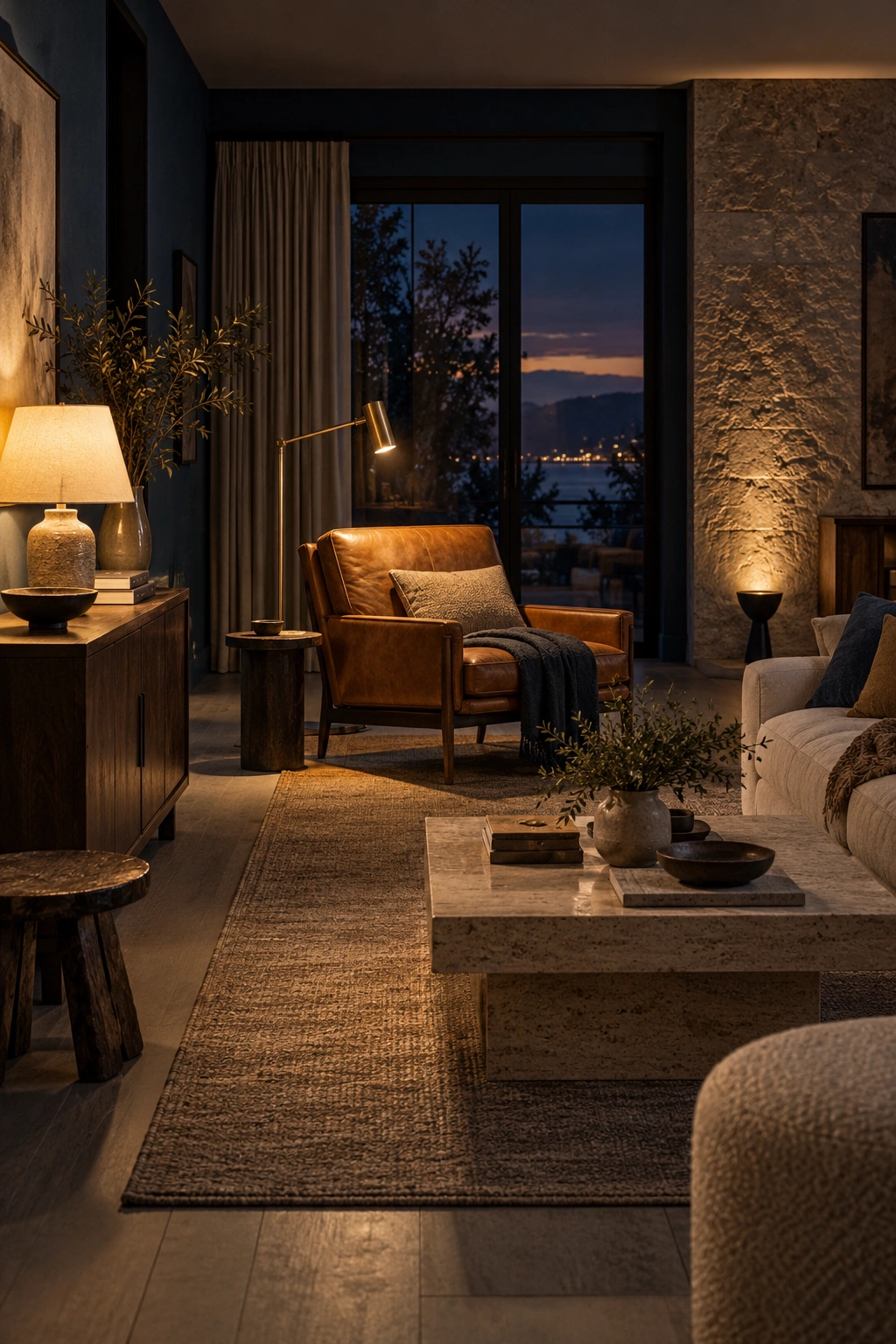
myAudience · AI-generated interior illustration · Original generated illustration; not documentary evidence
A room that looks beautiful at noon can feel oddly flat at eight. The ceiling light shows everything at once; the corners disappear, a glossy screen catches a reflection, and the chair you love is too dim for reading. Before changing the furniture, change where the light lands.
Try three separate jobs. First, enough general illumination to move around comfortably. Second, a light aimed where a task happens: reading, sewing or working at a table. Third, a modest glow that gives the room depth, perhaps a shaded lamp beside an armchair or a wash of light across a textured wall. These are useful roles, not a requirement to buy three new fittings.
Move the lamps you already own and test them while seated. Can you see the bare bulb? Does the shade throw light into your eyes? Does your hand cast a shadow across the page? A reading lamp may work better beside and slightly behind the shoulder than directly in front of the chair. Adjust the position for your own vision and comfort.
If you choose new bulbs, compare lumen output rather than assuming wattage describes brightness. Check the fitting's permitted bulb type and rating, and make sure any dimmer and LED are compatible. Colour temperature is a preference: a warm-looking lamp can feel welcoming, but the best reading setup is the one that lets you see clearly without uncomfortable glare.
Keep cables off walking routes, follow fitting instructions and leave electrical alterations to a qualified professional. Then take one photograph with the ceiling light on and another with your smaller lights arranged. Notice the surfaces that become visible. Often the transformation is in the shadows between them.