The bookshelf that earns its breathing room
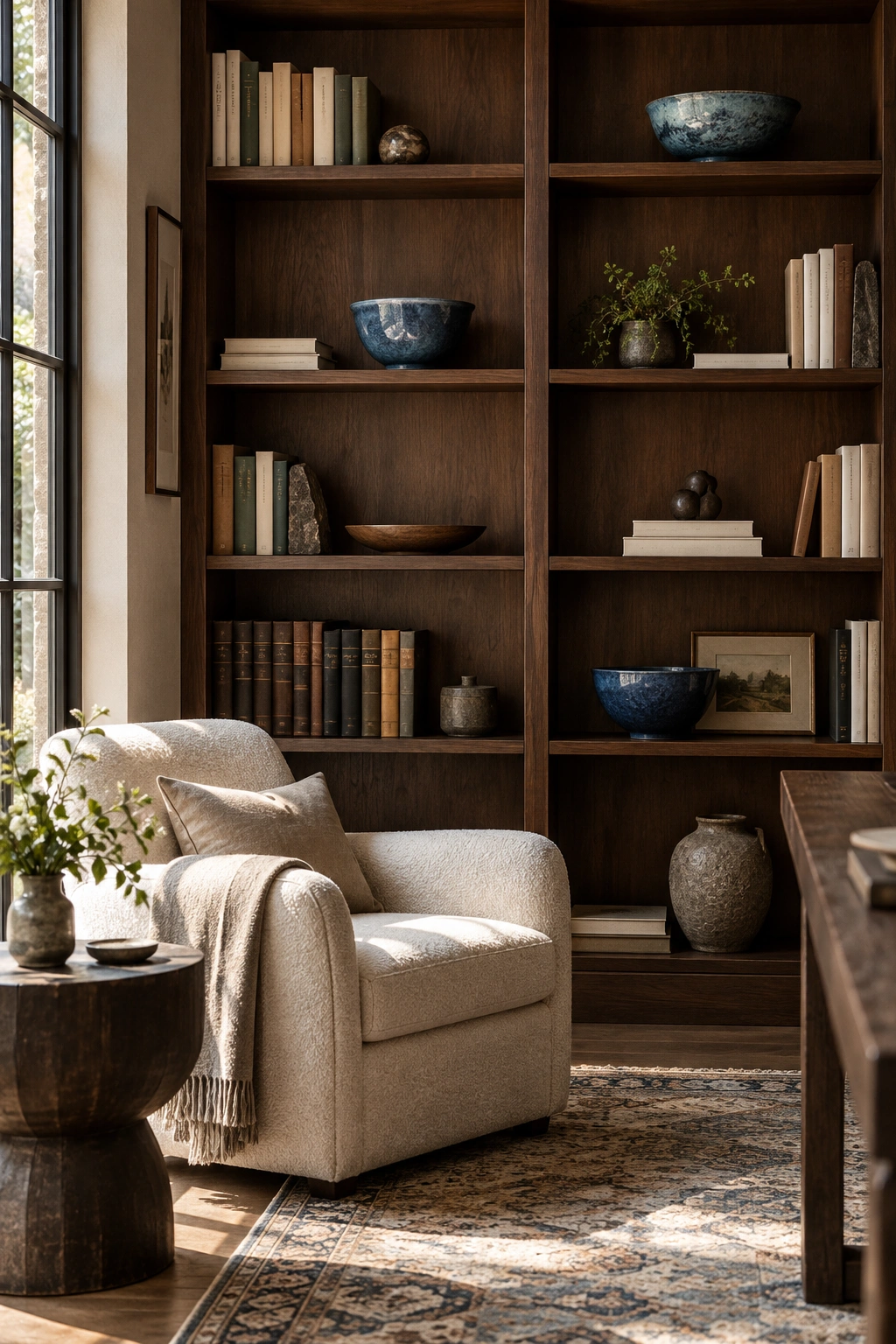
myAudience · AI-generated interior illustration · Original generated illustration; not documentary evidence
A bookshelf becomes easier to enjoy when it stops trying to display everything at equal volume. The interesting part is often the interval: a run of paperbacks, a little open space, then one bowl whose shape you can actually see.
Begin by removing one shelf's contents, not the entire room's. Put back the books you reach for first. Keep subjects together if that helps you find them; a beautiful colour arrangement is a poor bargain if it hides the cookbook you use every Sunday. Let the shelves reflect how you read.
Vary the rhythm with a short horizontal stack where the shelf depth allows, topped by one light object. Keep frequently used books easy to remove. Avoid piling so high that taking one volume requires dismantling the scene, and check the shelf's load limits rather than assuming a full row is harmless.
Now choose a single material to carry through the display: glazed ceramic, dark wood or clear glass. Three related objects spread across the unit may feel more deliberate than three collections compressed onto every shelf. Leave at least one patch of empty backing visible. It gives the next object an outline.
Bring the visual weight down. Heavy books belong where they can be handled comfortably, and tall furniture needs an appropriate anti-tip restraint fitted according to the manufacturer's instructions. CPSC's Anchor It guidance is especially relevant around children; decorative restraint and structural restraint are entirely different matters.
Finish by returning something that refuses the palette: a bright paperback, a handmade mug, the small thing you kept for sentimental reasons. A useful shelf should look like someone lives with it, not like its owner is afraid to touch it.