A bedroom built around texture
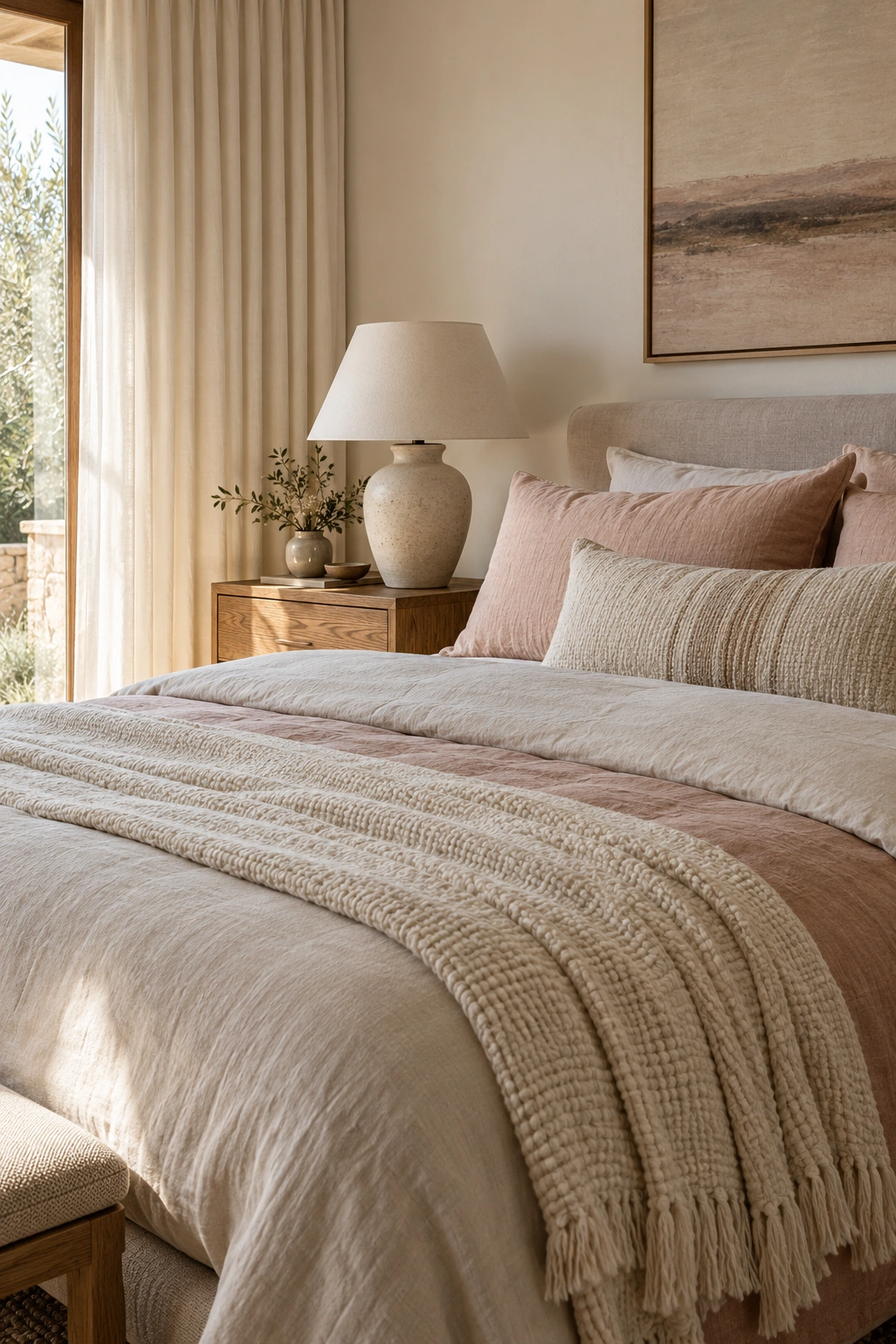
myAudience · AI-generated interior illustration · Original generated illustration; not documentary evidence
A pale bedroom needs more than a pale duvet. When all the surfaces are equally smooth, even a carefully chosen palette can feel thin. Texture adds interest without asking the room to become louder.
Start with the largest areas: bedding, curtains, floor and headboard. Give each a different surface. Smooth cotton beside a nubbly throw; a woven shade beside a matte wall; a timber bedside table beside a softly quilted cover. You are building contrast that can be seen in a single colour family.
Choose one anchor shade from something already in the room. A honey-coloured floor might lead towards oat, clay and warm white. A dark bed frame might welcome chalk and a little charcoal. Place fabric samples together in daylight and again under the lamp you use at night. A white that looks creamy in the shop may read green beside your curtains.
Make the daily routine easy. One practical cushion is plenty if extra cushions end up on the floor. A washable throw can sit across the lower third of the bed rather than burying the entire duvet. Keep the bedside surface clear enough for water, glasses and whatever you actually reach for.
Try the texture edit before the colour edit. Fold away one patterned layer and add an existing knitted blanket, or put a smooth cotton cover beside a basket you already own. In the evening, look at the room from the doorway. If you can distinguish the materials without turning on every light, the scheme already has depth.
The satisfying bedroom is often the one that requires fewer decisions when you are tired. Let its beauty survive being used.