Art that holds a wall together
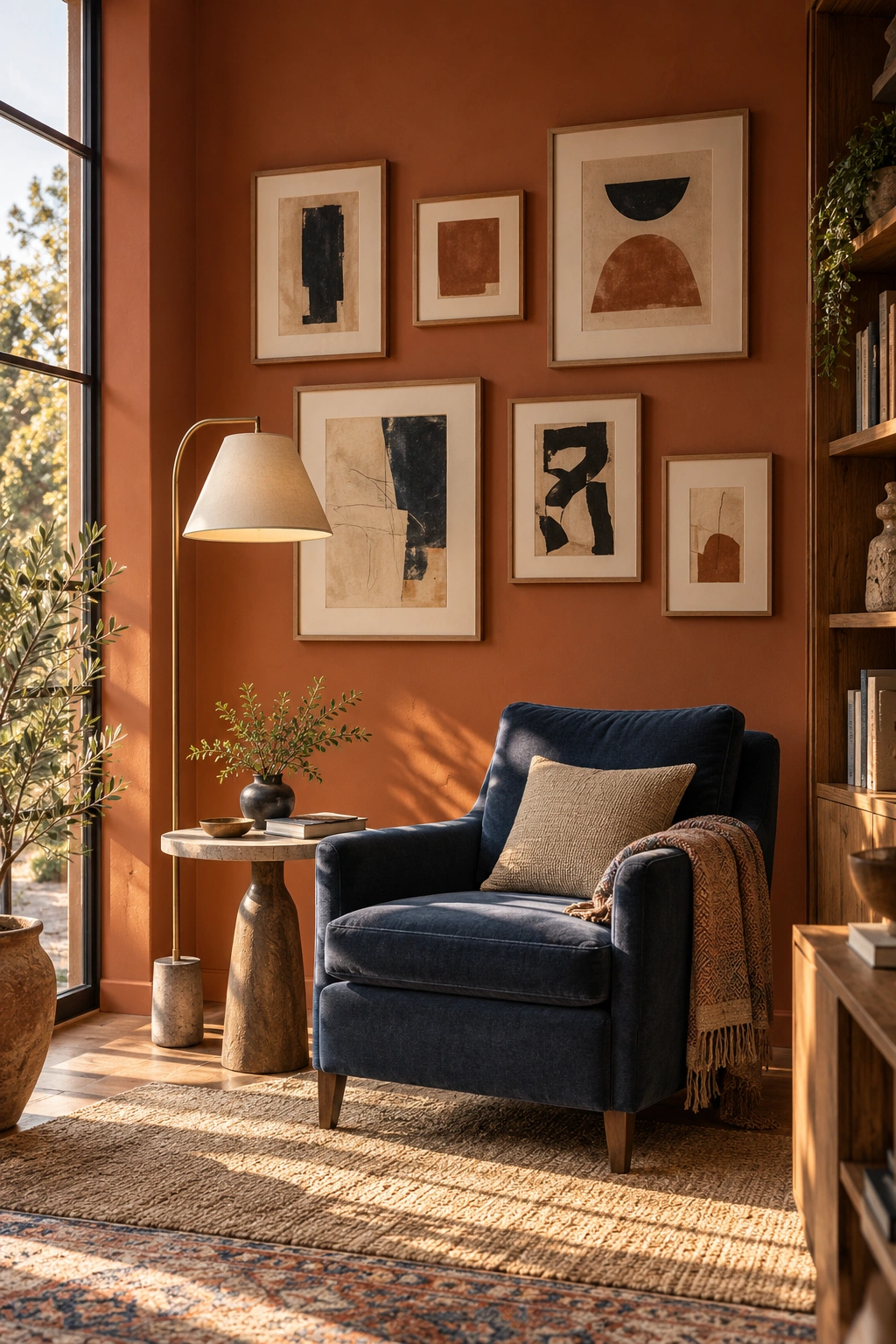
myAudience · AI-generated interior illustration · Original generated illustration; not documentary evidence
A group of pictures works best when it feels like one composition before it becomes a collection of individual frames. You can keep mismatched subjects and still give them a shared rhythm.
Gather the pieces on the floor first. Choose an anchor: the largest work, a dark frame, or the picture you most want to notice. Arrange the others around it rather than building outwards from whichever nail happens to be in the wall. Take a photograph from above and look at the outline of the entire group.
A repeated gap often does more to unify a collection than identical frames. Try a narrow, consistent space between the pieces, then increase it if the arrangement feels cramped. These are trial layouts, not mathematical rules; unusually wide mounts or a very dark print may need a different amount of breathing room.
Make paper templates of the outer frame sizes and test the whole arrangement at the intended position. View it while seated as well as standing. Above a sofa, the group should relate to the furniture rather than drift towards the ceiling simply because there is empty wall available. Check that heads, doors and moving furniture will not collide with projecting frames.
For a quieter result, repeat one element across the collection: warm timber, a cream mount or a particular shade of blue. Let one piece break the pattern. A child's drawing or a tiny landscape can be the thing that makes the group feel personal.
Use fixings appropriate to each frame's weight and the wall, with professional advice where needed. Then leave the arrangement alone for a few days. Pictures are better company when you can enjoy them without continually moving the furniture beneath them.