The open shelf edit for a compact kitchen
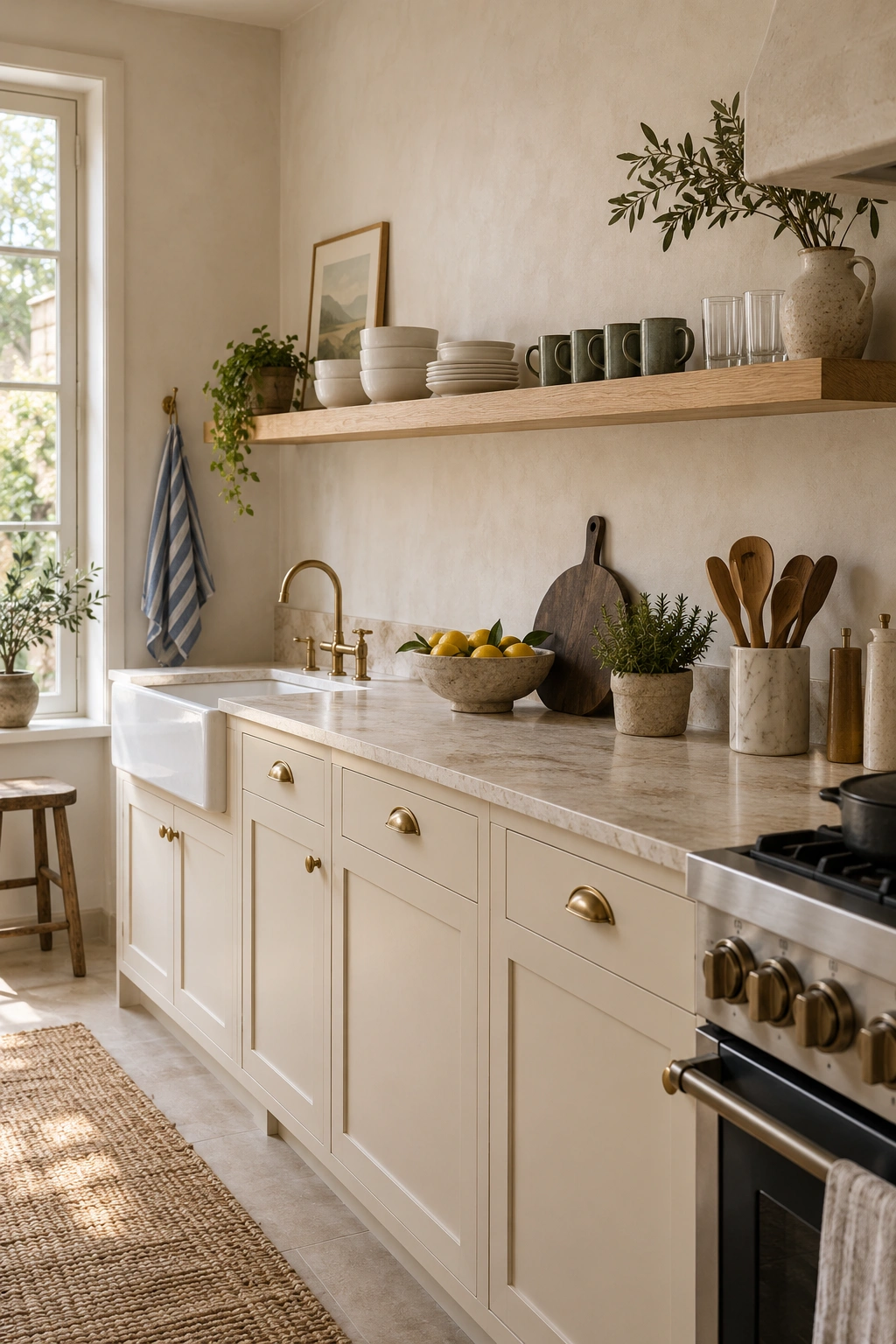
myAudience · AI-generated interior illustration · Original generated illustration; not documentary evidence
An open kitchen shelf can be a pleasure when it holds objects that move. Bowls come down for breakfast, cups return after washing, the olive oil goes back where the cook expects it. The shelf starts to feel fussy when its contents are too precious to touch.
Choose one everyday category first. Four bowls and four mugs may be enough. Give them a limited material family, such as white stoneware with a single dark glaze, but do not buy a matching set merely to create order. Objects with similar shapes can make a useful group even when their histories differ.
Place the things you use most within comfortable reach and keep heavy items where they can be lifted safely. Check the shelf, fixings and manufacturer's load limits. Overhead storage is not the place to improvise a mounting method, especially above a work surface.
Leave a little empty surface between groups. A stack of bowls, a short run of glasses and one jug are easier to read than a continuous line of ornaments. Add colour through something useful: a striped tea towel on a proper hook or a glazed serving dish. Keep textiles and other combustible items away from cooking heat.
Think about cleaning before styling. Open shelves collect dust and cooking residue, so display only what you are willing to wash. Keep food in suitable closed containers and follow its storage instructions. A decorative jar is not automatically an airtight one.
For a first trial, clear a single existing shelf and return only the objects used during the next three days. That small inventory can produce a more convincing kitchen than an afternoon spent arranging things nobody cooks with.