A work corner that closes for the evening
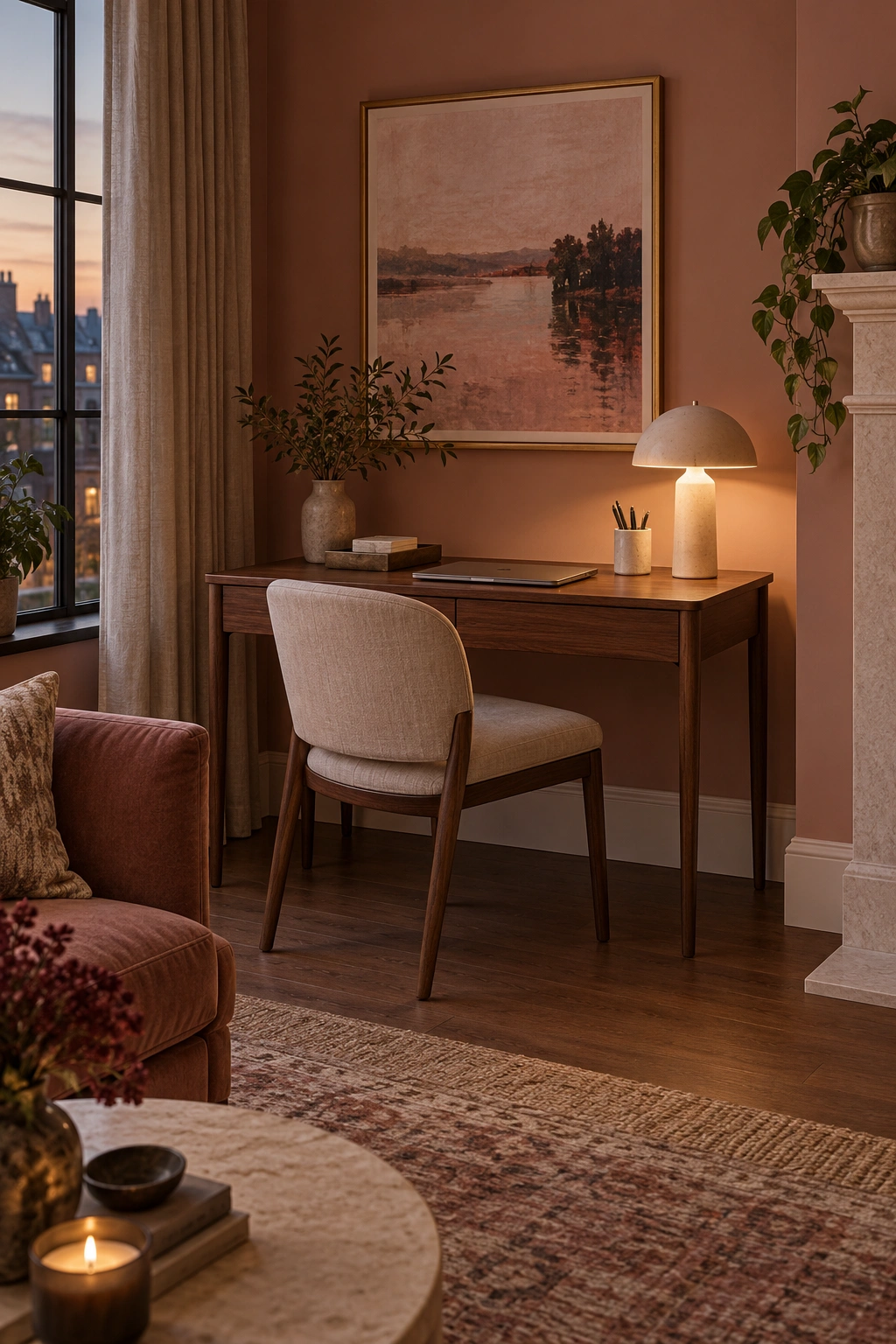
myAudience · AI-generated interior illustration · Original generated illustration; not documentary evidence
A desk in a living room does not need to disappear completely to stop dominating the evening. It needs a convincing end point: the papers gathered, the screen quiet, the useful tools contained. Closing the working day can be a small act of arrangement.
Start with a surface large enough for the work you actually do. Test the chair, screen position and reach before adding decorative pieces. A beautiful narrow shelf is not a satisfactory desk if your forearms hover over its edge. Adjust your setup to your own comfort and seek suitable ergonomic guidance if you have persistent discomfort.
Give active papers one shallow tray and equipment one clearly defined home. A lidded box can hold chargers and spare cables when they are cool and disconnected; do not enclose powered equipment or cover ventilation. Route cables without stretching them across the floor, and follow the equipment's instructions.
Choose a task lamp that lights the work without throwing glare onto the screen. Then introduce one material already present in the room: a timber desk beside timber shelving, or a muted green organiser beside green upholstery. The corner will feel less like equipment parked in an unrelated setting.
At the end of the day, put the laptop away if its instructions and your routine allow, turn off the task light, and leave one object you enjoy seeing: a small ceramic pot, a photograph, a notebook with a pleasing cover. This is a visual change of use, not a promise of better sleep or less stress.
Try the closing routine before buying storage. If the same three objects are left out every night, make room specifically for them. Order becomes easier when it fits the mess you actually make.