The Gravel Garden That Starts With Your Soil
AI-generated editorial illustration for myAudience · Generated for myAudience; not a photograph of a real location
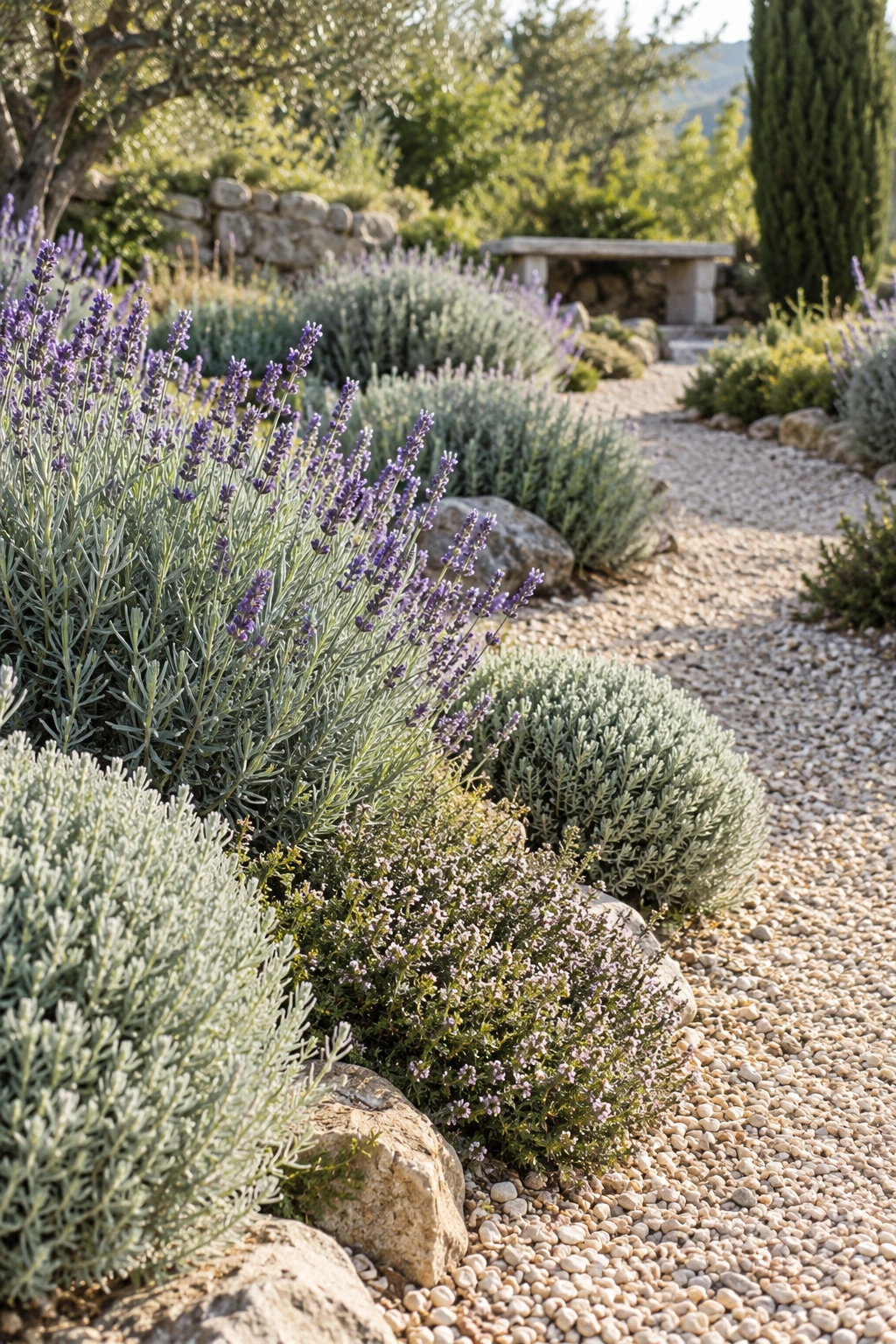
A good gravel garden has a rhythm: a rounded silver shrub, a low green cushion, a pause of pale stone. Start with three distinct shapes and let the gaps belong to the design. Lavender, santolina and thyme can create that rhythm in a suitable sunny, freely draining site, with species and cultivars chosen for local conditions.
The important part happens below the gravel. A decorative surface does not turn wet clay into a Mediterranean hillside. Check how water moves through your soil, especially in winter, before choosing plants. Where drainage is unsuitable, a properly designed raised bed or containers may be a more realistic first experiment than covering a whole border.
Place plants with their eventual spread in mind. Leave a narrow route through the scene so you can reach weeds without stepping on crowns. Choose gravel that relates to nearby paving and walls: a warm buff stone beside old brick, perhaps, or a quieter grey alongside slate. One material used consistently keeps a small space from becoming busy.
New plants still need establishment care; drought tolerance is not a promise of instant independence. Check root-zone moisture and local watering advice, and remove weeds while they are small. Outside the UK, check regional invasive-plant guidance before copying a planting list. The idea worth borrowing is the composition: repeated shapes, compatible needs, and enough open ground to see both.