The Kitchen-Door Herb Collection
AI-generated editorial illustration for myAudience · Generated for myAudience; not a photograph of a real location
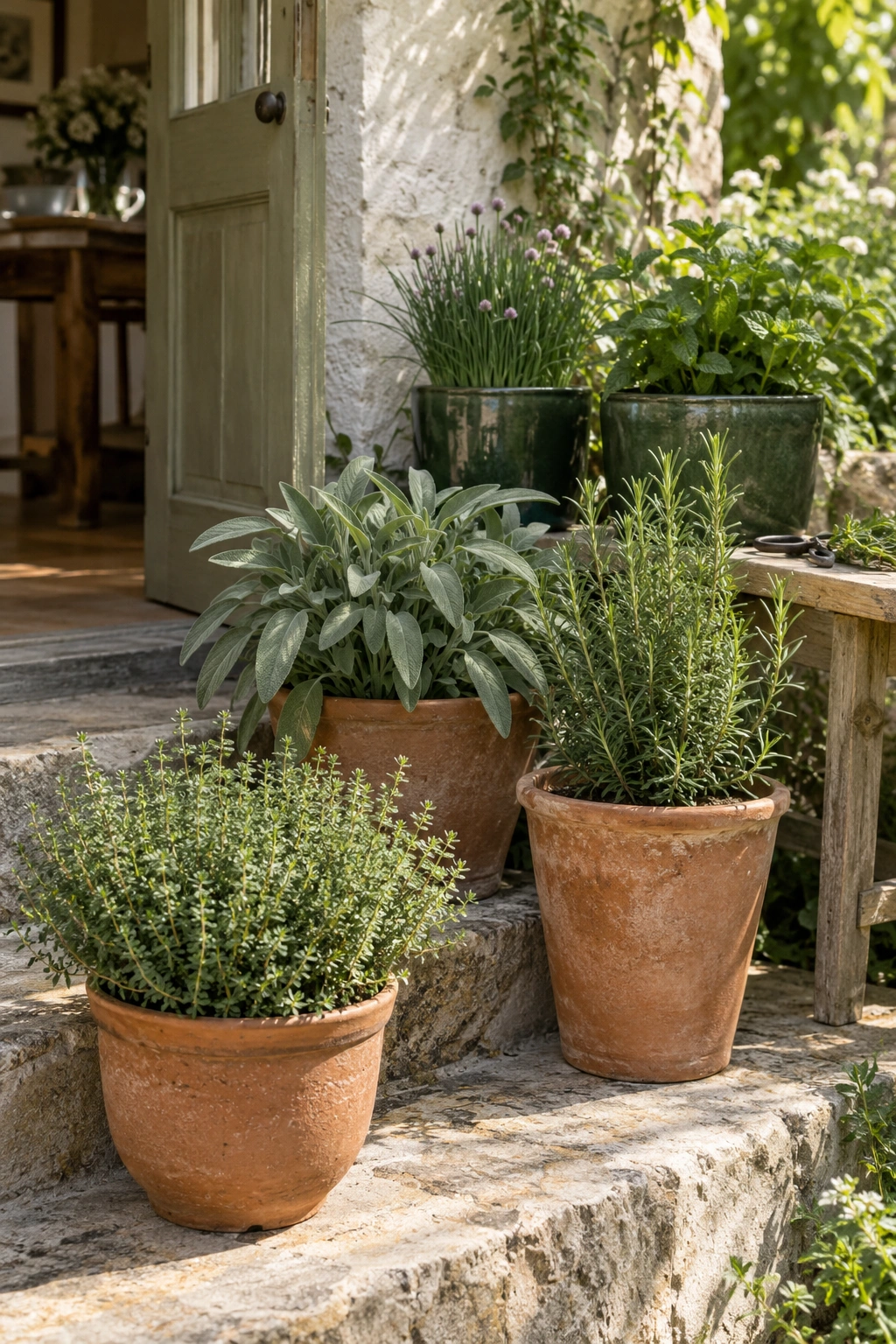
The best herb collection begins with dinner. Think about what you actually cook: thyme for roast vegetables, sage for butter or beans, chives for eggs. Put those plants close enough to the kitchen that picking a few leaves feels easier than opening a packet. An arrangement you use is more satisfying than a crowded display you forget.
Separate pots let you make a handsome group without forcing every herb into the same conditions. Rosemary, sage and thyme suit a sunny, well-drained position. Chives and mint appreciate a different moisture balance; mint deserves its own container because it spreads vigorously. Choose plants correctly labelled as culinary herbs, and check suitability for your climate.
Give the collection a loose visual order. Use one upright plant, one broad-leaved plant and one low, fine-textured plant in front. A pair of quieter pots further back can hold the greener, leafier herbs. Keep the route through the door clear, and put a small shelf for scissors where it does not obstruct the steps.
Container herbs need attention to water and root space. Inspect the compost, harvest lightly while plants establish, and replace or pot on tired specimens rather than expecting a cramped pot to produce indefinitely. Tender herbs have their own seasonal needs; basil should not be treated like a hardy woody shrub. Start with the few flavours you love, learn their habits, and let the collection grow at the pace of your cooking.