The Late-Summer Border That Keeps Its Shape
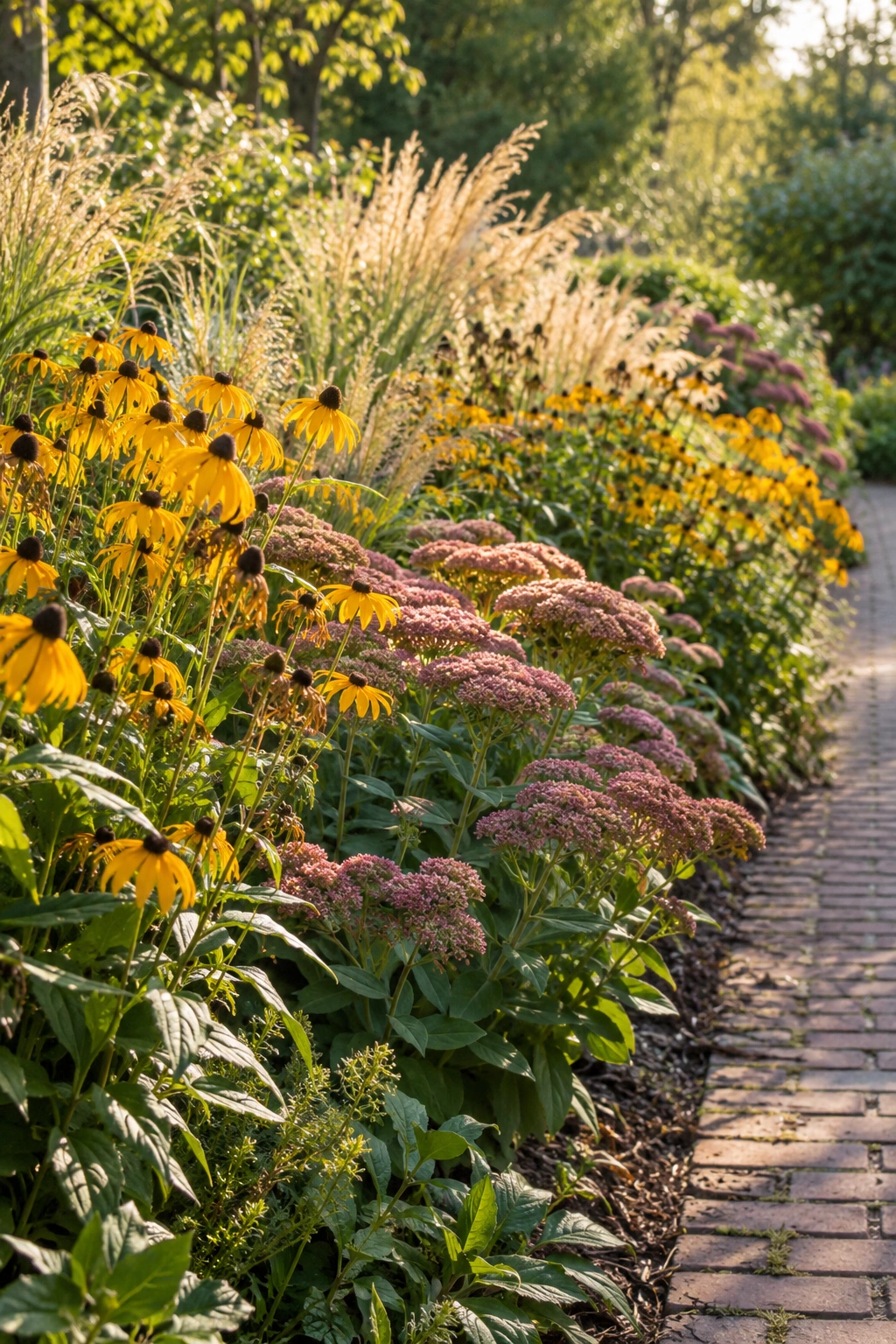
AI-generated editorial illustration for myAudience · Generated for myAudience; not a photograph of a real location
Late summer deserves its own planting plan. Golden daisy flowers, broad pink flowerheads and upright grass stems give a border different ways to catch the light. In a suitable sunny temperate garden, a locally appropriate rudbeckia, an upright hylotelephium and a well-chosen ornamental grass can form the beginning of that conversation.
Choose the actual plants before choosing quantities. Species and cultivars vary in height, spread, moisture needs and winter survival; some grasses also spread or seed too readily for particular regions. Read nursery labels alongside regional advice. A beautiful combination on paper still needs compatible roots and enough room at maturity.
Repeat a small group rather than distributing every plant evenly. A drift of yellow can return further along the path, with pink acting as a quieter middle note. Let a taller grass sit behind the flowers where it can catch backlighting without leaning across the route. View the arrangement from your usual seat as well as from the end of the bed.
Build access into the planting. A visible path makes weeding and selective cutting possible without trampling the plants. Later, keep sound stems whose seedheads still hold an attractive shape, removing those that have collapsed or show disease. A border can move from flowers to winter structure without losing its outline; that second scene is worth planning from the start.