A baking scale clears up a small but useful uncertainty
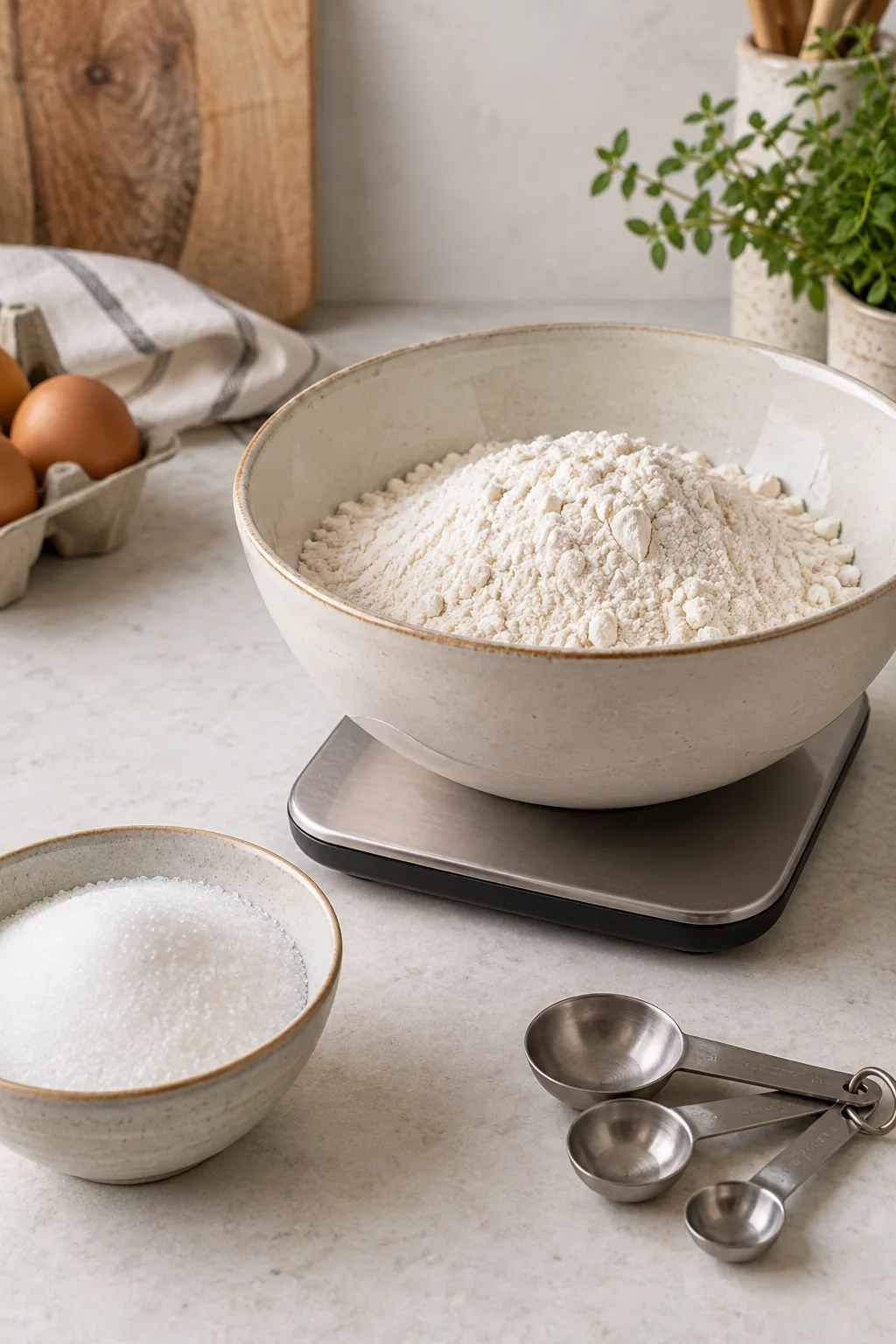
myAudience · AI-generated food illustration · Original AI-generated illustration; no third-party photograph
Flour changes how it sits in a cup when it is scooped, shaken or packed. A scale lets a recipe's gram quantity remain the same even when those habits differ. The advantage is consistency, not a guarantee that every bake will succeed.
Set the bowl on a stable scale and zero it before adding the ingredient. Add slowly as you approach the target. If measuring several ingredients into one bowl, pause and check the number before zeroing for the next; it is harder to remove extra baking powder once it is mixed into flour.
Use the recipe's own units consistently. A volume-to-weight chart can help when adapting a recipe, but one ingredient's conversion does not apply to another. Flour, sugar and chopped nuts have different weights at the same cup volume. Avoid treating a kitchen spoon as a standardized measuring spoon.
Keep raw flour and batter away from ready-to-eat food. Flour is a raw ingredient, so do not taste uncooked dough or batter as a test of flavour. Clean the preparation area after measuring and follow the recipe's full baking instructions. A tidy weighing sequence helps you notice mistakes while they are still easy to correct.