A blue room that stays warm
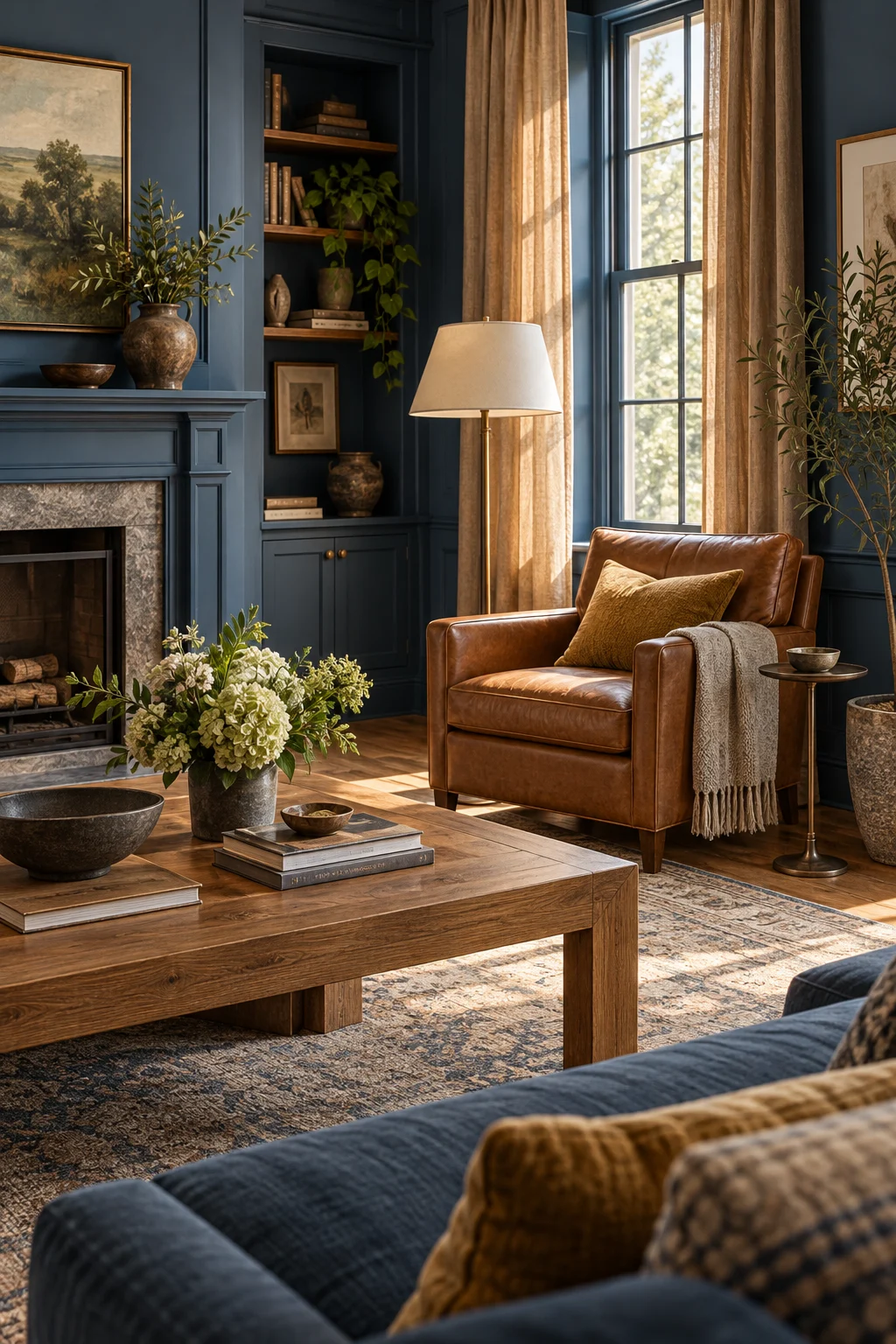
myAudience · AI-generated interior illustration · Original generated illustration; not documentary evidence
Blue does not have to arrive with white stripes and a seaside reference. In a room full of timber, leather and woven cloth, it can become a rich background for warmer materials.
Start with the blue you already love, then look at its neighbours. Honey oak brings a different effect from cool grey laminate; caramel leather sits differently from a crisp white cotton cover. Hold actual samples together rather than judging each in isolation. There is no universally warm blue that behaves the same in every room.
Try cinnamon at a modest scale first: a cushion, a folded blanket or a ceramic pot. If that works, a larger curtain panel might become the room's soft counterweight. Keep one paler surface so the darker tones have something to sit against. An ivory lampshade can be enough in a compact reading corner.
Look at the arrangement after dark with the lights you normally use. An attractive daylight colour may change under a different lamp. Check the bulb's suitability for its fitting before experimenting, and choose comfortable visibility over an atmospheric photograph.
For a no-paint trial, gather blue books, warm wood and one tobacco textile on a table. The combination will tell you more about your taste than a label such as coastal or traditional. A blue room becomes interesting when it stops trying to prove it belongs to a theme.