Two adjoining rooms, one quiet thread
myAudience · AI-generated interior illustration · Original generated illustration; not documentary evidence
Adjoining rooms do not need the same wall colour to belong together. They need a few details that make the view through the doorway feel intentional.
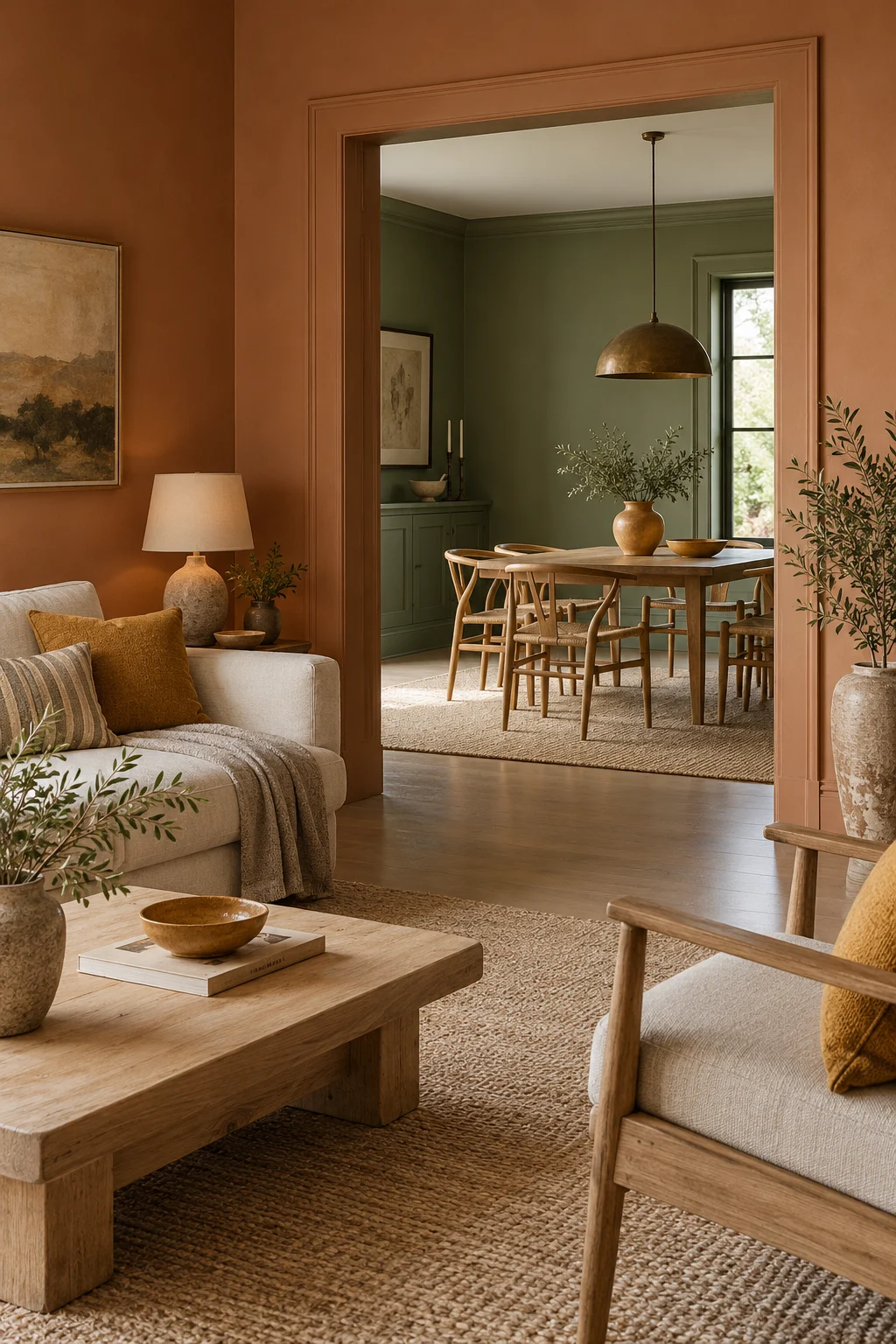
Stand where you most often see both spaces at once. You might notice a clay wall in the foreground, a sage wall beyond and a dark doorway between them. This is the composition to work with, rather than judging each room separately from its centre.
Choose one thread to cross the threshold. An ochre cushion in the sitting room can answer an ochre bowl on the dining table. Similar timber tones can do the same work more quietly. Keep the repeated element modest enough that each room still has its own character.
Pay attention to the colours that sit directly beside one another at the doorway. Place real samples there, including a piece of the trim colour if that is changing. A scheme that looks agreeable on a mood board may behave differently where two painted surfaces meet.
Try moving an existing lamp, picture or textile before buying new things. Sometimes the missing connection is already elsewhere in the house. Photograph the doorway view after each change, keeping the camera in the same place.
Then walk through the rooms normally. A good relationship should survive open doors, a dining chair pulled out and a book left on the sofa. The thread is there to connect daily life, not to demand a perfectly staged view.