Paint samples that earn their place
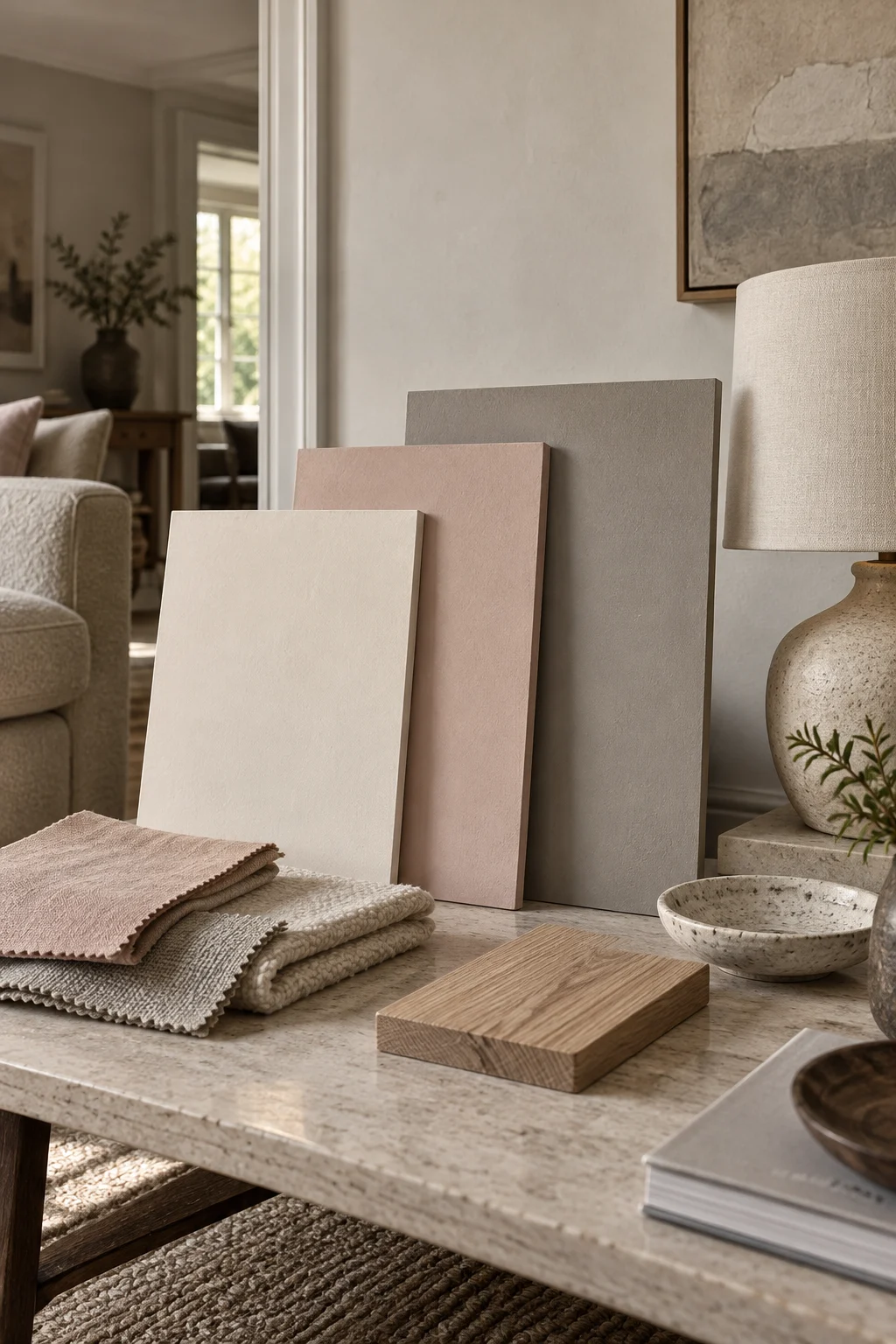
myAudience · AI-generated interior illustration · Original generated illustration; not documentary evidence
A paint sample is most useful when it answers a specific question. Will this cream look agreeable beside the floor? Does this pink become too strong under the evening lamp? Choosing ten samples without a question can make the decision harder.
Start with the finishes that will remain: flooring, worktop, upholstery and large timber pieces. Bring a small selection of candidate colours to them. Use the manufacturer's recommended sample method and let the coating dry as instructed before judging it.
Movable sample boards can help you compare different positions without scattering permanent squares across the room. Label the back, and keep a record of the exact product and finish. A colour tested in one formulation does not guarantee an identical appearance in another.
Look at each sample beside the actual materials, at the hours you use the room. If you work away all day, the evening lamp may be more relevant than the bright morning photograph. Avoid judging the colour only through a phone camera, which can alter how the scene appears.
Eliminate samples that clearly disagree with the fixed finishes, then compare the remaining two calmly. Put the others away. Too many neighbouring swatches can make subtle differences seem more important than they will be across a wall.
Finally, check the surface preparation, product suitability and any permission you need. A good colour decision and a durable paint finish are separate parts of the job. The sample earns its place by helping you decide before the whole room is involved.