The soft edge of a hard room
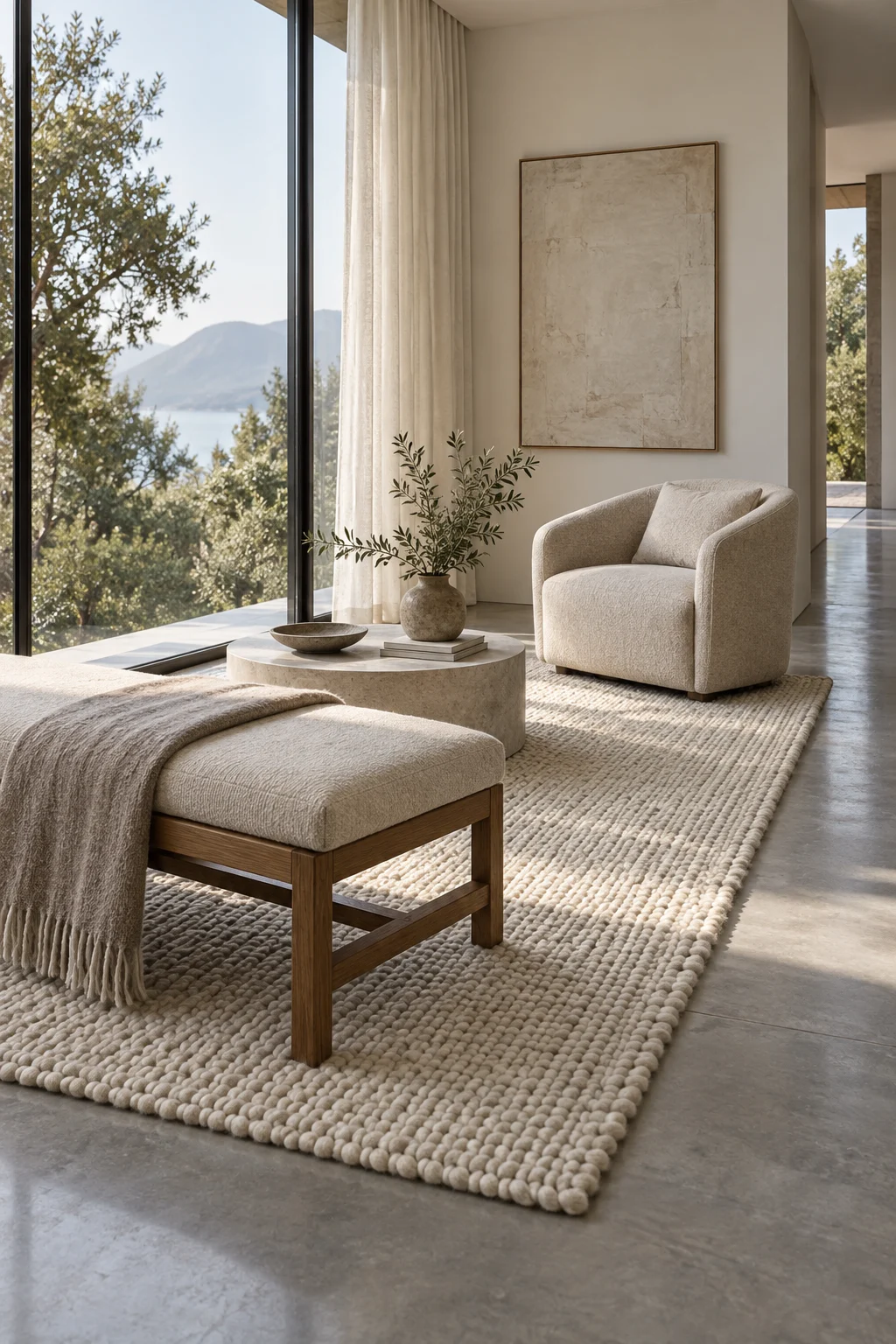
myAudience · AI-generated interior illustration · Original generated illustration; not documentary evidence
Concrete, glass and smooth painted surfaces can give a room beautiful clarity. They can also leave you wanting something softer to see and touch. You do not need to cover every hard edge to change the balance.
Pick the surface closest to daily life. A rug beneath the sitting area, a padded bench where you put on shoes or curtains beside a large window can have more relevance than a row of decorative cushions. Start with one substantial textile rather than several small additions.
Keep the material contrast visible. Wool against concrete, linen beside glass and upholstery against a straight timber frame each offer a distinct meeting of surfaces. The colours can remain restrained while the textures do the work.
Check the practical requirements: suitable rug underlay, clear floor routes, curtain clearance around heating and ventilation, and upholstery that can tolerate its intended use. If noise is a problem, a decorative textile alone is not a measured acoustic solution; specialist advice may be needed.
Look at the room before and after the one change. Do the hard surfaces still have their definition? Can you use the new soft element comfortably? A balanced room does not erase its architecture. It gives your hand and eye somewhere different to land.