The Pots You Can Actually Water
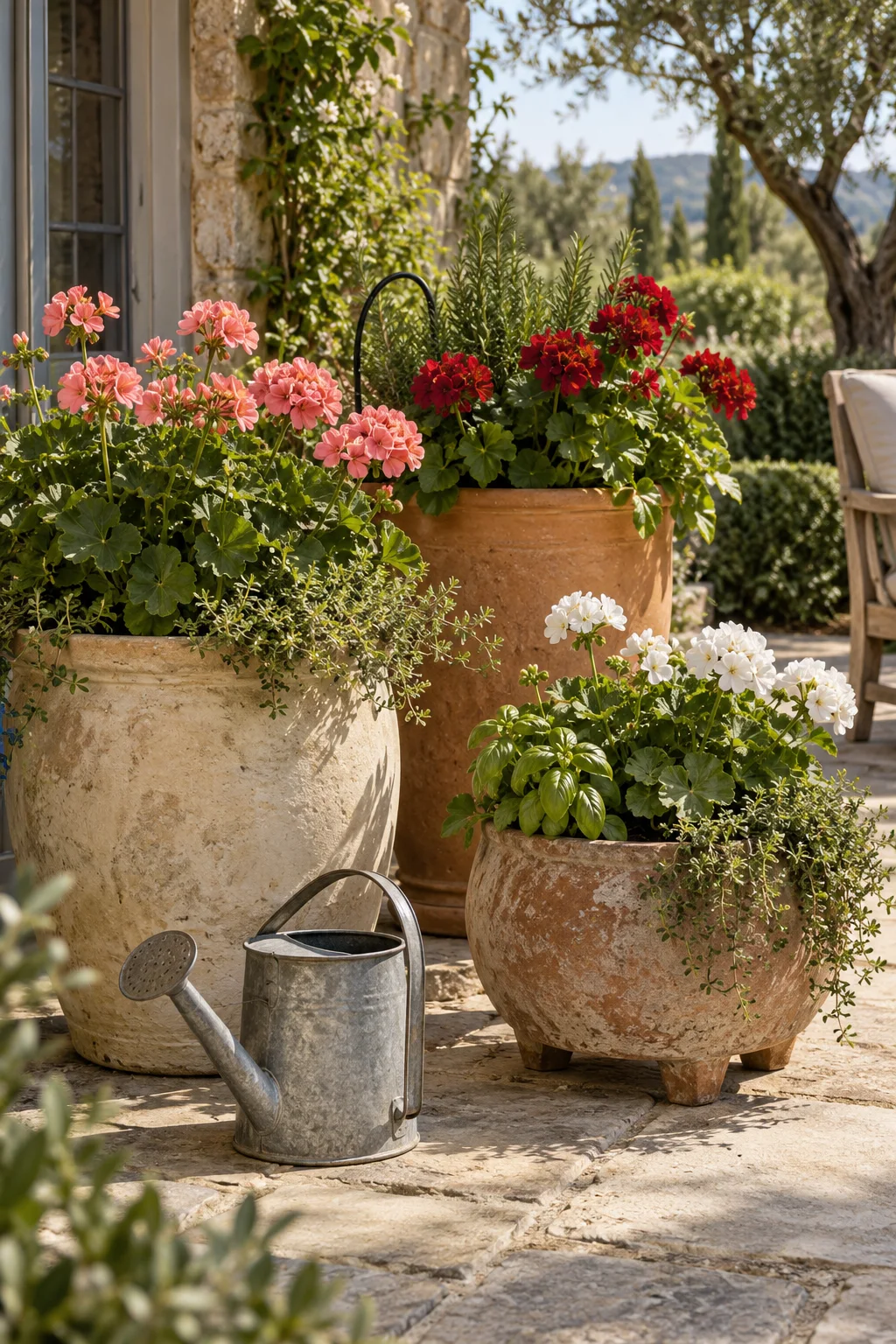
myAudience · AI-generated garden illustration · Original generated illustration; not documentary evidence
The prettiest container arrangement is often the one you can care for without moving furniture. Before deciding where a flowering pot belongs, carry an empty watering can along the route. Can you reach its compost surface? Can excess water leave safely? A useful layout makes those answers obvious.
Group pots with similar needs where practical, while leaving individual containers accessible. One thirsty leafy plant should not dictate care for a woody herb that wants freer drainage. Read labels, choose a suitable growing medium and ensure the pots have working drainage holes. This pictured pelargonium arrangement is a UK summer display, not a hardy winter planting; check each plant’s suitability around pets and keep ornamental leaves out of culinary harvests. Larger containers may dry more slowly than tiny ones, but every site behaves differently.
Compose the group through height and material. One tall pot at the back, a rounded middle shape and a lower vessel near the path can feel generous without multiplying the work. Keep the fronts visible enough to inspect leaves and stems. Leave air around the planting rather than pushing every rim together.
Check root-zone moisture instead of assigning all pots the same daily drink. If you use irrigation, follow the equipment's setup instructions and test where water actually lands; automated watering still needs inspection. A watering can stored neatly nearby can be part of the picture. Convenience, thoughtfully arranged, is a garden design material too.