Flowers That Hand the Season On
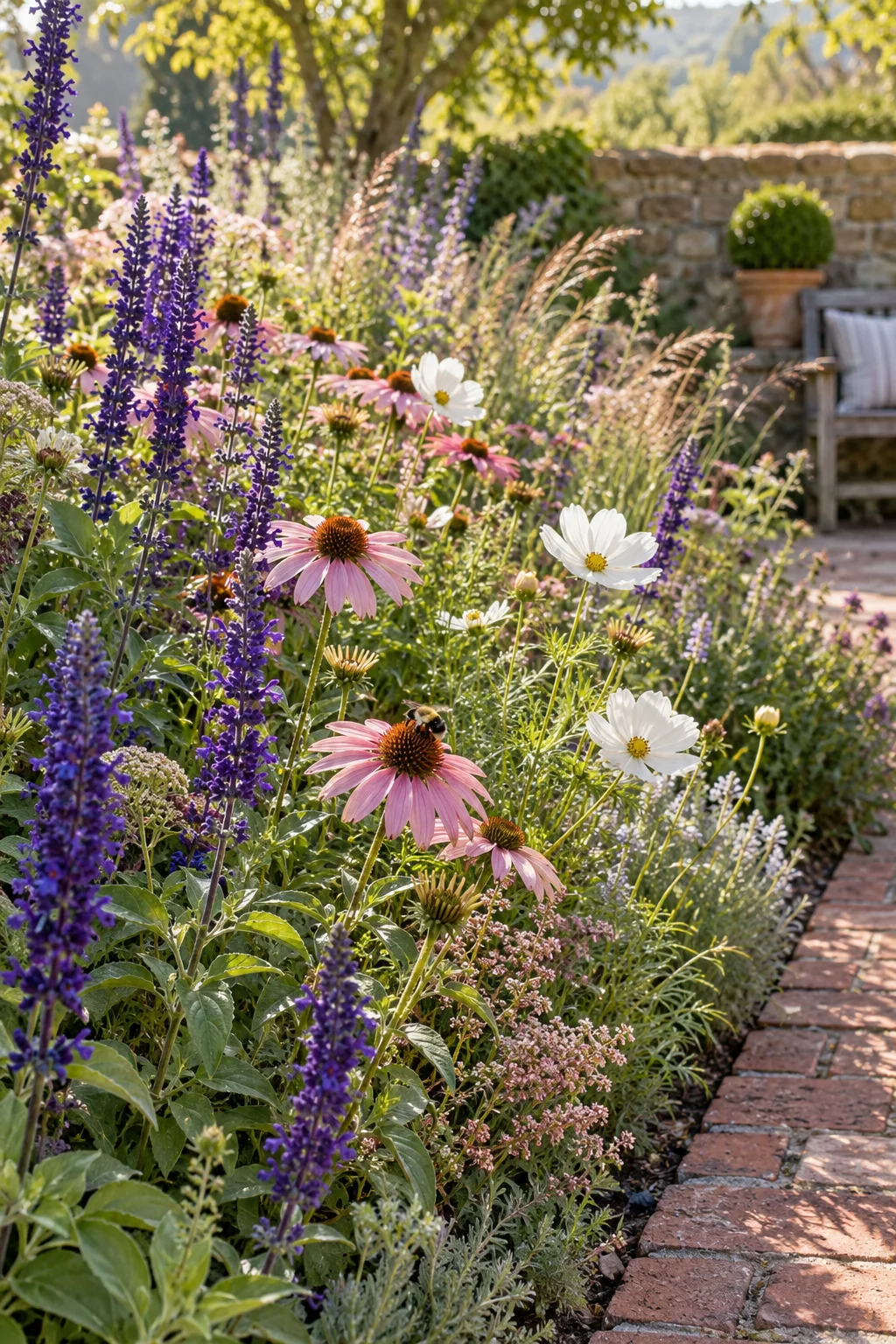
myAudience · AI-generated garden illustration · Original generated illustration; not documentary evidence
A border for visiting insects needs more than one spectacular week. Think of flowering as a relay: an early source of forage, a summer handover, then something useful later. The calendar and suitable plants depend on your region, so begin with local guidance rather than importing a whole list from another climate.
For a sunny British temperate summer scene, open daisy flowers beside upright salvia spikes offer an attractive contrast. Select species and cultivars appropriate to your soil and local ecology, checking invasive-plant guidance where relevant. Consider native plants and particular insect needs as well as general flower visitation.
Plant in recognisable groups so you can see what is flowering and when gaps occur. A pale flower next to purple can be visually effective, but colour alone does not tell you whether the plant supplies useful forage. Consult a reputable regional pollinator list and avoid assuming that every elaborate double flower performs like a simpler one.
Spend a few minutes watching before buying more. Note which plants receive visits, what is opening next and whether the border offers shelter as well as flowers. Observations are local, imperfect and useful. Over time, replace an unproductive gap with a suitable plant that extends the season; the border becomes a sequence you can enjoy learning.