A Border That Makes Room for Rain
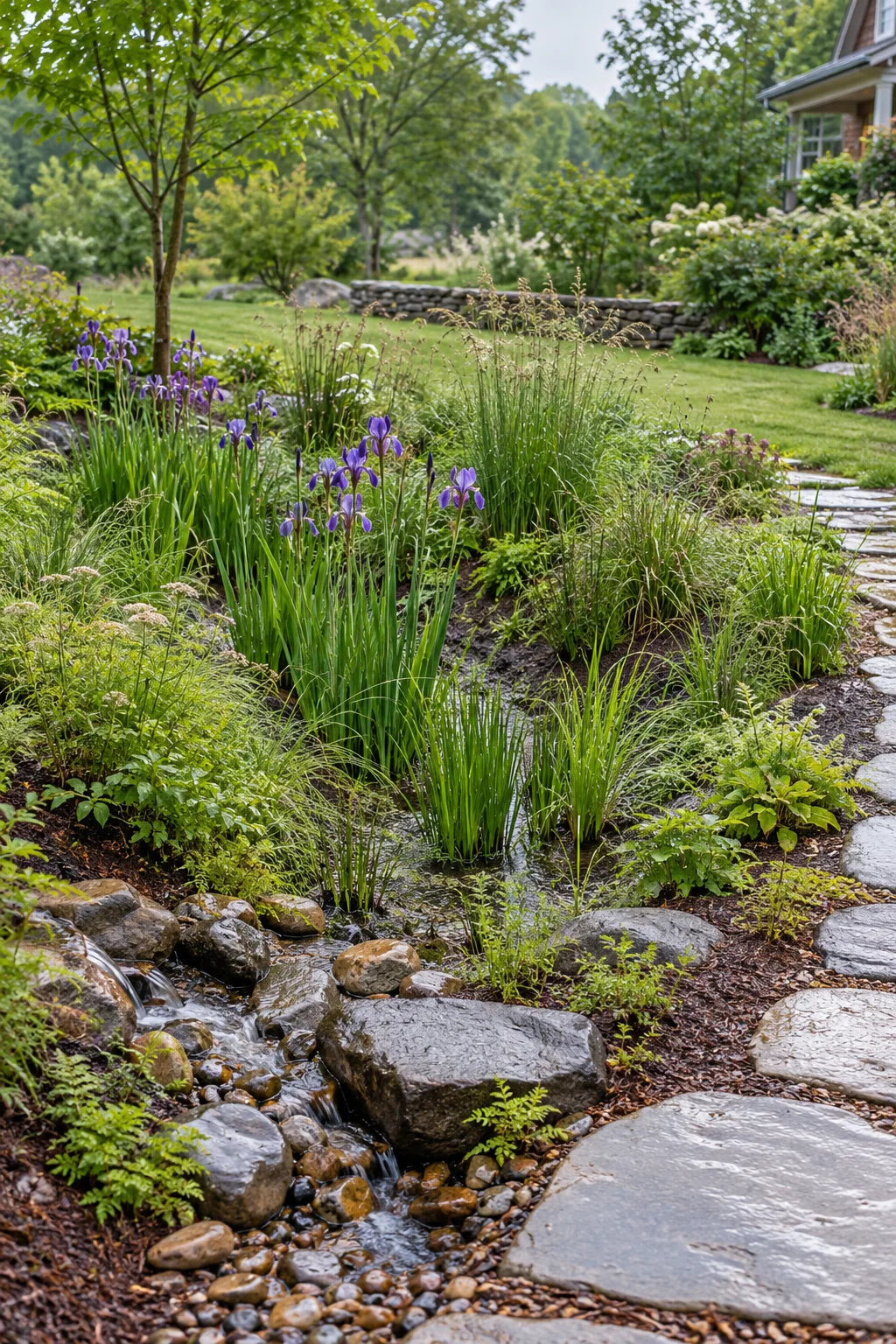
myAudience · AI-generated garden illustration · Original generated illustration; not documentary evidence
A rain garden can look like an ordinary beautiful border between showers. Its difference is in the ground: a planned shallow depression receives suitable runoff, holds it temporarily and lets it drain. It is not a pond expected to remain wet all year, and its plants must suit that changing pattern.
Start with the site, not a spade. Soil drainage, slope, building foundations, underground services, overflow and local requirements all need assessment. Seek qualified advice where necessary, especially near structures. The RHS guidance describes typical UK rainfall; another region needs its own stormwater design. A rain garden is not a universal remedy for flooding, and badly directed water can create new problems.
When the location is appropriate, use the moisture gradient as part of the design. Plants nearer the inlet may need to tolerate temporary wetness; the outer edge may be drier. Choose locally appropriate species for the actual conditions, checking invasive status rather than copying a decorative planting list unchanged.
Keep the inlet and overflow reachable for inspection. A simple stone channel can make the purpose visible, while repeated foliage shapes give the border coherence when no water is moving. Watch it after rain and through dry weather. The most useful planting picture is one that works in both scenes, with its engineering quietly doing the necessary work.