The Blueberry Has Its Own Compost
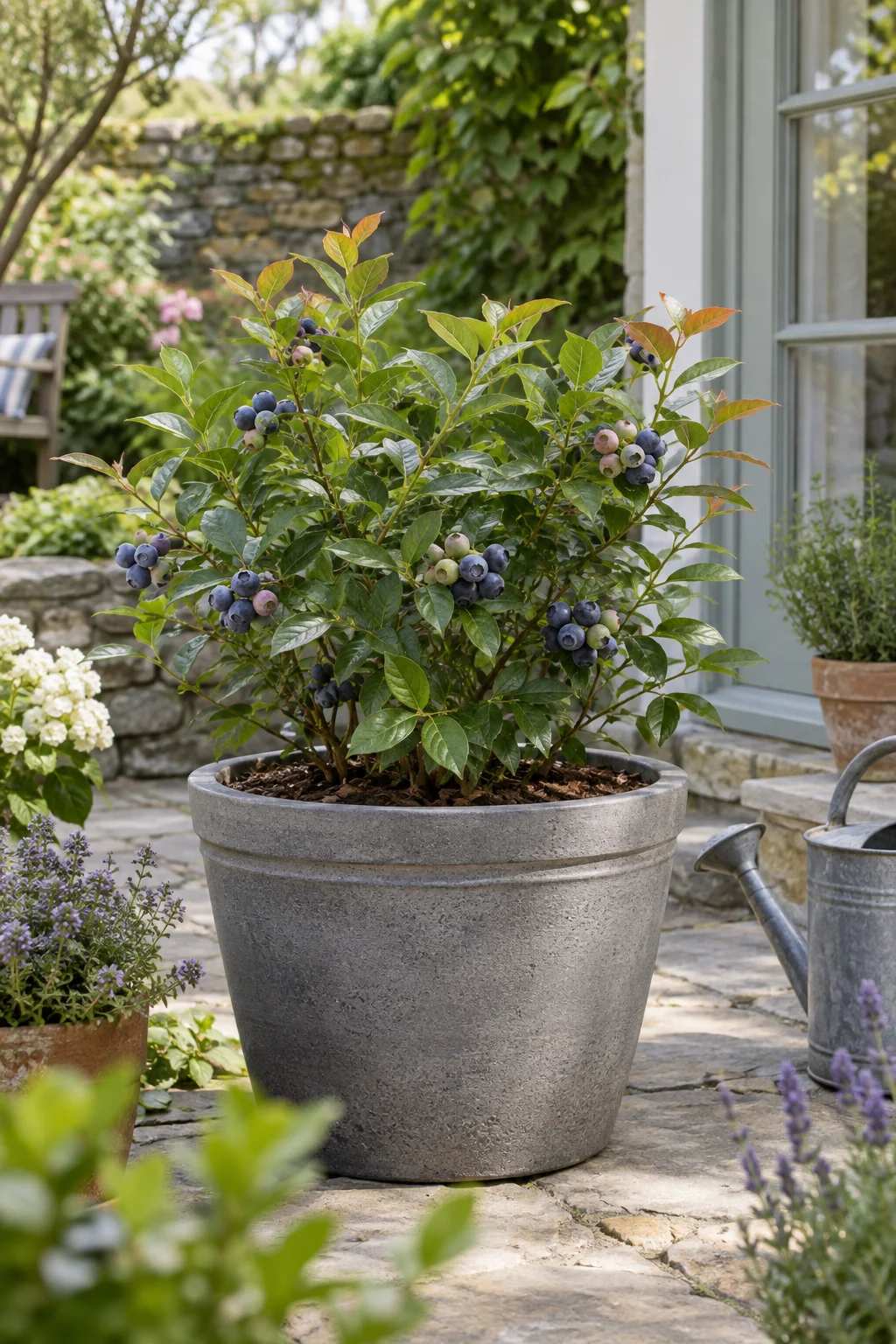
myAudience · AI-generated garden illustration · Original generated illustration; not documentary evidence
A blueberry can be a patio shrub before it is a harvest. Spring bells, blue fruit and warm autumn leaf colour give it several moments to look forward to. Choose a pot that lets the plant stand clearly in the scene, with space beside it for watering and picking.
The growing medium matters. Blueberries need acid conditions; in a UK garden with unsuitable soil, a drained container of peat-free ericaceous compost offers a practical option. Check variety size and climate suitability before buying. A compact label should still come with real mature dimensions and care advice.
Consider compatible varieties if you have space, because cross-pollination can improve cropping, but do not squeeze several shrubs into one small pot to chase that benefit. Follow guidance for water quality and feeding, and keep the root zone from drying out or remaining waterlogged. The shrub’s needs should shape the arrangement.
Pick ripe berries carefully and wash before eating. If protection is needed, choose a well-secured, inspectable cover rather than draping loose mesh over the plant. Watch autumn colour as part of the reward, even in a modest crop year. A blueberry is an invitation to understand one plant’s particular conditions, not proof that any fruit shrub belongs in ordinary compost.