Dry Shade Has Its Own Palette
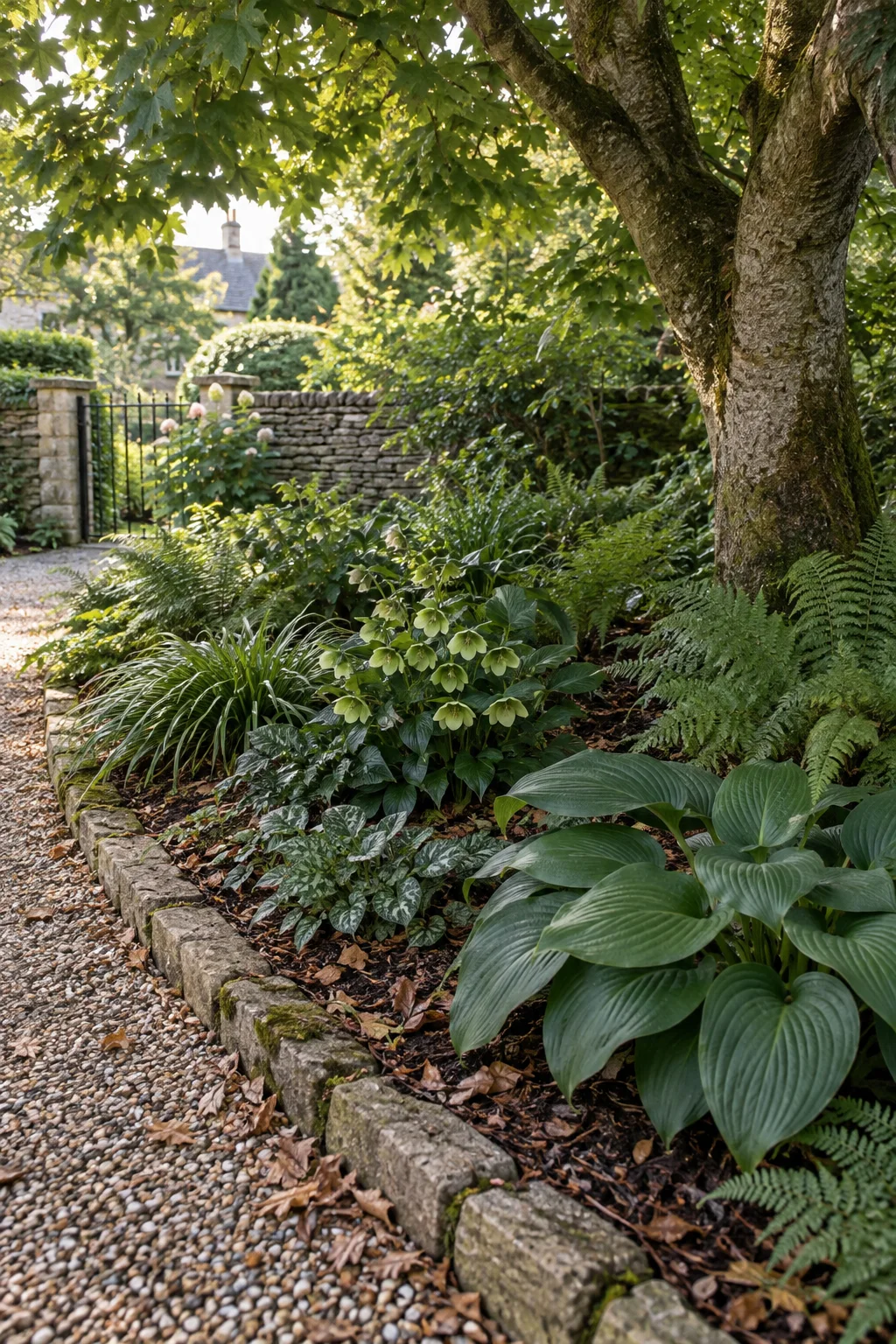
myAudience · AI-generated garden illustration · Original generated illustration; not documentary evidence
Shade beside an established tree can be dry as well as dark. Instead of borrowing a moist woodland picture, begin with the root competition and rainfall your corner actually experiences. A small arrangement of contrasting leaves can be more convincing than a collection of thirsty plants struggling to look lush.
The RHS UK shade guidance distinguishes dry and damp sites. Choose a named plant whose light, moisture and winter needs fit the corner, and check mature spread. Outside Britain, regional ecology and invasive-plant guidance should determine whether a suggested species belongs there.
Avoid digging deeply among tree roots or raising the soil level around a trunk. If significant roots obstruct the proposed bed, seek competent tree advice and reconsider the planting area. Establishment watering still matters for plants described as tolerant of dry shade.
Let the composition include visible leaf litter where appropriate, an uncluttered edge and a simple view from indoors. Observe the light before and after the canopy leafs out. The palette becomes stronger when it answers those seasonal conditions, with fewer plants chosen more carefully.