Give a Clay Border a Working Path
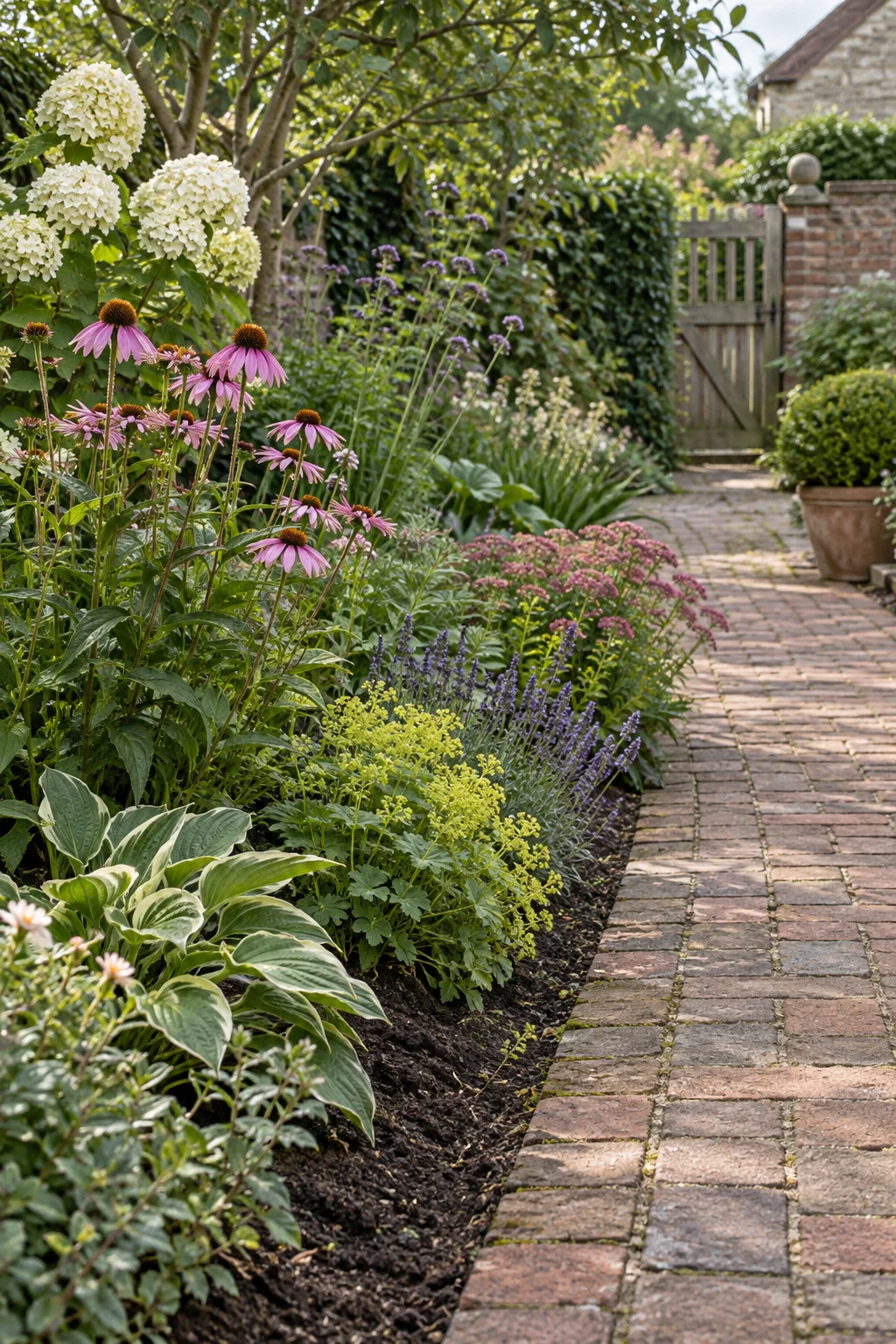
myAudience · AI-generated garden illustration · Original generated illustration; not documentary evidence
A garden on clay benefits from a path before another plant. A firm working edge lets you reach the border when the soil is too wet to walk on, while groups of compatible perennials give the ground a clear purpose. The path can be a practical line and a pleasing part of the picture.
British clay soils often retain moisture and nutrients but may be slow to drain. Choose plants for the real site, including light and winter wetness, rather than treating all clay as identical. A plant tolerant of heavier soil is not necessarily tolerant of prolonged flooding.
Avoid trampling or cultivating saturated ground. Follow soil-care guidance for appropriate organic matter and timing, and do not assume a thin decorative gravel layer will solve poor drainage. More serious drainage or excavation needs site assessment, services checks and suitable professional advice.
Start with a reachable section and leave room for mature growth. Watch which plants keep their shape through wet winters and dry summers. A border becomes easier to understand when access protects the soil and the planting responds to its strengths.