A Hydrangea Chosen for the Site
myAudience · AI-generated garden illustration · Original generated illustration; not documentary evidence
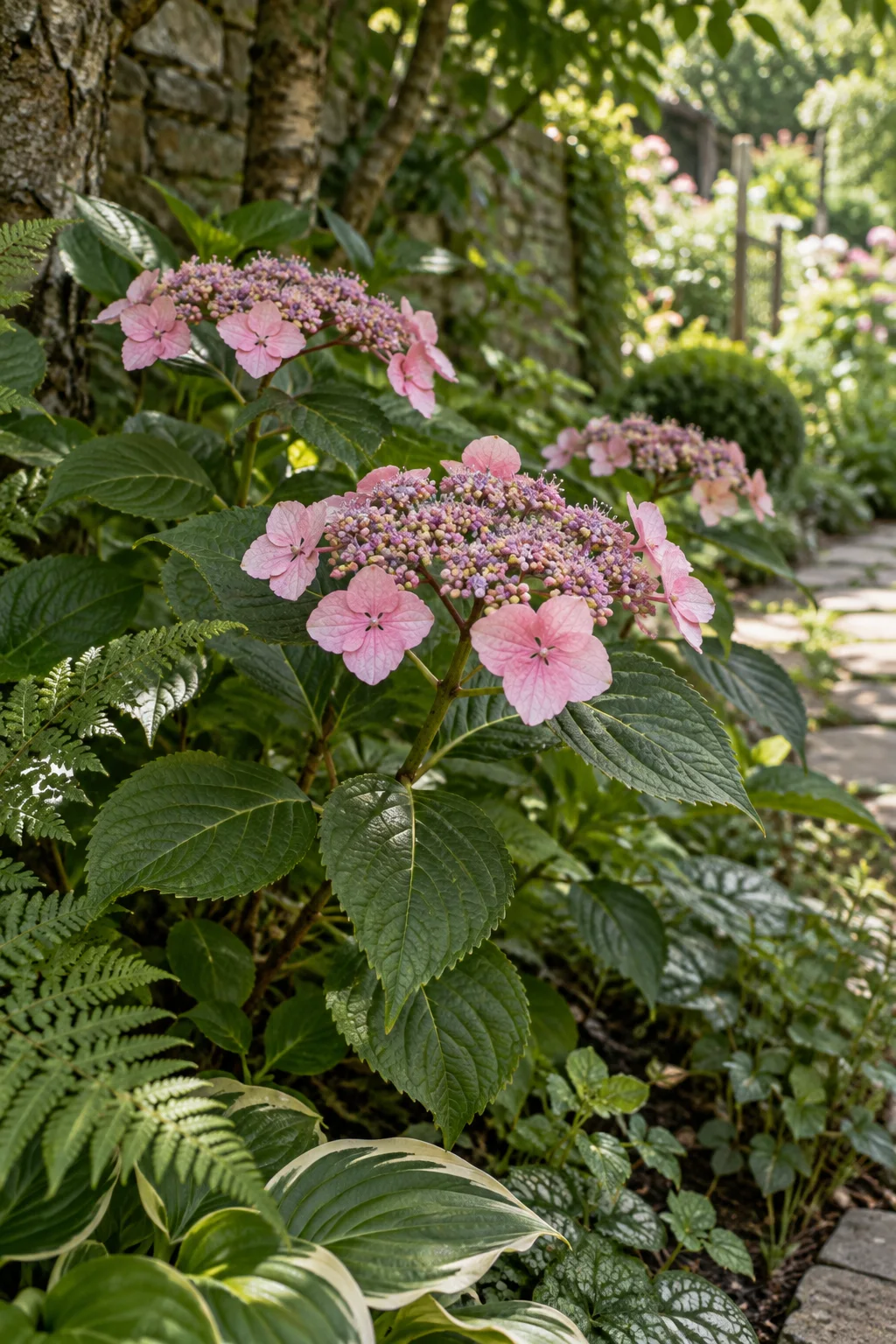
Hydrangeas offer more than one kind of flower picture. Compare lacecaps, mopheads and other shrubby forms with the space and conditions you have. Choose the plant’s mature outline before choosing a colour scheme around it.
The RHS British guide explains species differences, soil needs and pruning. Moisture, exposure and late frost affect performance, and hot dry sites may be unsuitable. Blue flower colour depends on particular plants and soil conditions, so do not promise a colour from the label alone.
Use the exact plant’s care guide and avoid improvised soil additives. Keep root-zone moisture appropriate without waterlogging, and allow access for inspection. Hydrangeas are ornamental and potentially harmful if eaten; place them with household and pet safety in mind.
Watch how the flowerhead changes rather than trying to keep it at one perfect stage. A suitable shrub can bring a generous seasonal shape, with its faded colours becoming part of the design.