Lifestyle and chronic illness
By UK GCSE Biology · independent study · myAudience
Original myAudience scientific illustration; not a documentary photograph or measured specimen. · Original generated project artwork; source concepts reviewed, no textbook figures copied.
Lifestyle and chronic illness
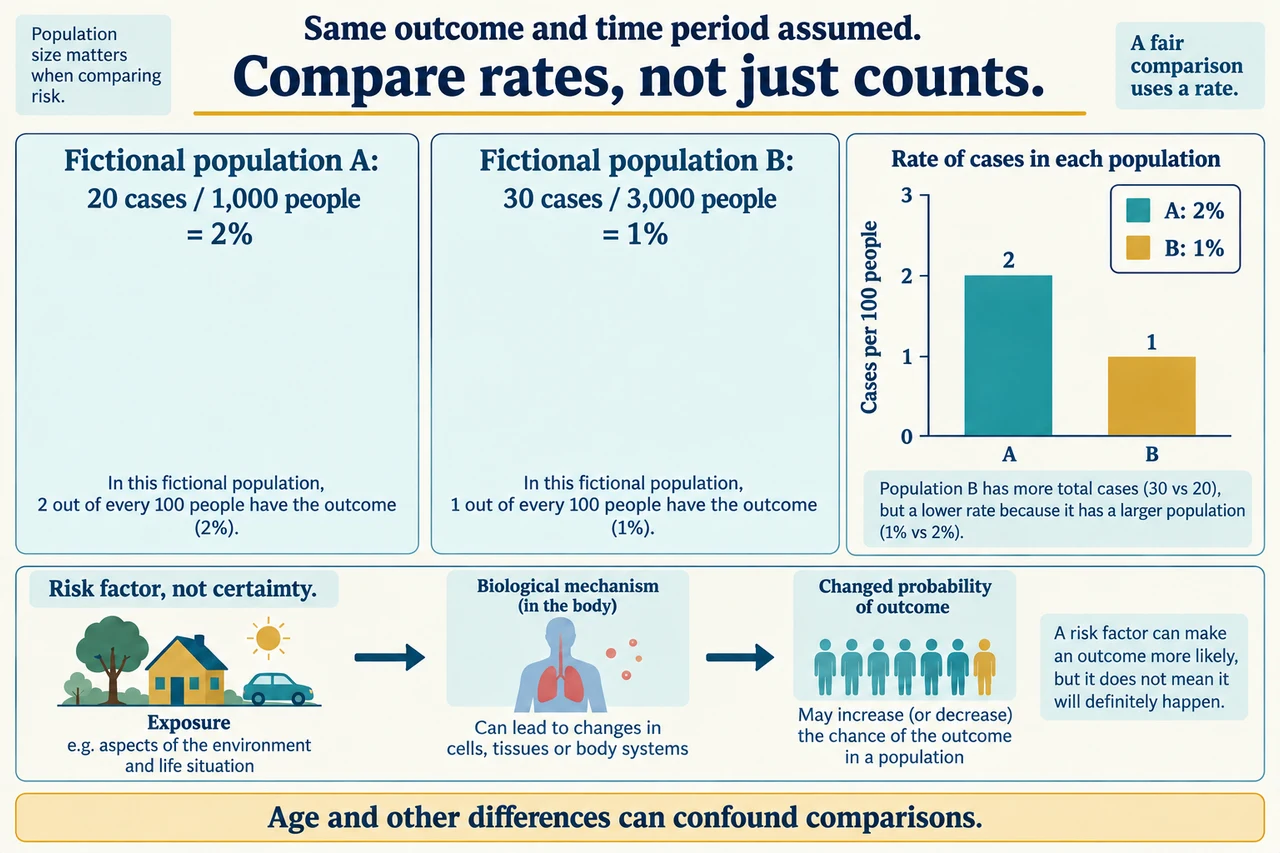
A risk factor changes the likelihood of a disease; it is not a guarantee that disease will occur. Smoking, alcohol exposure, physical activity and diet can affect different health outcomes through different mechanisms. Inherited variation and environmental conditions also matter.
A useful evaluation compares group sizes, exposure definitions and other differences between the groups. If two populations have different ages, their raw disease counts can be misleading. Several factors can combine, and a person can develop an illness without every listed risk factor. Explain uncertainty without presenting illness as a moral judgment or a simple personal failure.
Specific risk discussions should name the exposure and outcome. Smoking damages lung tissue and increases lung-cancer risk; alcohol can damage the liver and affect brain function. Diet, activity and smoking can influence cardiovascular risk, while obesity is a risk factor for Type 2 diabetes. Pregnancy introduces additional considerations for a developing baby. Effects depend on exposure and other factors, and illness has personal, community and financial consequences beyond a plotted percentage.
Worked example: Population A has 20 cases among 1000 people; B has 30 among 3000. Which rate is higher?
A has 20/ 1000=2%
B has 30/3000=1%
Answer: A has the higher rate despite fewer cases.
Check your understanding: Does a risk factor mean a disease is inevitable?
Answer: No.
Why: Risk describes probability across a population, not certainty for a particular person.