Illness caused by viruses
By UK GCSE Biology · independent study · myAudience
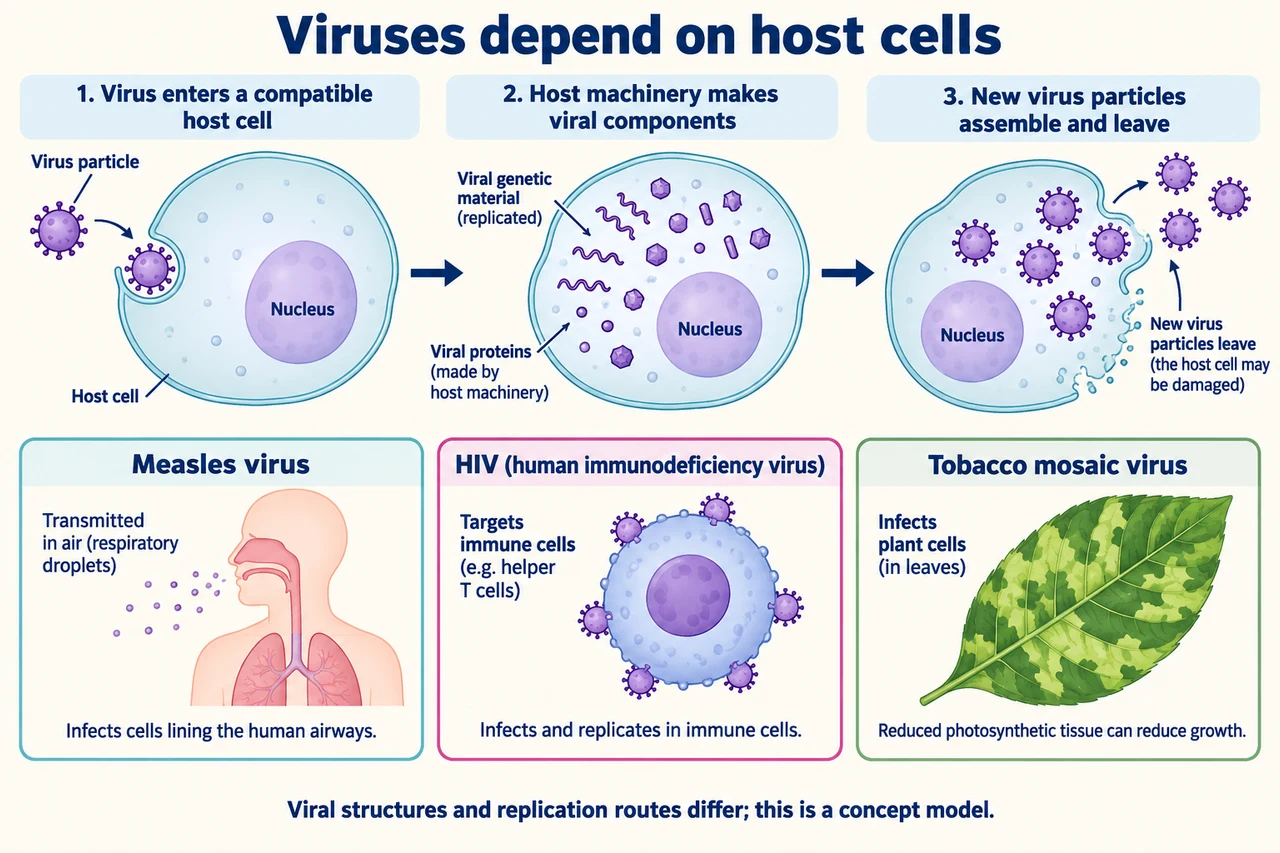
Original myAudience scientific illustration; not a documentary photograph or measured specimen. · Original generated project artwork; source concepts reviewed, no textbook figures copied.
Illness caused by viruses
Viruses contain genetic material but depend on compatible host cells for reproduction. Replication can damage cells and disrupt wider functions. Measles spreads through the air and can cause fever, rash and serious complications. HIV is transmitted through particular bodily fluids and targets immune cells; uncontrolled infection can leave a person vulnerable to other infections and some cancers.
Tobacco mosaic virus affects plants: patchy leaf damage can reduce photosynthetic capacity and therefore growth. This contrasts a damaged photosynthetic tissue with HIV’s damage to immune function. Antiretroviral medicines can control HIV, but bacterial antibiotics do not treat viruses. An explanation should connect the host, transmission route and affected tissue rather than give all viral diseases one symptom or treatment.
Worked example: Why would a bacterial cell-wall-targeting antibiotic not act on a virus?
The medicine targets a bacterial structure
A virus has no bacterial cell wall
Answer: That target is absent, so the mechanism does not address viral replication.
Check your understanding: Is tobacco mosaic virus a bacterial disease of plants?
Answer: No; it is viral.
Why: The pathogen type matters when explaining replication and approaches to control.