Illness caused by bacteria
By UK GCSE Biology · independent study · myAudience
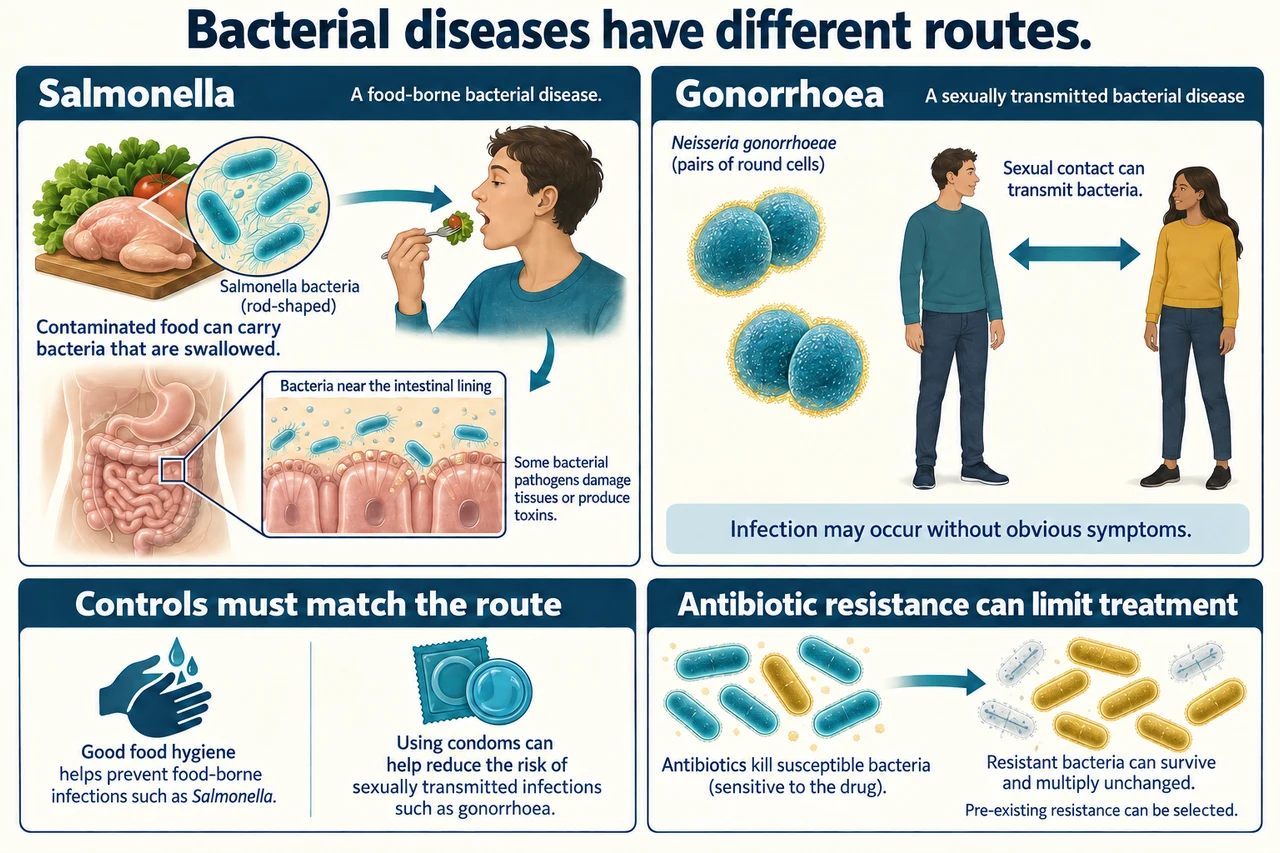
Original myAudience scientific illustration; not a documentary photograph or measured specimen. · Original generated project artwork; source concepts reviewed, no textbook figures copied.
Illness caused by bacteria
Some bacterial pathogens release toxins or damage host tissues. Salmonella infection is associated with contaminated food and can cause gastrointestinal illness. Gonorrhea is a bacterial sexually transmitted infection. These examples differ in route and affected tissues even though both involve bacteria.
Salmonella can be transmitted through contaminated food, while gonorrhea can spread through sexual contact and may involve antibiotic-resistant strains. Food hygiene and barrier methods address different transmission routes. Diagnosis and treatment require appropriate medical assessment; an educational example cannot establish the organism responsible for a particular person’s symptoms.
Salmonella can cause diarrhea, abdominal discomfort and fever after bacteria are swallowed, often through contaminated food. Gonorrhea can cause discharge and painful urination, but infection can also be present without obvious symptoms. Resistant strains illustrate why an old treatment cannot be assumed effective today. The teaching comparison is between pathogen and transmission mechanisms; real diagnosis requires evidence, not a symptom checklist.
Worked example: Why would safe food handling target Salmonella transmission rather than the main route of gonorrhea?
Identify the transmission routes
Salmonella can be foodborne, while gonorrhea is primarily transmitted through sexual contact
Answer: Control measures must match the route.
Check your understanding: Can bacterial disease involve toxins?
Answer: Yes.
Why: A pathogen can cause damage through substances it produces as well as through effects on infected tissues.