Illness caused by fungi
By UK GCSE Biology · independent study · myAudience
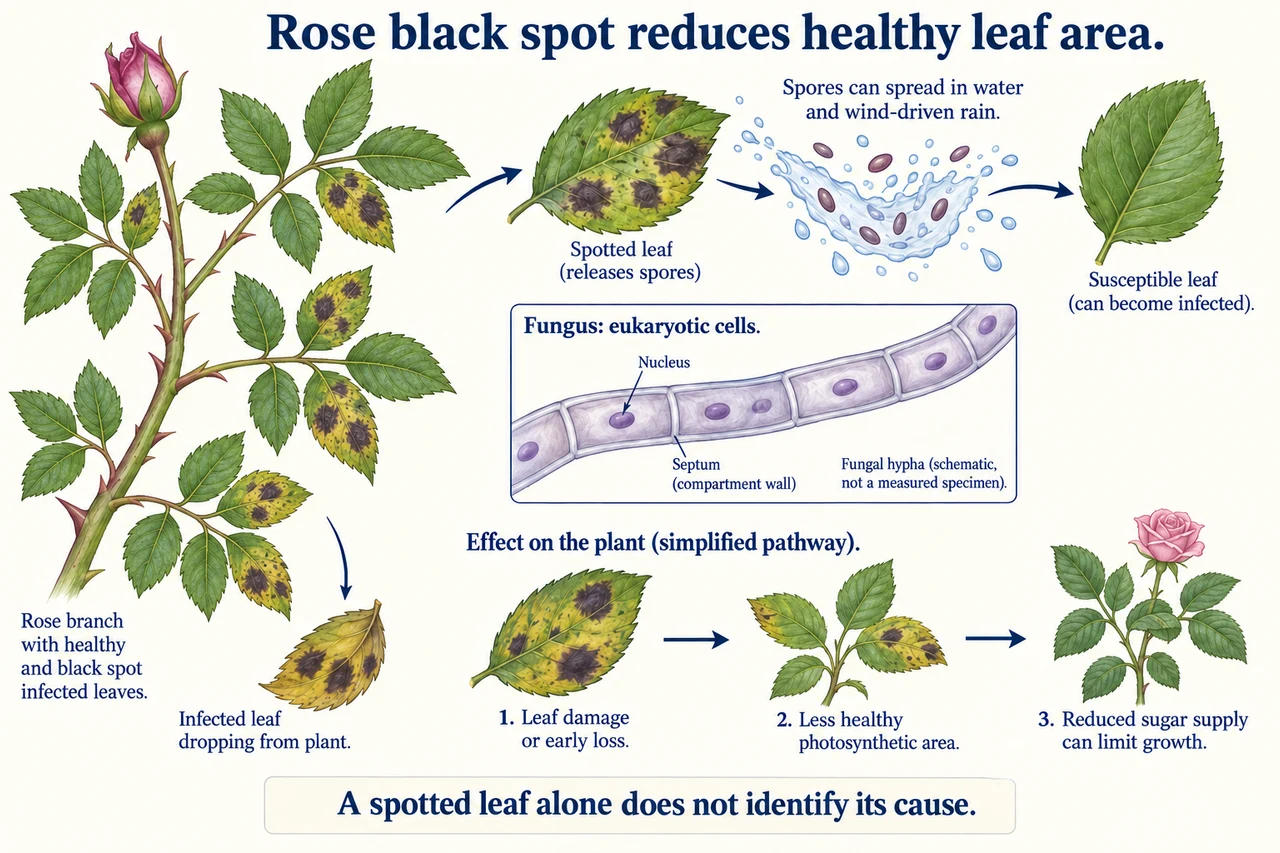
Original myAudience scientific illustration; not a documentary photograph or measured specimen. · Original generated project artwork; source concepts reviewed, no textbook figures copied.
Illness caused by fungi
Fungi have eukaryotic cells; some cause disease in plants or animals. Rose black spot spreads through spores associated with water or air movement. Leaves develop damage, may yellow and fall early, reducing both the area and time available for photosynthesis. That reduction helps explain poorer plant growth rather than implying that the fungus directly stops every biochemical reaction.
Removing infected material or an appropriate approved plant treatment can reduce exposure under suitable conditions. Product suitability and current approvals matter. A spotted leaf alone cannot identify the cause: nutrient deficiency, pests and other infections can produce overlapping signs. Compare the pattern and supporting evidence before naming a disease.
Worked example: How could loss of healthy leaves reduce a plant’s growth?
Leaves provide photosynthetic tissue
Less healthy leaf area can reduce sugar production
Answer: Reduced photosynthesis can limit resources for growth.
Check your understanding: Are fungi prokaryotes?
Answer: No; fungi are eukaryotic.
Why: Their cells have a nucleus rather than the organization typical of bacterial cells.