Preparing immunity through vaccines
By UK GCSE Biology · independent study · myAudience
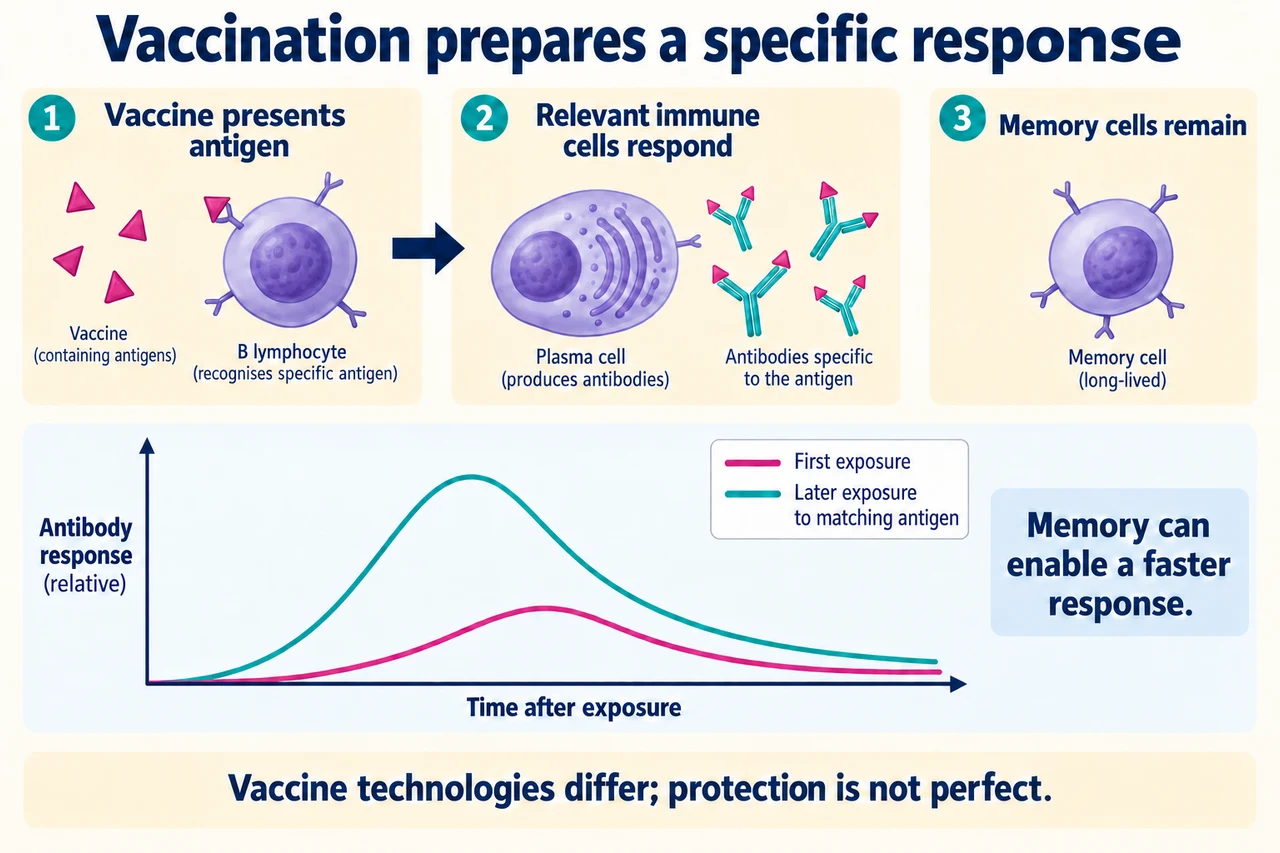
Original myAudience scientific illustration; not a documentary photograph or measured specimen. · Original generated project artwork; source concepts reviewed, no textbook figures copied.
Preparing immunity through vaccines
Vaccination presents antigens in an appropriate preparation without requiring the person to develop the disease itself. In the simplified GCSE model, dead or inactive pathogen material stimulates a specific immune response and memory; actual vaccine technologies differ. Memory can support a faster, more effective response on later exposure. A vaccine does not guarantee that every recipient avoids every infection.
When vaccination sufficiently reduces transmission, widespread uptake can also protect some people who cannot receive that vaccine. This population effect depends on the pathogen, vaccine and uptake. Distinguish protection against severe disease from prevention of all infection or transmission: these are different outcomes evaluated using evidence. Individual suitability and schedules require qualified health guidance.
Worked example: Why might a second encounter produce antibodies more rapidly?
The first exposure can establish immune memory
Relevant immune cells can respond more quickly later
Answer: The secondary response can be faster than the initial response.
Check your understanding: Does vaccination work by directly acting as an antibiotic?
Answer: No.
Why: It prepares immune responses rather than using the same mechanism as a bacterial-targeting drug.