Releasing energy with and without oxygen
By UK GCSE Biology · independent study · myAudience
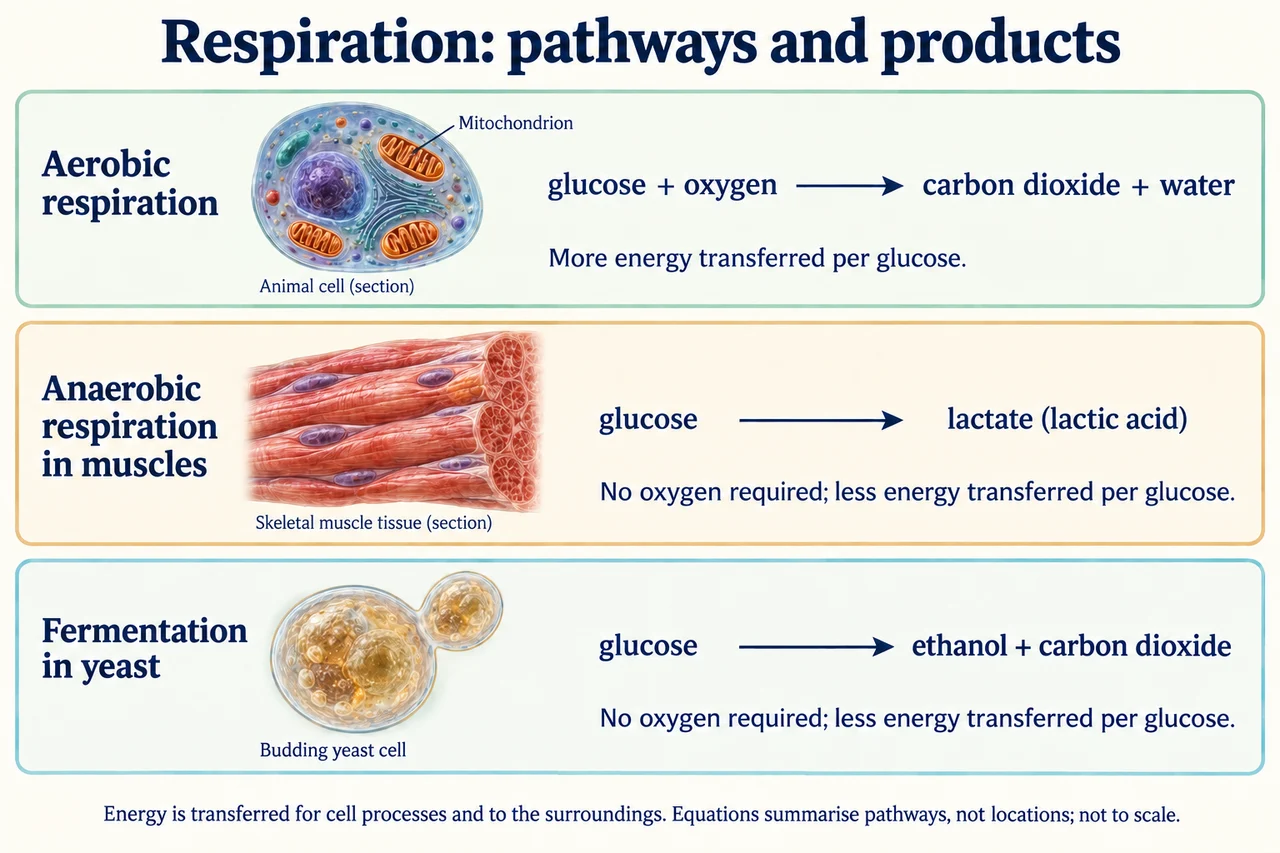
Original AI-generated myAudience scientific concept illustration; not a micrograph or measured specimen. · Original generated project artwork; no source textbook figures reused. Reference links support subject review, not a copied-art license.
Releasing energy with and without oxygen
Aerobic respiration transfers energy from glucose using oxygen; the balanced model is C₆H₁₂O₆ + 6O₂ → 6CO₂ + 6H₂O. It is described at GCSE as exothermic. Some transferred energy supports movement, transport and synthesis, while some reaches the surroundings. Cells transform and transfer energy rather than creating it from nothing.
Without sufficient oxygen, the muscle model uses incomplete glucose breakdown producing lactate, commonly called lactic acid at this level, with less usable energy per glucose than aerobic respiration. Yeast fermentation instead produces ethanol and carbon dioxide. Identify the organism and products before choosing an equation; oxygen must not be added to a route specifically described as anaerobic.
Worked example: Why can yeast make dough rise under suitable fermentation conditions?
Yeast metabolizes sugars
Fermentation produces carbon dioxide
Answer: Gas trapped in the dough increases its volume.
Check your understanding: Does anaerobic respiration in yeast produce the same products as in human muscle?
Answer: No.
Why: Yeast produces ethanol and carbon dioxide; muscle anaerobic metabolism produces lactate in this GCSE comparison.