Biology of physical exertion
By UK GCSE Biology · independent study · myAudience
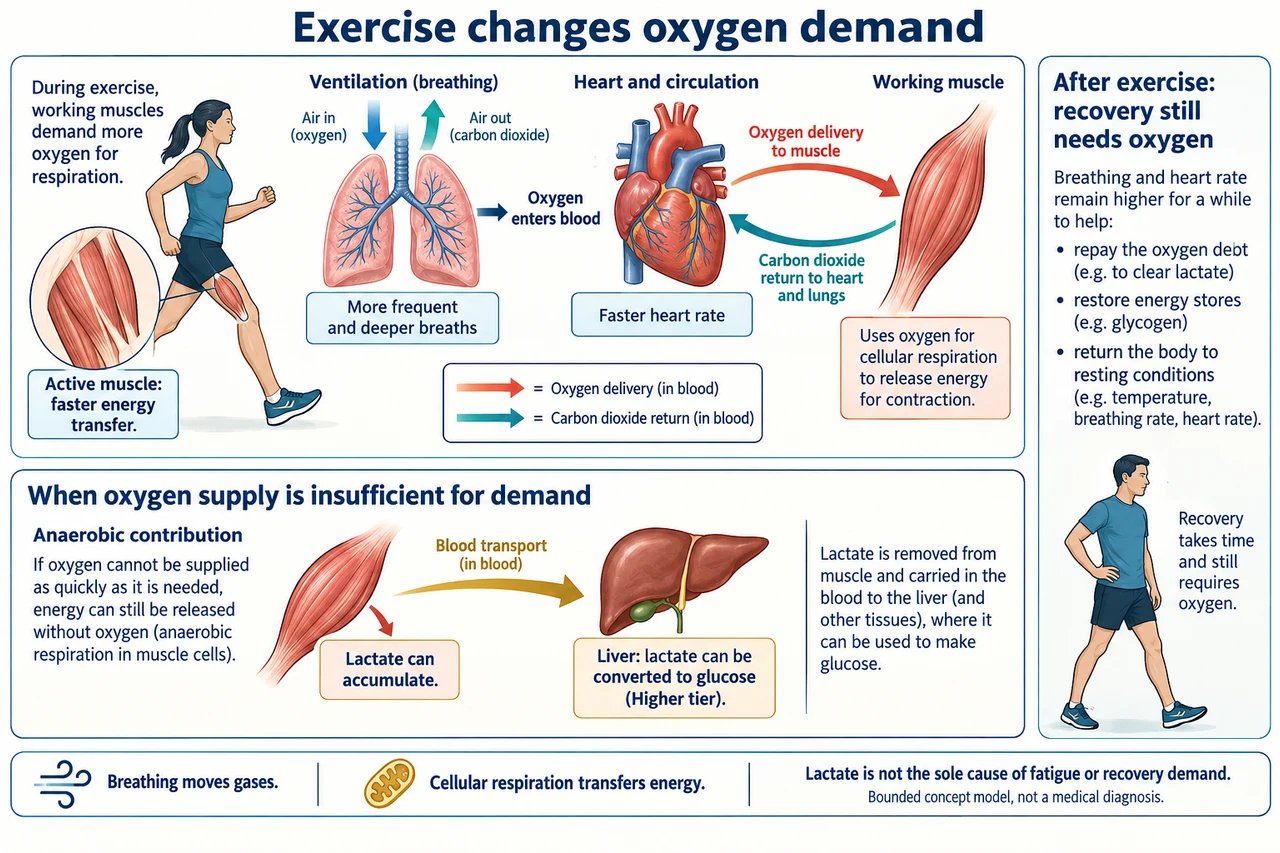
Original myAudience scientific illustration; not a documentary photograph or measured specimen. · Original generated project artwork; source concepts reviewed, no textbook figures copied.
Biology of physical exertion
During exercise, active muscle needs faster energy transfer. Heart rate, breathing rate and breathing depth can increase, supporting oxygen delivery and removal of carbon dioxide. If demand outpaces oxygen supply, anaerobic metabolism contributes and lactate can accumulate.
After intense exertion, processes that deal with lactate and restore conditions contribute to continued oxygen demand. A measured breathing rate is one indicator, not an exact measure of all cellular respiration. Compare exercise intensity, duration and recovery time when interpreting data, and do not infer a medical diagnosis from one classroom observation.
A faster heart pumps more frequently, while deeper and faster breathing can increase ventilation. These responses help meet increased demand rather than creating energy. GCSE uses the term oxygen debt for extra oxygen demand after strenuous exercise. Higher-tier link: lactate carried to the liver can be converted to glucose through energy-requiring reactions. Lactate processing is one recovery demand; elevated breathing alone cannot quantify how much lactate was produced or show that a person is unfit.
Worked example: Why can breathing remain elevated briefly after exercise ends?
The body still has recovery demands
Oxygen supports restoration of normal conditions
Answer: Demand does not vanish at the instant exercise stops.
Check your understanding: Is faster breathing itself cellular respiration?
Answer: No.
Why: Breathing supplies and removes gases; chemical energy transfer occurs within cells.