Keeping internal conditions steady
By UK GCSE Biology · independent study · myAudience
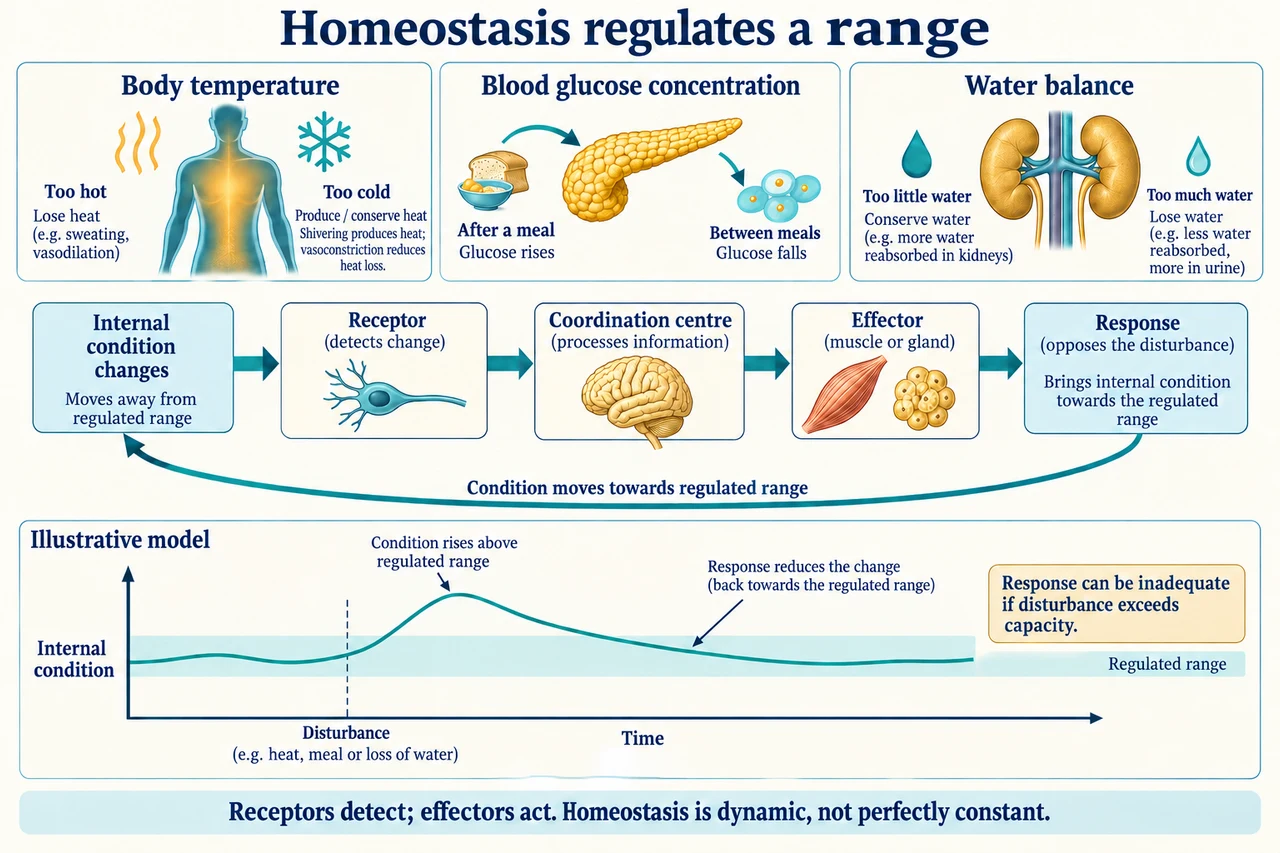
Original myAudience scientific illustration; not a documentary photograph or measured specimen. · Original generated project artwork; source concepts reviewed, no textbook figures copied.
Keeping internal conditions steady
Homeostasis regulates internal conditions within ranges suitable for cell function. Examples include blood glucose concentration, water balance and temperature. A receptor detects a change, a coordination centre processes information, and effectors produce a response.
Blood glucose, body temperature and water balance are regulated because cells function within suitable conditions. Homeostasis does not mean the body never changes: exercise, food intake and environmental changes create disturbances. A good explanation follows the disturbance, detection and corrective action rather than claiming that one organ maintains every internal variable unchanged.
The regulated value is the variable being controlled, not necessarily a single exact number. After a disturbance, receptors detect information about conditions; a coordination centre organizes signals, and effectors alter the variable. A response can fail to restore conditions if the disturbance is too large or the control system is impaired. Calling a response homeostatic therefore requires explaining which internal condition it helps regulate, not simply saying that the body reacted.
Worked example: Temperature rises above the usual regulated range. What kind of response would restore it?
Identify the upward disturbance
A corrective response should increase heat loss or reduce heat gain
Answer: A response opposing the rise supports homeostasis.
Check your understanding: Are receptors and effectors the same role?
Answer: No.
Why: Receptors detect change; effectors carry out a response.