Regulating sugar in blood
By UK GCSE Biology · independent study · myAudience
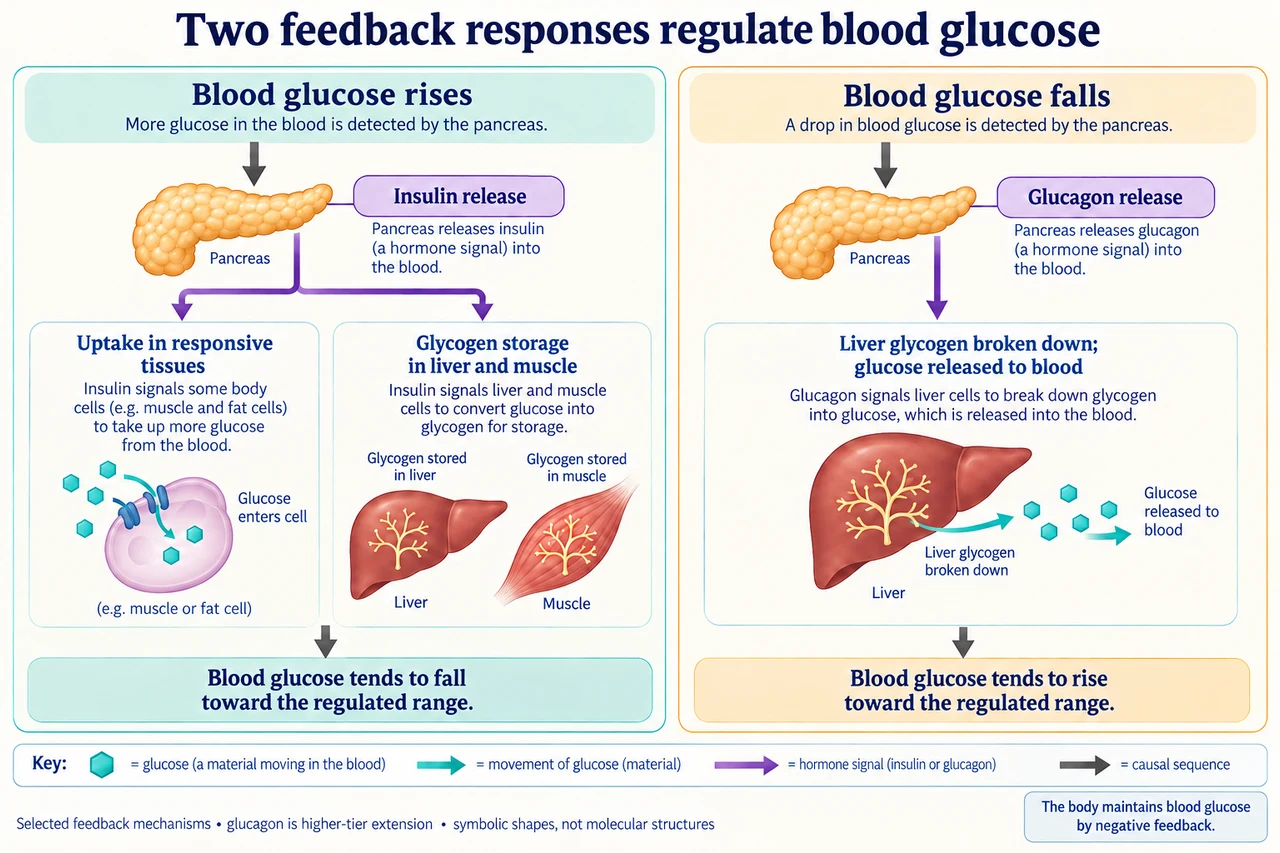
Original myAudience scientific illustration; not a documentary photograph or measured specimen. · Original generated project artwork; source concepts reviewed, no textbook figures copied.
Regulating sugar in blood
Insulin from the pancreas influences glucose uptake in appropriate tissues and storage as glycogen, tending to reduce raised blood glucose. Insulin is a hormone; glycogen is a carbohydrate store. Higher-tier extension: glucagon-related liver responses increase glucose availability when blood glucose falls. A feedback explanation names the initial change and how the response opposes it.
Type 1 diabetes involves inadequate insulin production, commonly following immune damage to insulin-producing cells. Type 2 commonly includes reduced responsiveness and may also involve impaired secretion. These are distinct biological mechanisms, not explanations based on blame. A graph should state time and concentration units; monitoring, diagnosis and individual treatment require qualified healthcare assessment.
Worked example: After a meal, a modeled blood glucose concentration rises. Predict the insulin-related response.
Identify glucose as above the regulated range
Increased insulin action supports uptake and storage
Answer: Glucose concentration can move back toward its regulated range.
Check your understanding: Is insulin itself glycogen?
Answer: No.
Why: Insulin is a hormone; glycogen is a stored carbohydrate affected by hormonal regulation.