Preventing pregnancy through different approaches
By UK GCSE Biology · independent study · myAudience
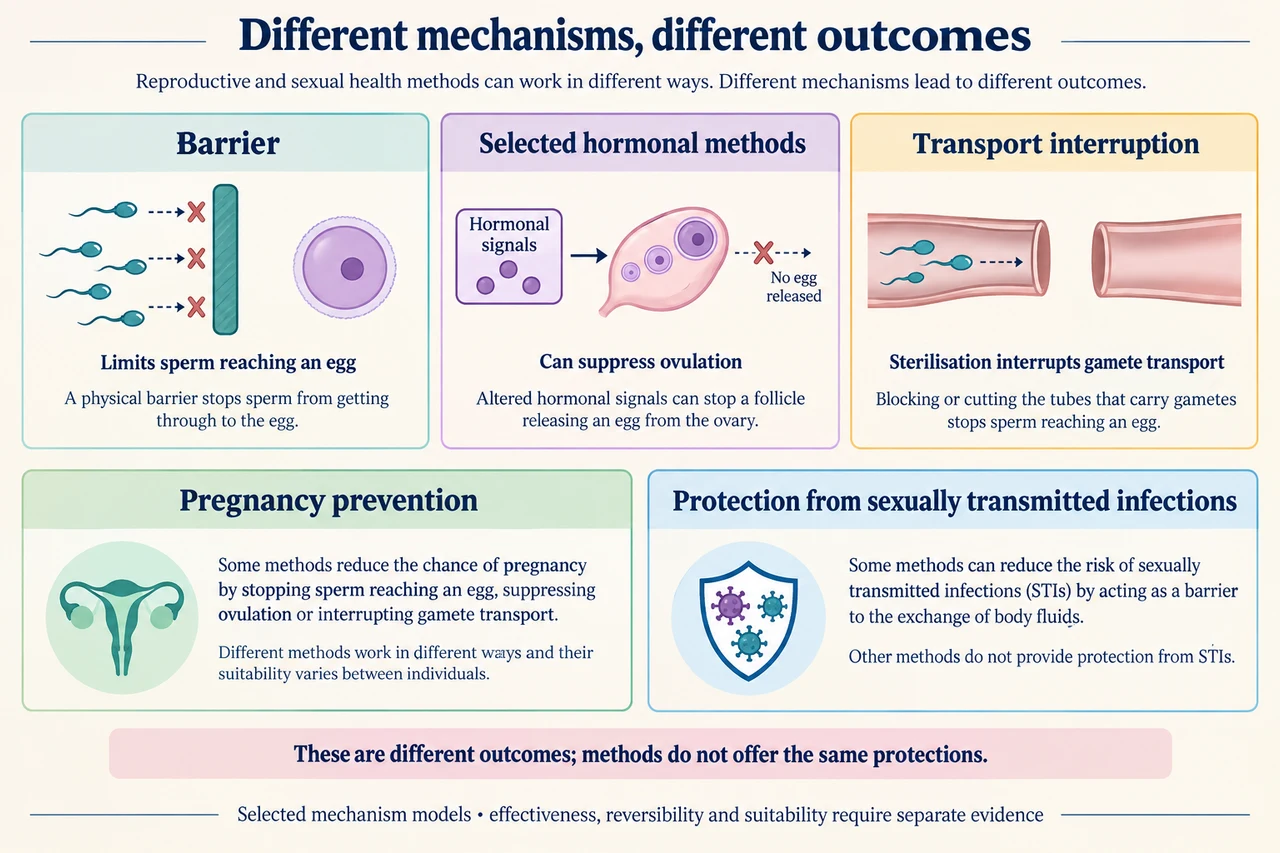
Original myAudience scientific illustration; not a documentary photograph or measured specimen. · Original generated project artwork; source concepts reviewed, no textbook figures copied.
Preventing pregnancy through different approaches
Contraceptive methods act at different stages. Condoms form a barrier; sterilisation interrupts gamete transport pathways. Hormonal approaches change signals or conditions involved in reproduction, including ovulation. Intrauterine methods act locally through mechanisms that differ by device. Spermicides impair sperm rather than necessarily stopping an ovary releasing an egg.
Compare actual-use effectiveness, reversibility, infection protection, suitability and preferences as separate criteria. A variable ovulation time limits a calendar prediction. Preventing pregnancy does not automatically provide protection from sexually transmitted infections. This mechanism lesson cannot select an appropriate method for an individual or check contraindications; those decisions require reliable clinical guidance.
Worked example: Why are pregnancy prevention and infection prevention separate outcomes when comparing methods?
Pregnancy depends on reproduction
Infection depends on pathogen transmission
Answer: A method can affect one outcome without providing the same protection against the other.
Check your understanding: Do all contraceptives work by preventing ovulation?
Answer: No.
Why: Barrier, device-based and surgical approaches use other mechanisms.