Applying plant growth signals
By UK GCSE Biology · independent study · myAudience
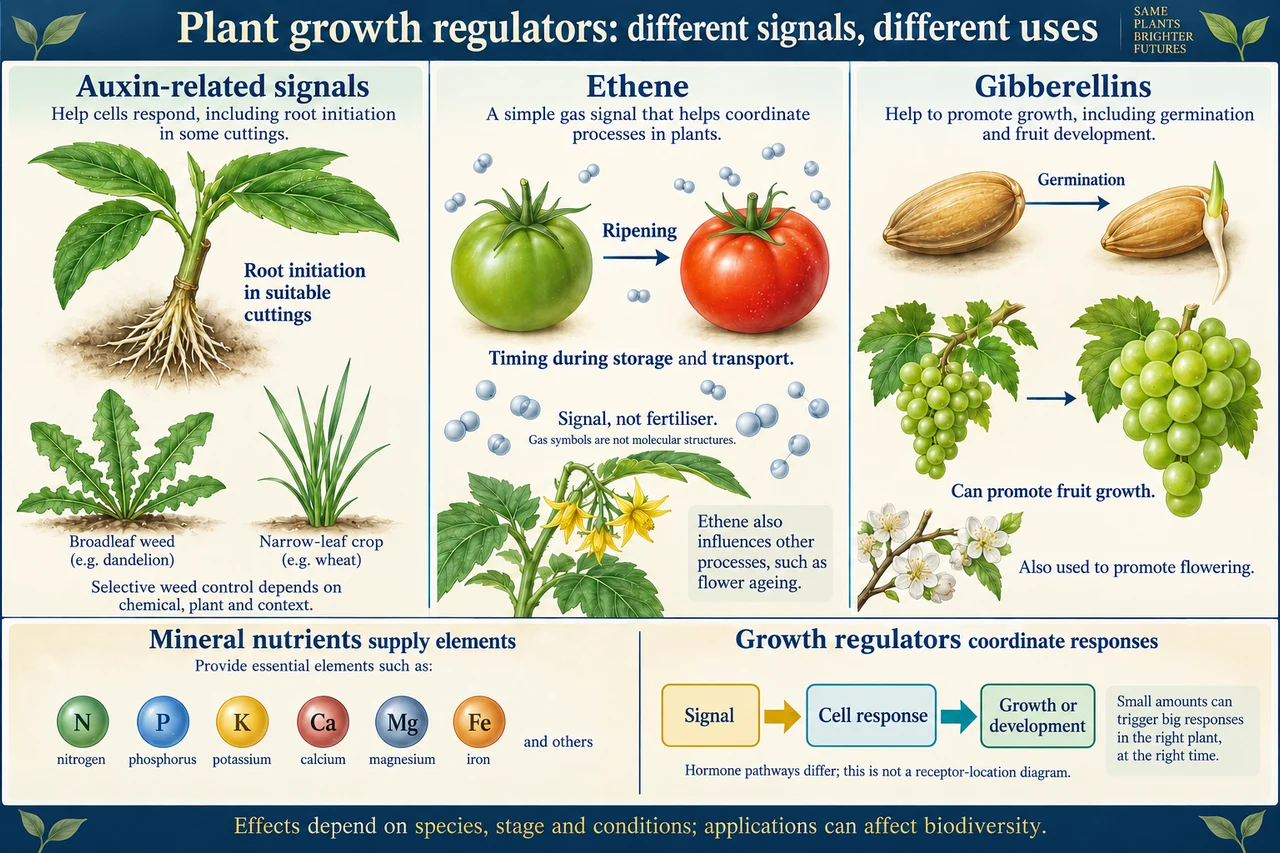
Original myAudience scientific illustration; not a documentary photograph or measured specimen. · Original generated project artwork; source concepts reviewed, no textbook figures copied.
Applying plant growth signals
Higher-tier extension: auxin-related chemicals can support roots in cuttings and selectively affect some weeds. Ethene coordinates fruit ripening, allowing timing to be managed for sale. Gibberellins can promote germination, flowering and fruit growth in suitable applications. Link each use to the biological response instead of describing every regulator as an interchangeable plant food.
Mineral fertiliser supplies elements, whereas a growth regulator changes signalling. Selective effects depend on plant responses, chemical and context; useful commercial outcomes do not establish that every application is risk-free. Approved products, environmental effects and handling requirements need separate evaluation. This lesson explains mechanisms without providing home dosing instructions.
Worked example: Why might a rooting preparation help a suitable cutting?
The aim is development of new roots
Auxin-related signals can support root initiation under appropriate conditions
Answer: The application targets a developmental response.
Check your understanding: Are plant hormones simply mineral nutrients?
Answer: No.
Why: They coordinate responses, whereas mineral nutrients supply elements needed to build molecules.