Bacteria surviving antibiotic exposure
By UK GCSE Biology · independent study · myAudience
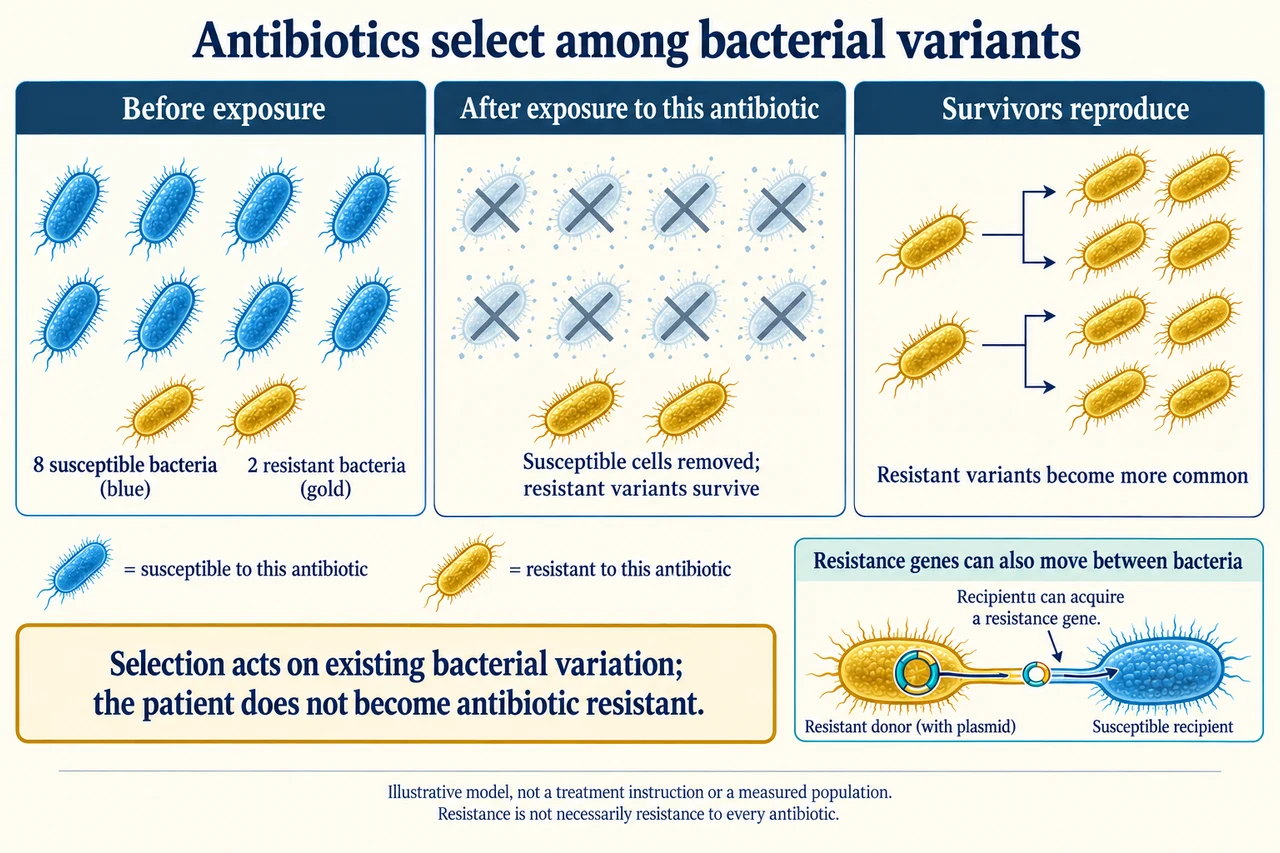
Original myAudience scientific illustration; not a documentary photograph or measured specimen. · Original generated project artwork; source concepts reviewed, no textbook figures copied.
Bacteria surviving antibiotic exposure
Antibiotic resistance can arise through genetic variation in bacteria. An antibiotic may kill susceptible cells while resistant cells survive and reproduce, increasing the resistant fraction. Genes can also move between bacteria, adding another route for resistance to spread.
Reducing unnecessary antibiotic use can reduce selection pressure, while hygiene can limit spread of resistant bacteria. The biological explanation still does not identify the appropriate medicine for an individual infection. Trace variation, selection, reproduction and transmission separately, and recognize that clinical decisions also require diagnosis, susceptibility evidence and patient-specific considerations.
Selection changes which bacterial variants reproduce after exposure. Susceptible cells may be removed while resistant survivors divide and transmit their inherited information; resistance genes can also pass between bacteria. Treatment failure can therefore involve changed pathogen populations, not a human body becoming resistant. Infection control limits spread, while appropriate prescribing limits unnecessary selection. This mechanism explains a population process without instructing an individual to start, stop or change prescribed medication.
Worked example: An antibiotic removes susceptible bacteria but some resistant cells survive. Predict the population afterward.
Survivors include resistant variants
These cells can reproduce
Answer: Resistance can become more common in subsequent generations.
Check your understanding: Is the patient’s body what becomes antibiotic resistant?
Answer: No.
Why: Resistance concerns the bacteria and their responses to the antibiotic.