Living influences on ecosystems
By UK GCSE Biology · independent study · myAudience
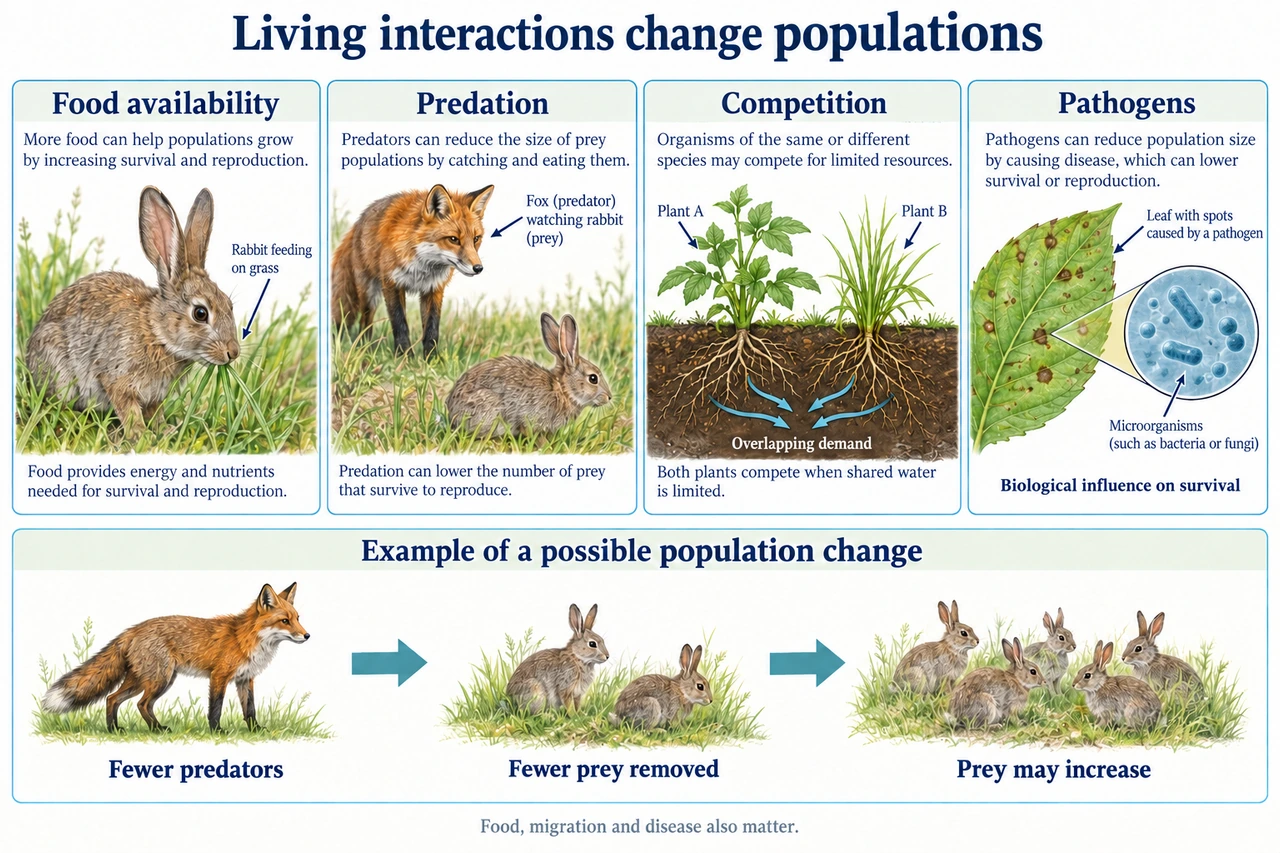
Original myAudience scientific illustration; not a documentary photograph or measured specimen. · Original generated project artwork; no textbook figure copied.
Living influences on ecosystems
Biotic factors arise from living organisms, such as availability of food, competition, predators and pathogens. A population can change when a new competitor arrives or when its food supply declines. Effects can be indirect through a food web rather than involving direct contact.
Changes can spread through several relationships. Removing a competitor can alter access to resources, while a new pathogen can reduce survival. Compare population measurements over a suitable period and consider alternative explanations. A single association between two populations does not establish which caused the other to change.
Predator and prey populations can influence one another, but food supply, migration and disease also contribute. A prey rise may be followed by increased predator reproduction, and later greater predation may reduce prey. This can create a lag between peaks; it does not require every population to follow a perfectly repeated cycle. A disease-causing agent is a biological influence even when the pathogen is a virus rather than a cellular organism.
Worked example: A predator declines and its prey increases. Suggest a possible mechanism.
Predation is a biotic influence
Fewer prey may be removed
Answer: Reduced predation could allow the prey population to increase if other conditions permit.
Check your understanding: Can a pathogen be a biotic influence?
Answer: Yes.
Why: It is a biological influence on host survival; pathogens include cellular organisms and viruses.