Ecosystems under changing conditions
By UK GCSE Biology · independent study · myAudience
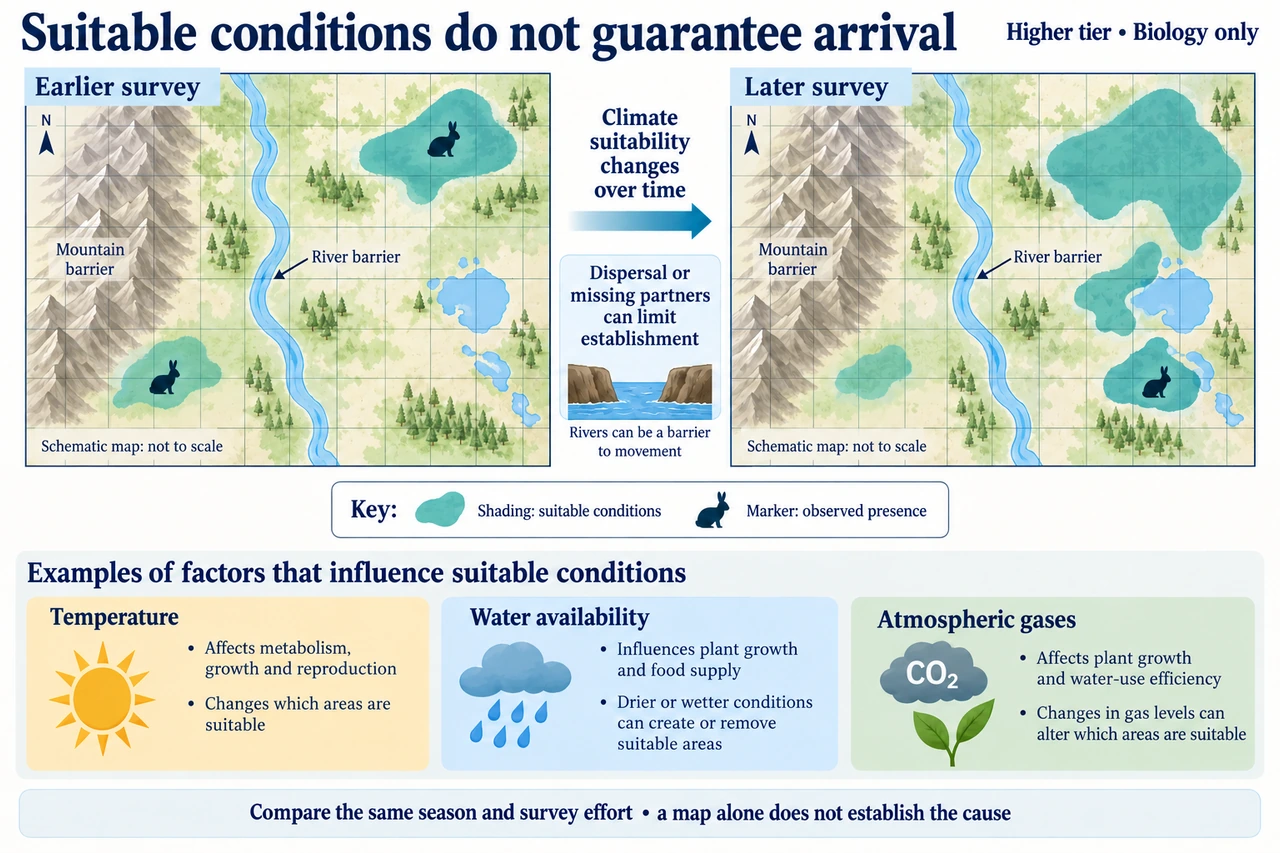
Original myAudience scientific illustration; not a documentary photograph or measured specimen. · Original generated project artwork; no textbook figure copied.
Ecosystems under changing conditions
Environmental conditions can change the distribution of species. Temperature, water availability and interacting populations may shift where organisms can survive and reproduce. An observed range change is evidence to investigate, not proof that every population will respond identically.
Seasonal changes and human actions can also alter distribution. Compare observations from similar methods and times of year before attributing a difference to a long-term cause. A new local record can indicate spread, better observation or changed reporting. Evidence across time and suitable geographic coverage help distinguish these possibilities.
Higher-tier, Biology-only extension: changes in atmospheric composition, rainfall and temperature can shift where suitable conditions occur. A species may still fail to colonise because dispersal is limited or an interacting species is absent. Compare the same seasonal period and survey effort across years to separate a long-term range shift from seasonal movement or improved observation. A measured boundary change is evidence, while the reason remains a hypothesis until supported.
Worked example: Why might suitable temperature alone fail to let a species establish in a new area?
It also needs resources and successful reproduction
Barriers or missing partners may limit establishment
Answer: Temperature is one requirement among several.
Check your understanding: Does a distribution map show the cause of a range change by itself?
Answer: No.
Why: The spatial pattern needs additional evidence about environmental and biological influences.