Handling human waste
By UK GCSE Biology · independent study · myAudience
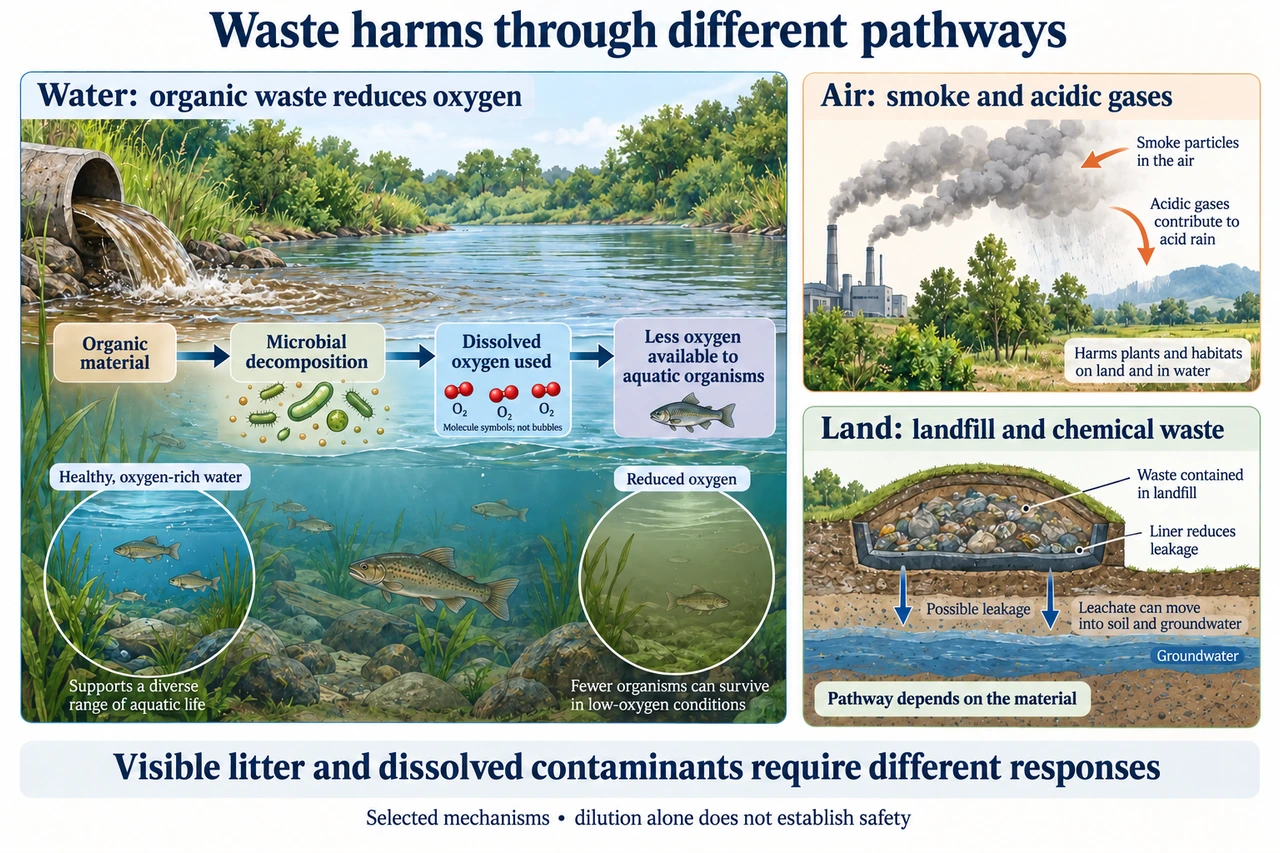
Original myAudience scientific illustration; not a documentary photograph or measured specimen. · Original generated project artwork; no textbook figure copied.
Handling human waste
Waste can affect water, air and land through different mechanisms. Organic waste entering water can support microbial decomposition, which may consume oxygen and affect aquatic organisms. Other pollutants can be directly toxic or persist in the environment.
Population size and consumption influence the amount of waste generated, while treatment, reuse and disposal affect its destination. A solution should be evaluated against the specific waste stream. Removing visible litter does not necessarily remove dissolved contaminants, and dilution alone does not prove that an exposure is harmless.
Sewage and fertiliser can alter nutrient supply in water; some pollutants are directly toxic, while smoke and acidic gases affect air and ecosystems through other routes. Landfill and chemical disposal can create land and water problems. Treatment must match the material and pathway: collecting litter addresses visible waste but may leave dissolved contaminants. Increased consumption affects waste production, so prevention and recovery matter alongside final disposal.
Worked example: How could untreated organic waste lower oxygen available to fish?
Microorganisms decompose the organic material
Aerobic activity uses dissolved oxygen
Answer: Oxygen availability for fish can decline.
Check your understanding: Must a waste be visibly poisonous to harm an ecosystem?
Answer: No.
Why: Its indirect effects, such as oxygen depletion, can also affect organisms.