Using organisms in food production
By UK GCSE Biology · independent study · myAudience
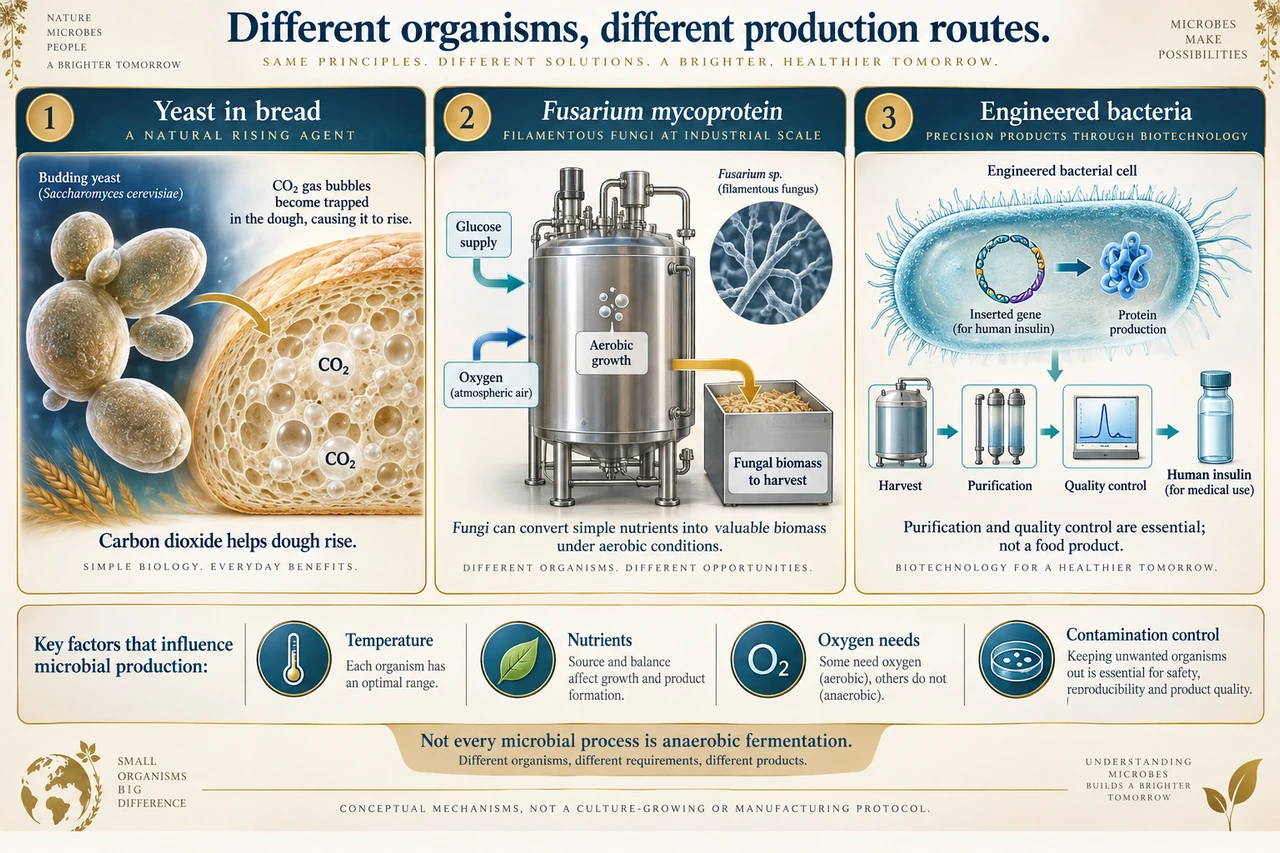
Original myAudience scientific illustration; not a documentary photograph or measured specimen. · Original generated project artwork; no textbook figure copied.
Using organisms in food production
Yeast fermentation produces carbon dioxide useful in bread-making. Controlled aerobic growth of the fungus Fusarium can produce mycoprotein with a suitable carbohydrate supply. These routes use different organisms and oxygen conditions. Temperature, nutrient supply and contamination control influence production; industrial food safety is not established by observing growth at home.
Genetic engineering can make microorganisms produce particular proteins, including insulin, while some modified crops aim to improve yield or nutritional content. Compare the specified product, biological process, inputs and measured outcome with an appropriate alternative. A larger output alone does not establish overall efficiency or safety. This conceptual explanation is not a culture-growing or manufacturing protocol.
Worked example: Why does an aerobic microbial production system need a suitable oxygen supply?
The organism’s aerobic respiration requires oxygen
Respiration supports energy transfer for growth and production
Answer: Insufficient oxygen can limit the process.
Check your understanding: Are all microbial food processes anaerobic fermentation?
Answer: No.
Why: Different organisms and products require different metabolic conditions.