From amino-acid sequence to protein shape
By UK A Level Biology · independent study · myAudience
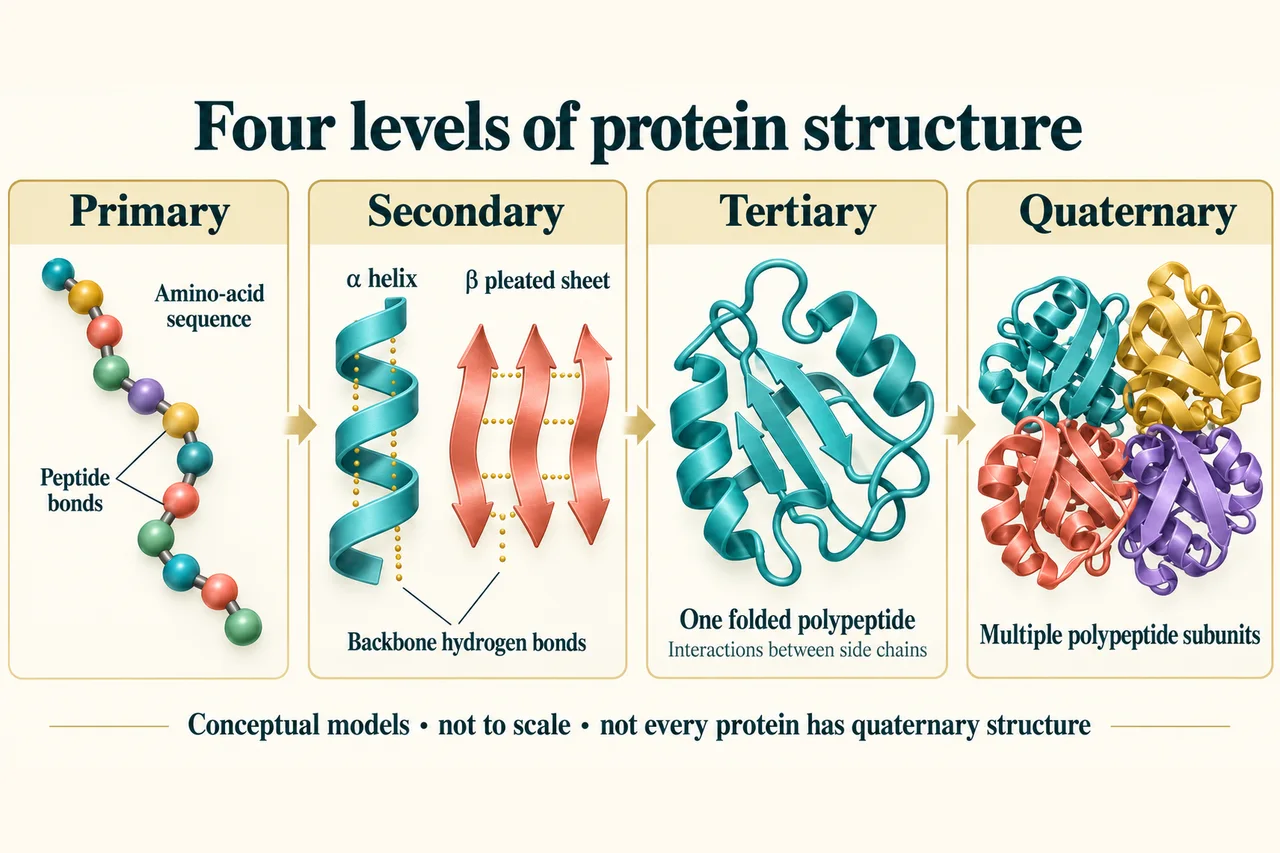
Original AI-generated myAudience scientific concept illustration; not a micrograph or measured specimen. · Original generated project artwork; no source textbook figures reused. Reference links support subject review, not a copied-art license.
From amino-acid sequence to protein shape
A protein starts with a sequence of amino acids joined by peptide bonds. Local folding produces structures such as helices and sheets. Further folding depends on interactions between side chains, including ionic interactions, hydrogen bonds and, where present, disulfide links.
The shape affects what a protein can bind or do. Some functional proteins contain several polypeptide chains. Denaturation changes the arrangement supporting the functional shape; it does not normally mean every peptide bond has been broken.
Primary structure is the amino-acid sequence. Secondary structure involves recurring backbone arrangements, while tertiary structure describes the overall folded chain. A useful explanation names the relevant interactions and where they occur; simply saying more bonds does not distinguish a peptide backbone from interactions stabilising a fold.
Haemoglobin illustrates why multiple chains can matter: interactions between its subunits contribute to cooperative oxygen binding. A fibrous protein illustrates a different relationship between shape and task. Do not expect every protein to function through a small binding pocket or to respond identically when heated.
An amino acid has amino and carboxyl groups and a variable side group; side-group chemistry helps explain how a chain folds. Peptide bonds define the backbone, hydrogen bonds can stabilise secondary structures, and side-group interactions help determine tertiary shape. Disulfide bridges are covalent links where suitable sulfur-containing residues occur. A Biuret response supports the presence of peptide-containing material under the test conditions but does not identify a protein’s complete sequence or function.
Worked example: A protein keeps its amino-acid sequence after heating but loses activity. What changed?
The sequence still describes its primary structure.
Loss of activity suggests disruption of the functional folded arrangement.
Answer: Its higher-level shape changed without necessarily breaking the peptide backbone.
Check your understanding: Does every protein have quaternary structure?
Answer: No.
Why: Quaternary structure describes association of multiple polypeptide chains; a single-chain protein need not have it.