← Explore learning guidesIndependent learning guide
UK GCSE Chemistry · independent study
Independent myAudience subject study using references for England. Published readings cover selected topics; full curriculum, assessment and practical coverage are not verified. No awarding-body affiliation, endorsement, qualification or grade guarantee is offered. Check the source specification and your centre for the requirements of your chosen course.
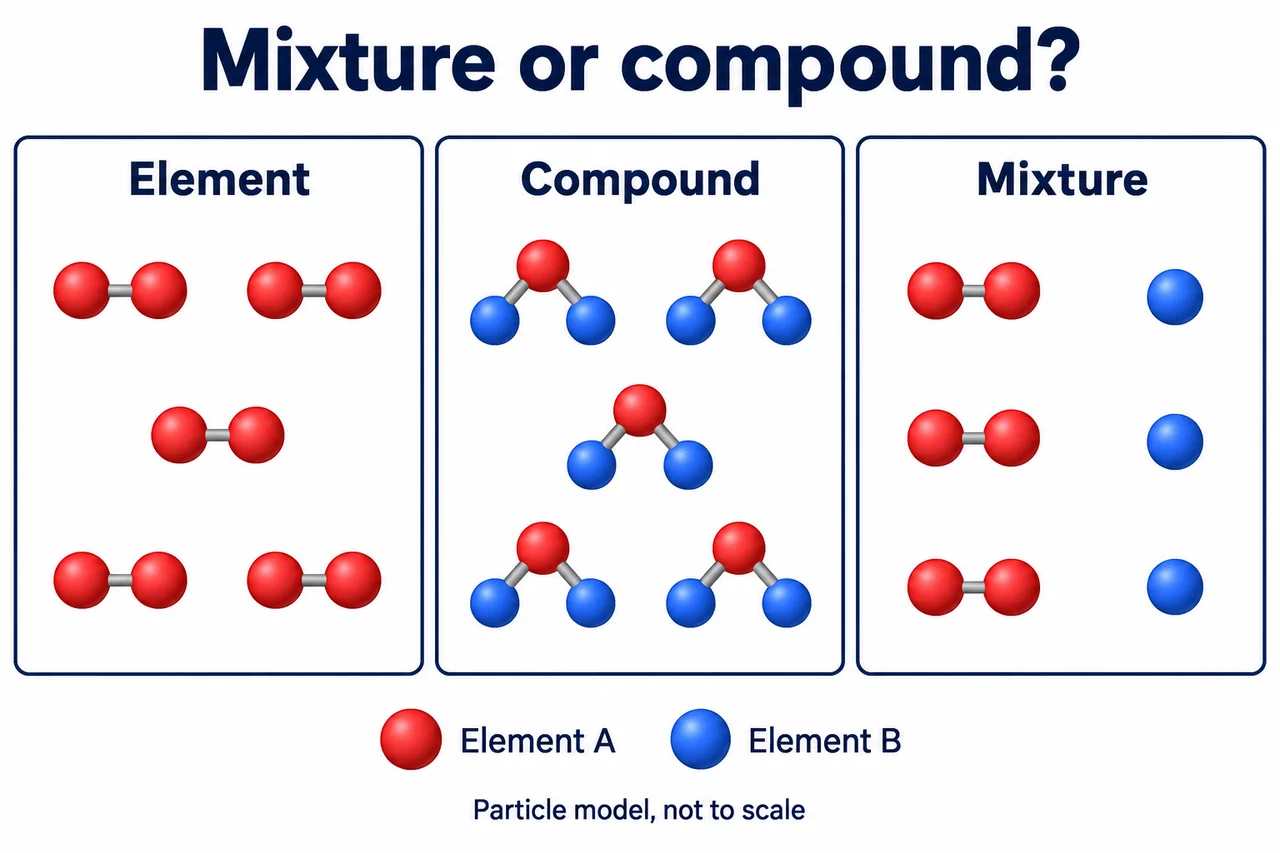
Atoms, elements and compounds
Separating mixtures
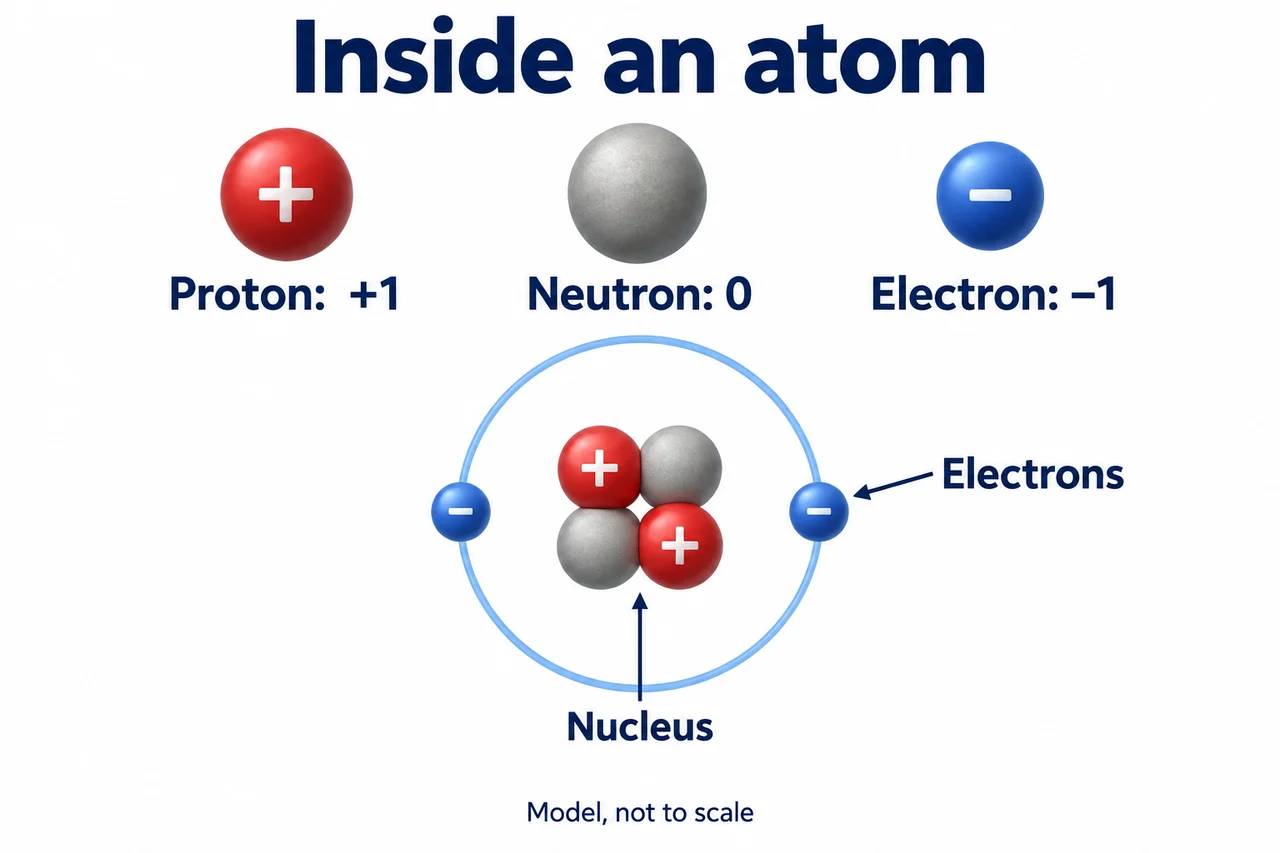
Evidence changes atomic models
Charges and neutral atoms
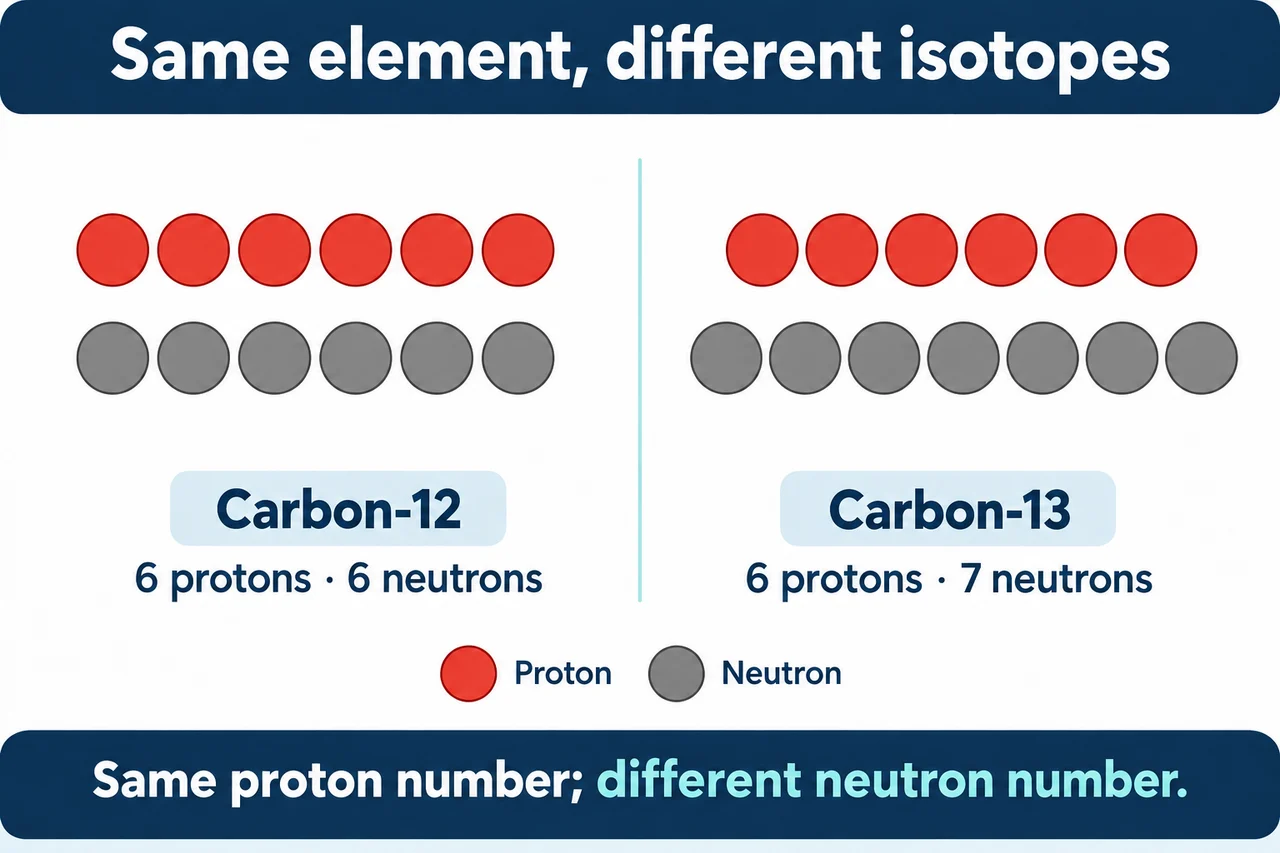
Atomic number, mass and scale
Calculating relative atomic mass
Electron shells and the first twenty elements
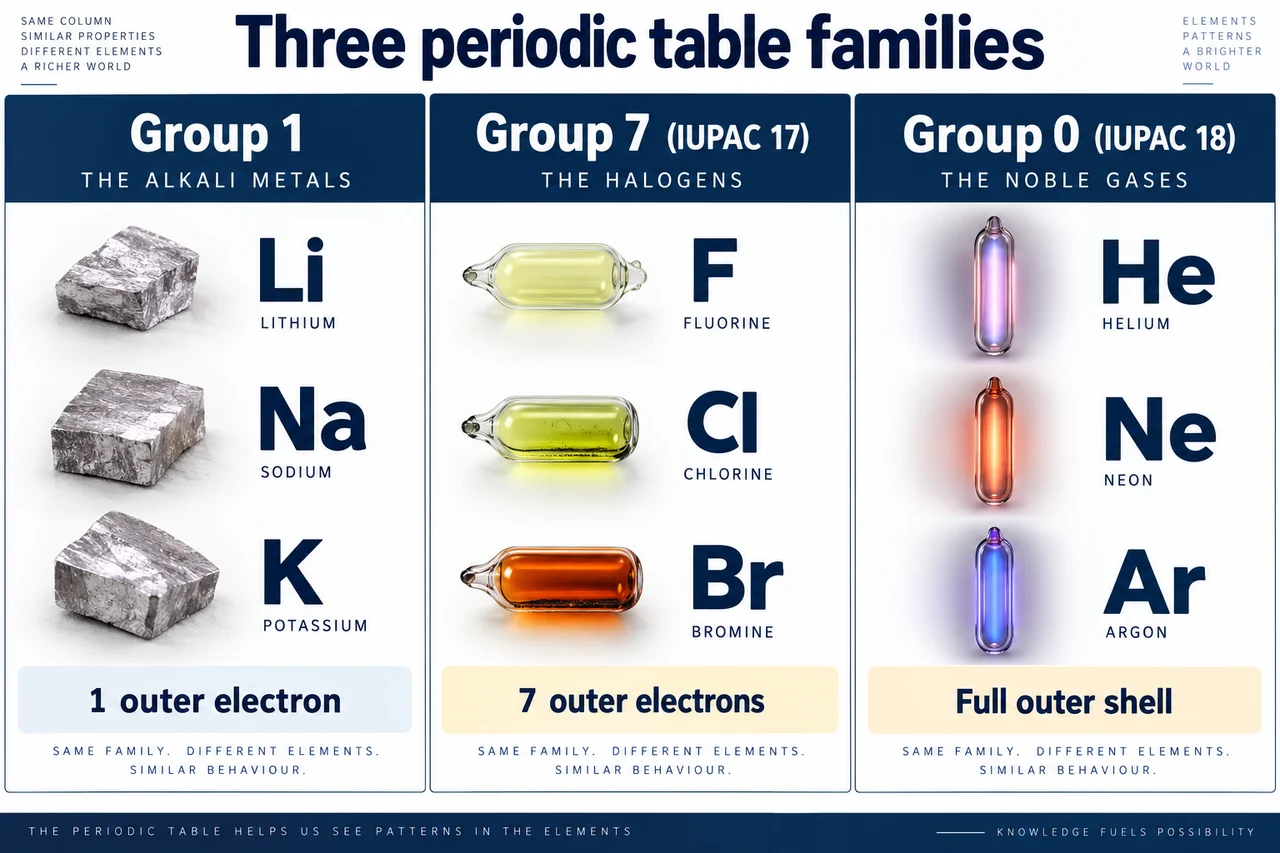
Reading the periodic table
How the table became predictive
Metals and non-metals
Noble gases: a stable outer shell
Alkali metals and reactivity
Halogens and displacement
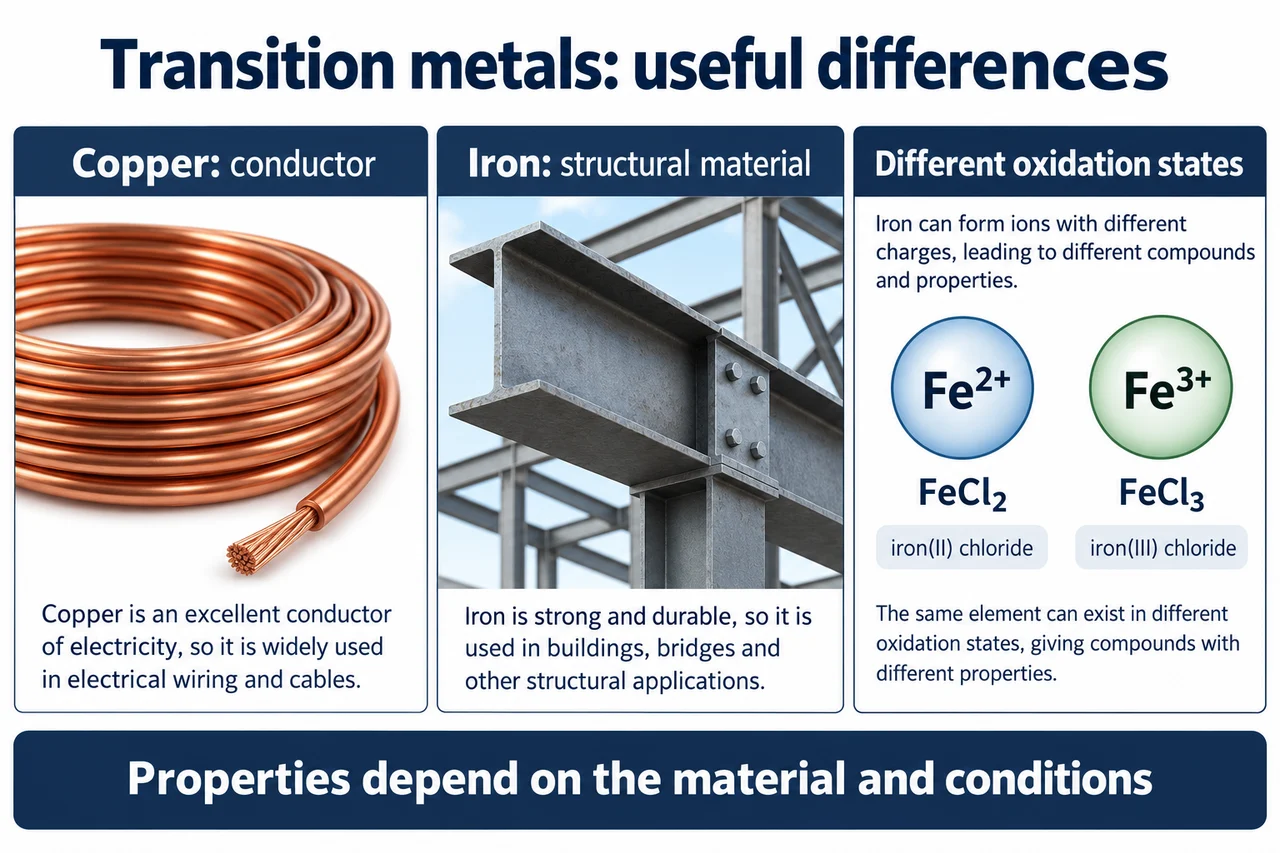
Transition metals compared with Group 1
Colour, variable ions and catalysts
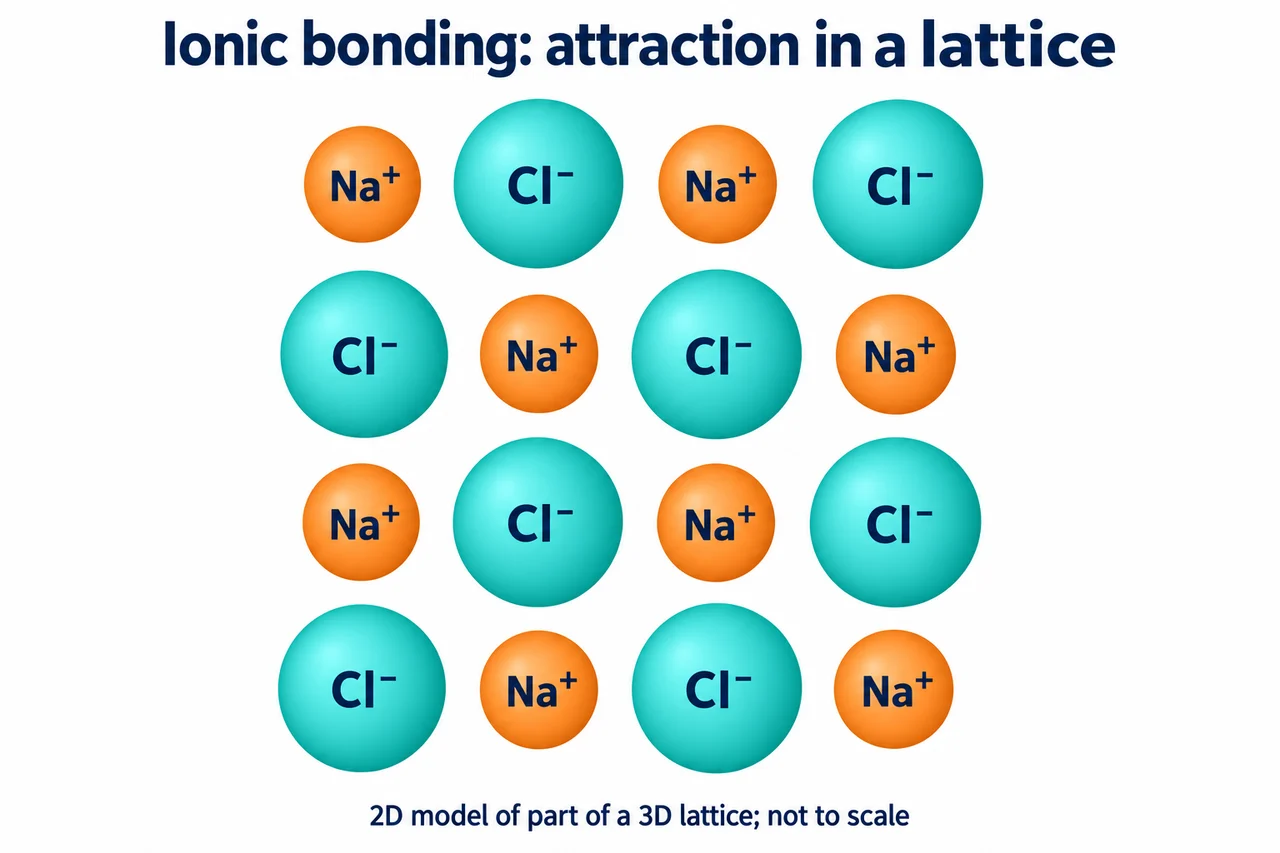
Chemical bonds are electrical attractions
Forming ions by electron transfer
An ionic compound is a giant lattice
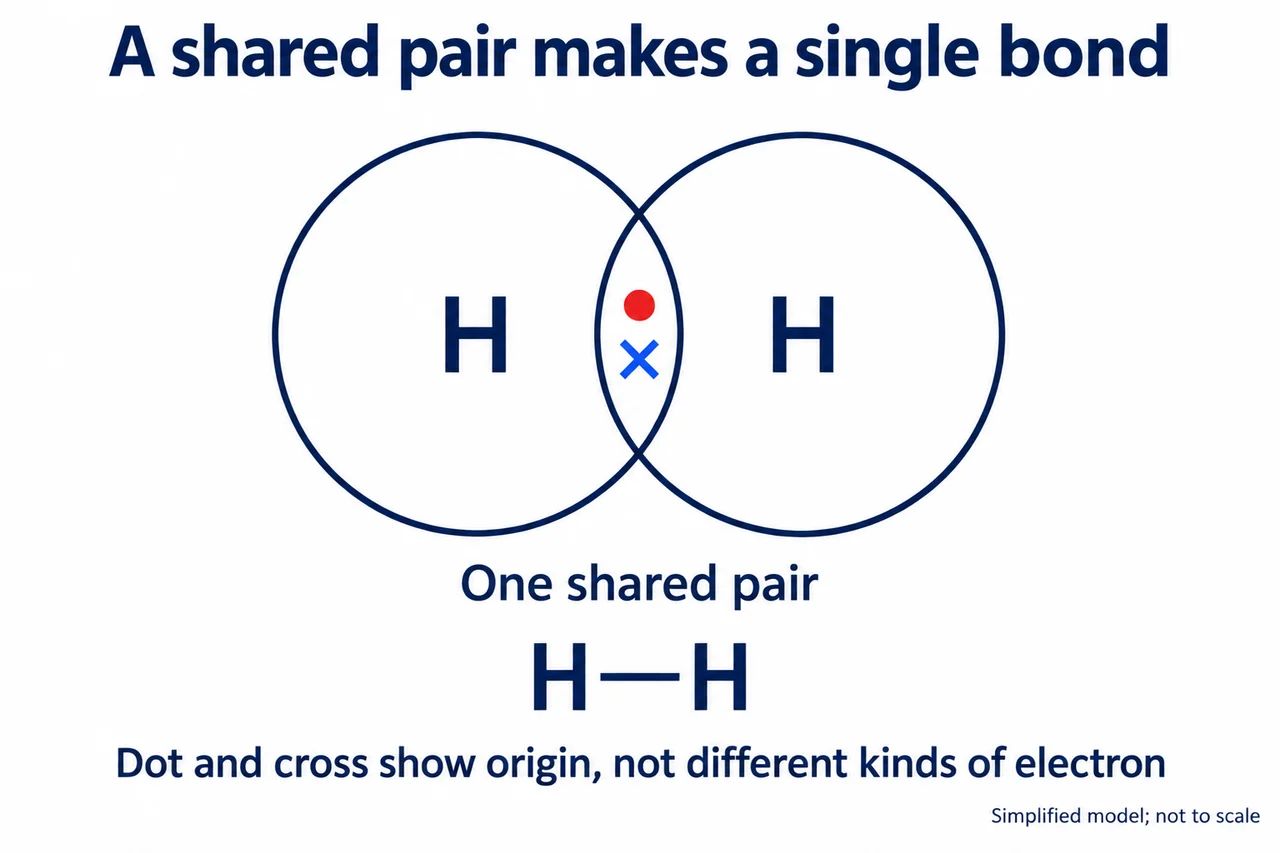
Sharing pairs in covalent bonds
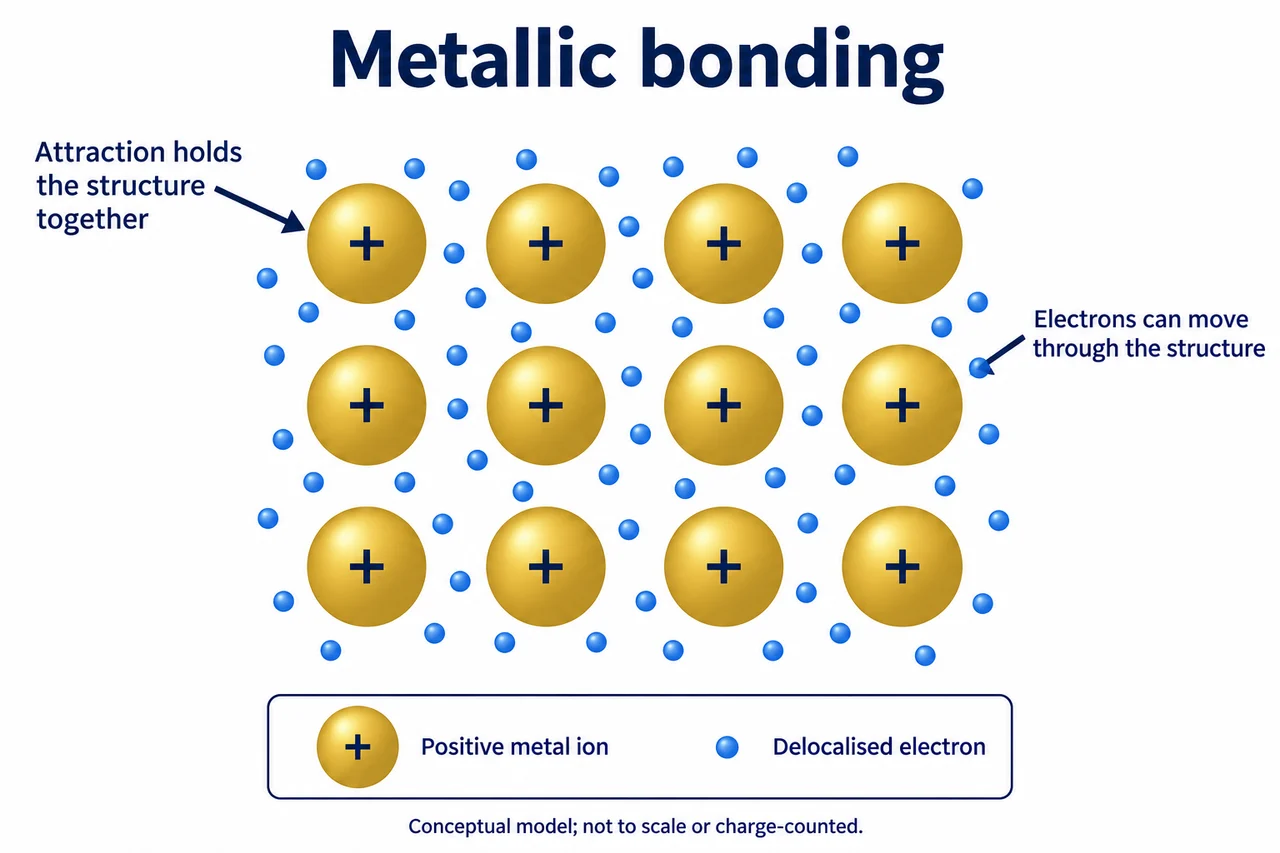
Delocalised electrons in metals
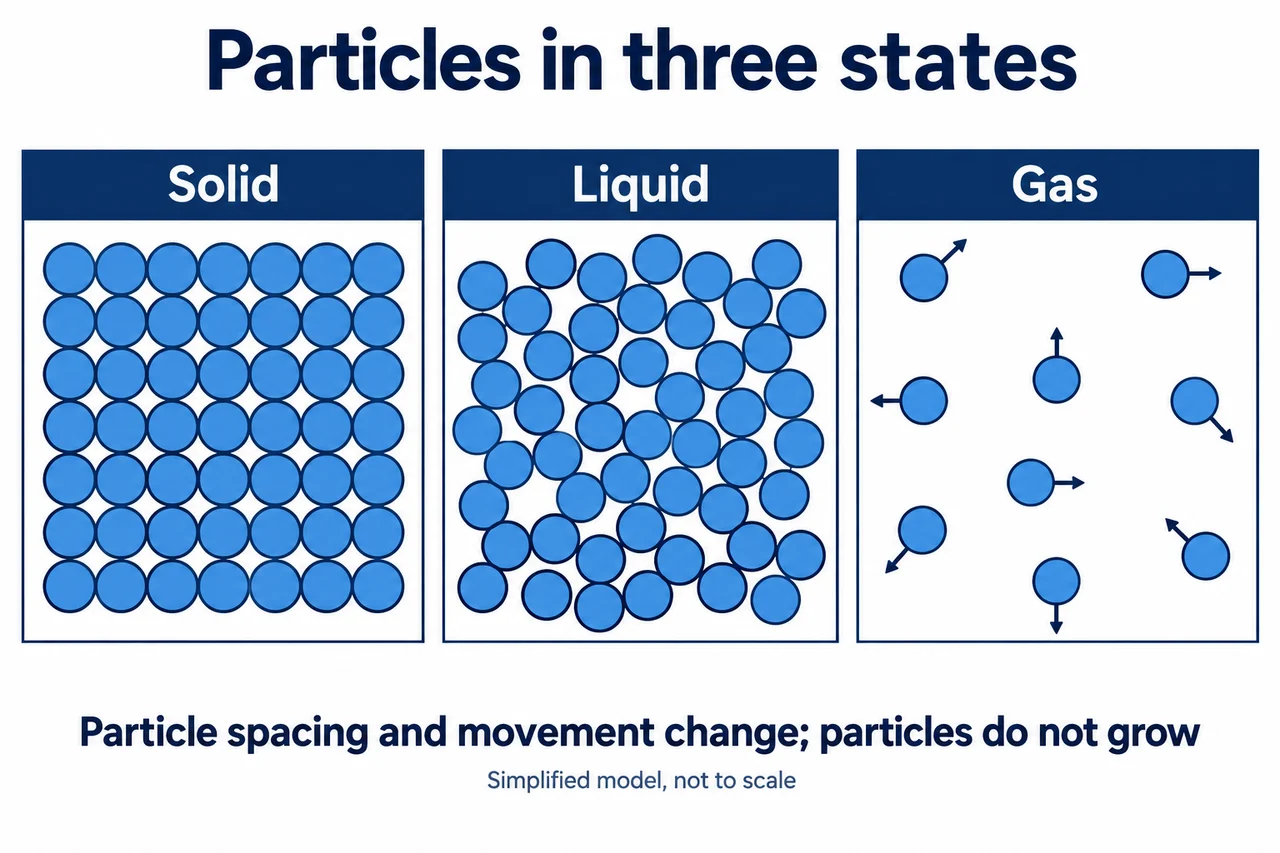
States, energy and particle models
State symbols describe the actual sample
Why ionic solids melt high and conduct only when mobile
Small molecules: bonds within, attractions between
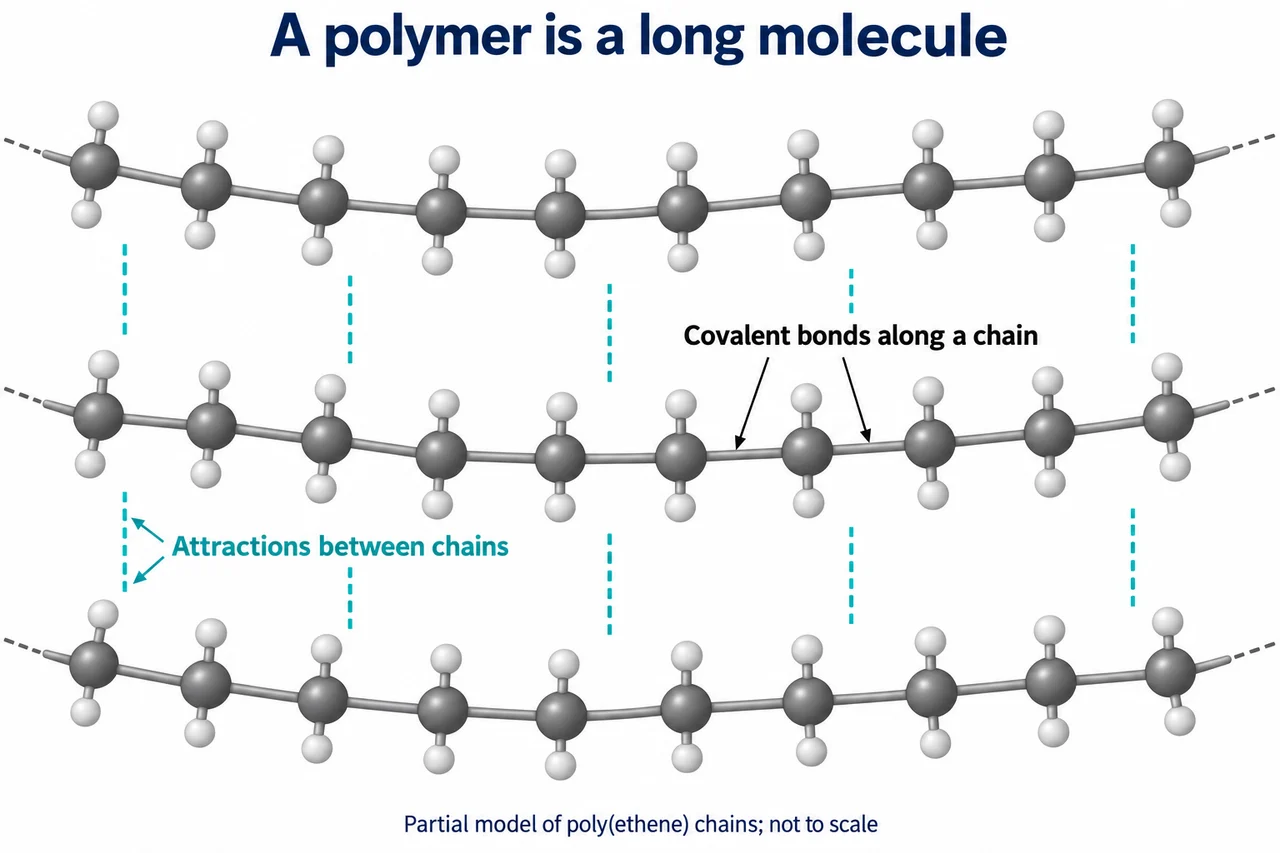
Polymers are long molecules, not tiny lattices
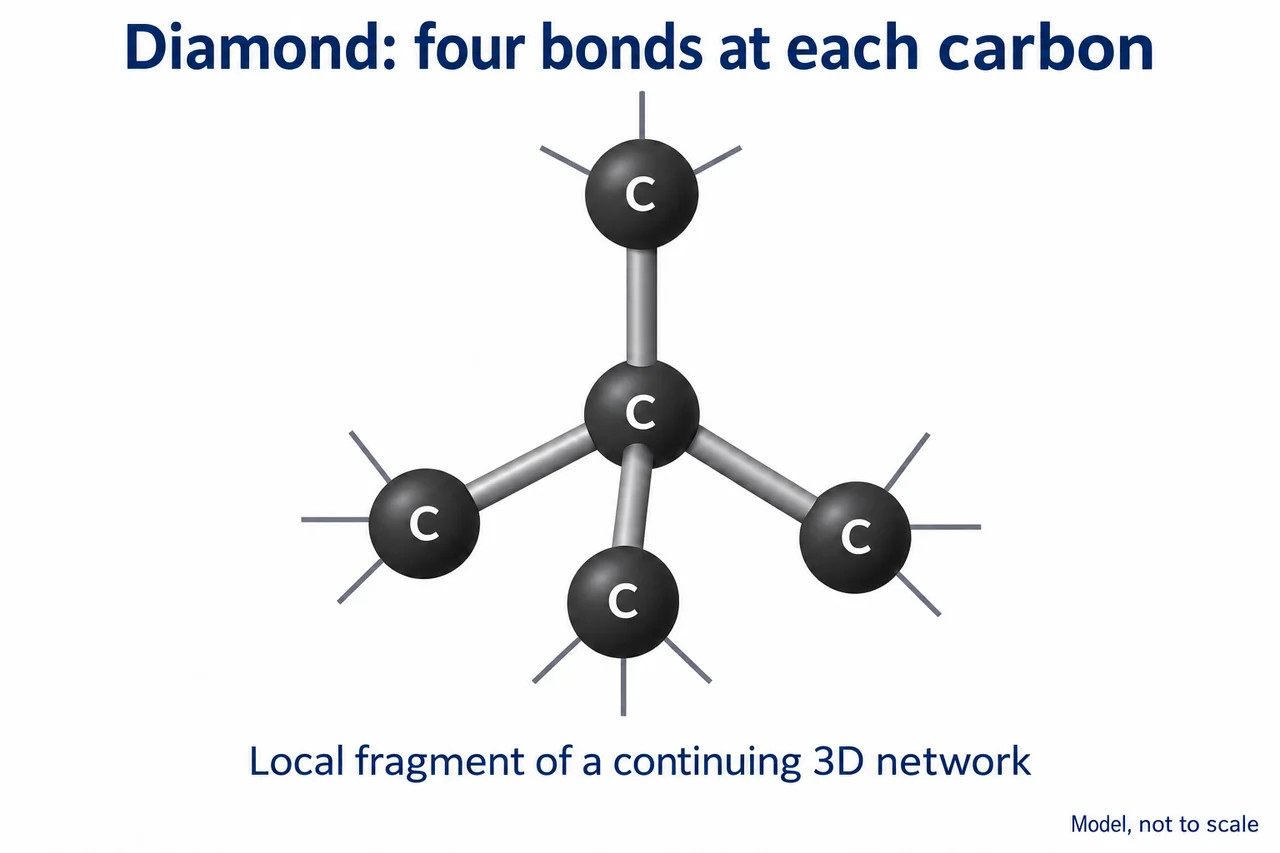
Giant covalent structures
Why alloys can be harder
Electric and thermal conduction in metals
Diamond: a three-dimensional carbon network
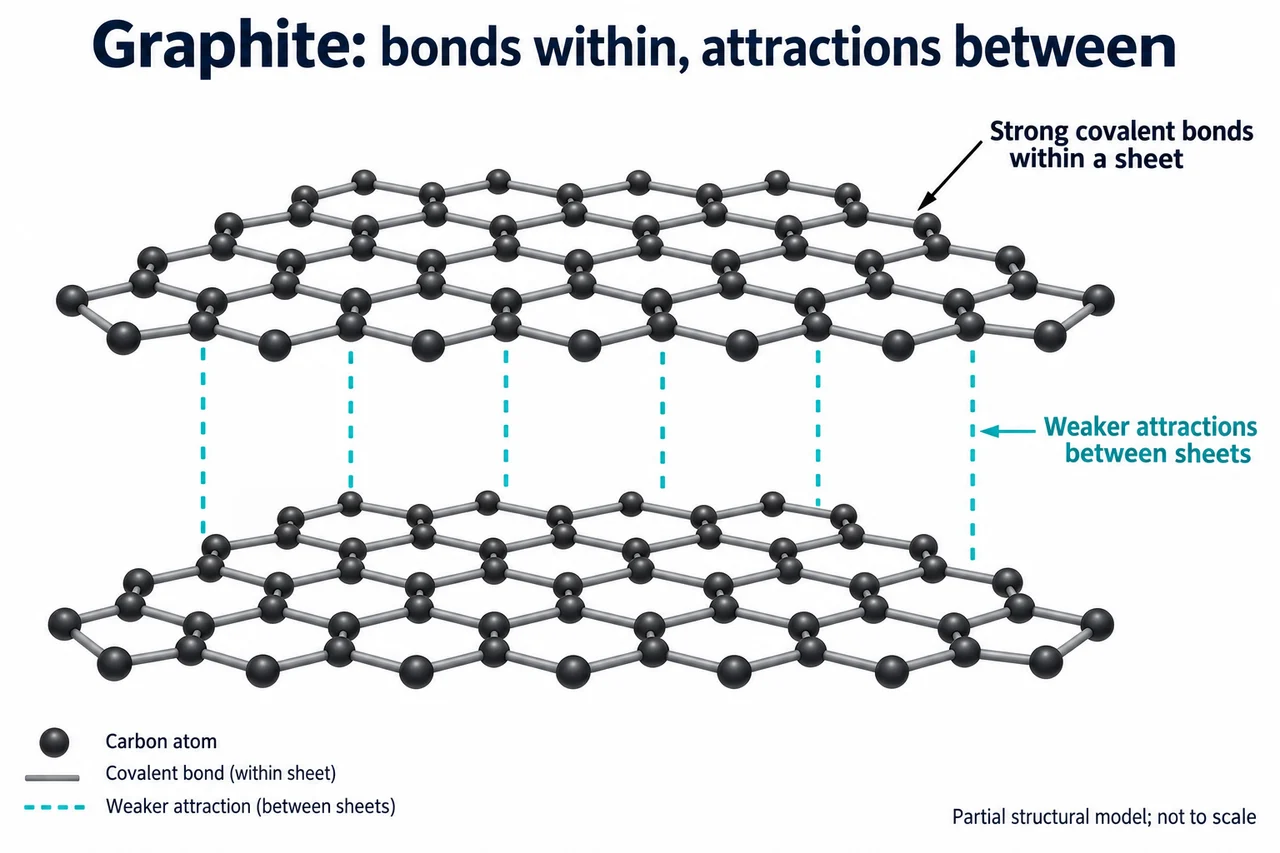
Graphite: strong sheets and sliding layers
Graphene, fullerenes and nanotubes
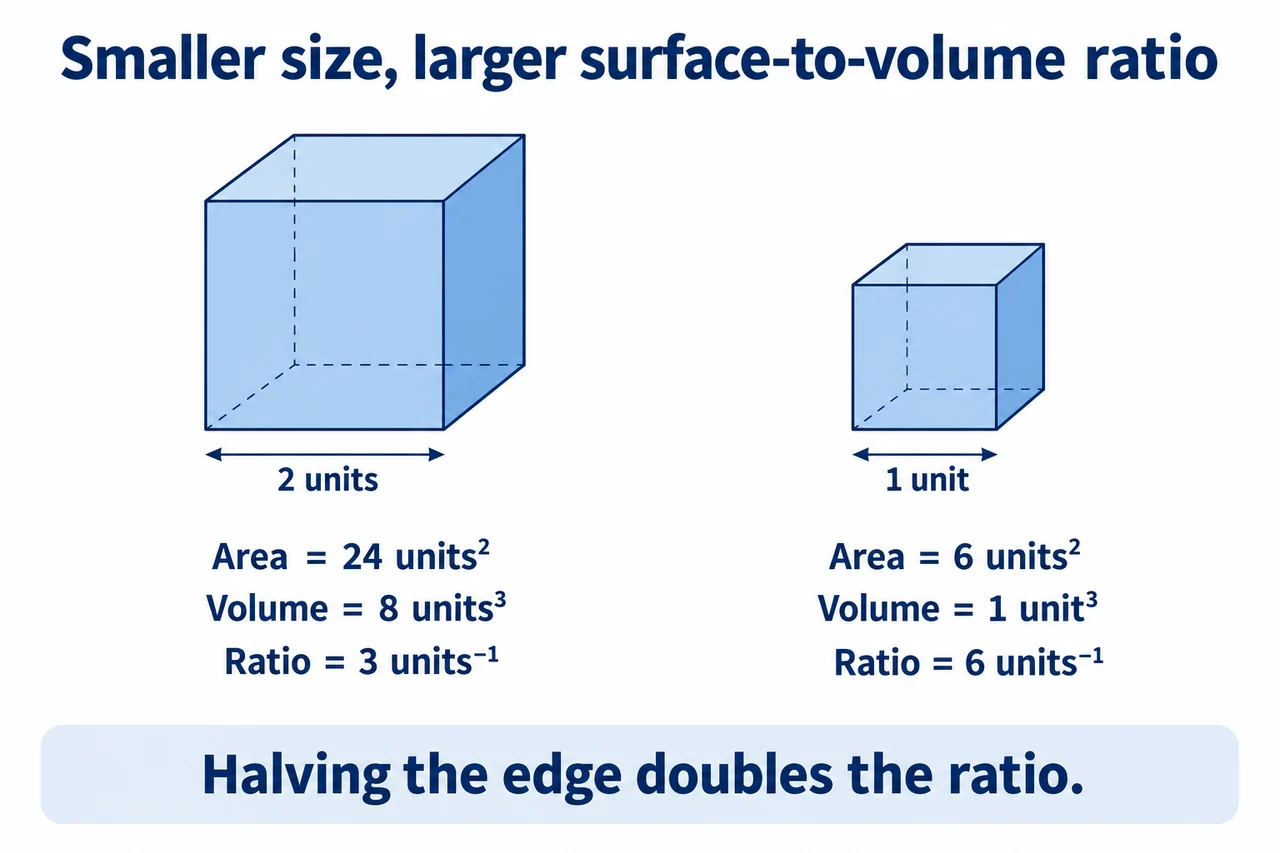
Nanoparticle size and surface area
Nanotechnology: uses need evidence
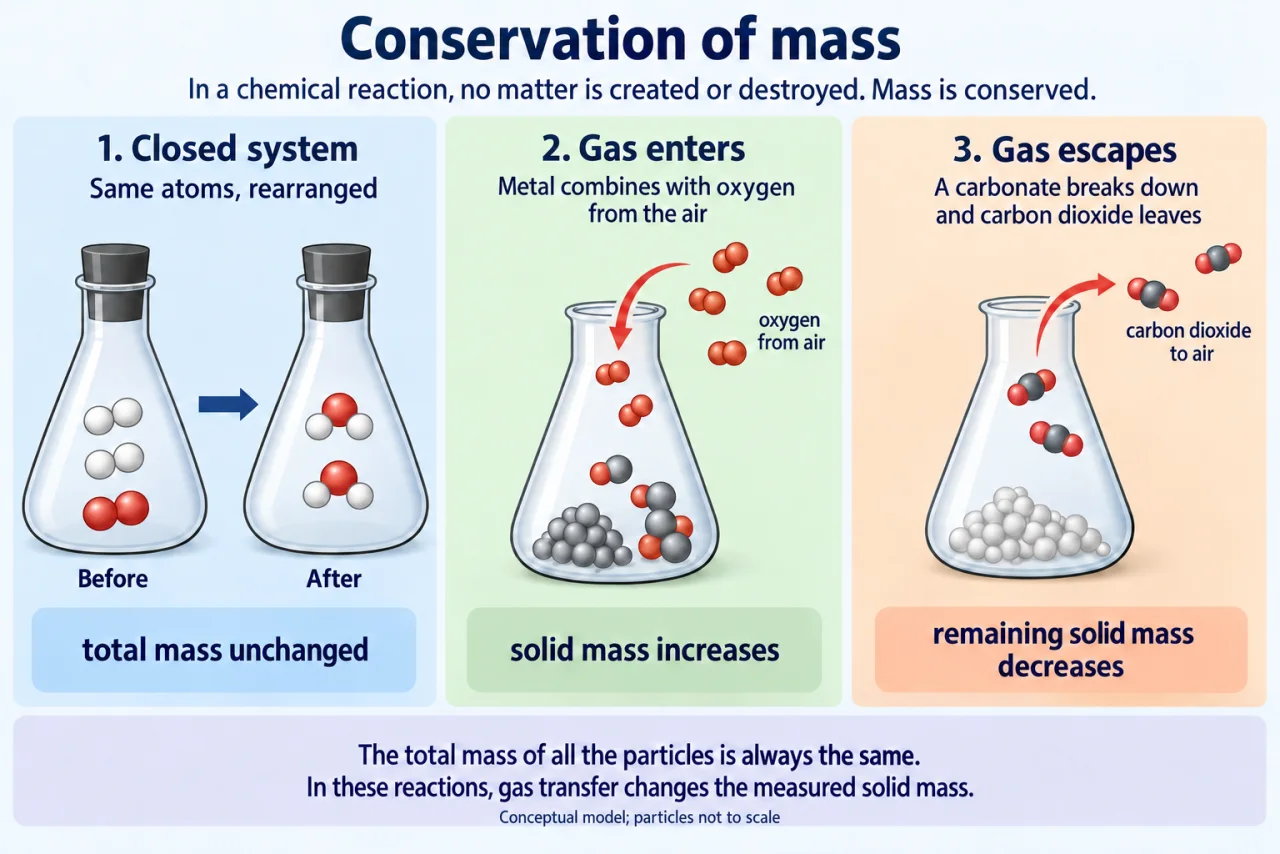
Keeping an atom account: conservation and balancing
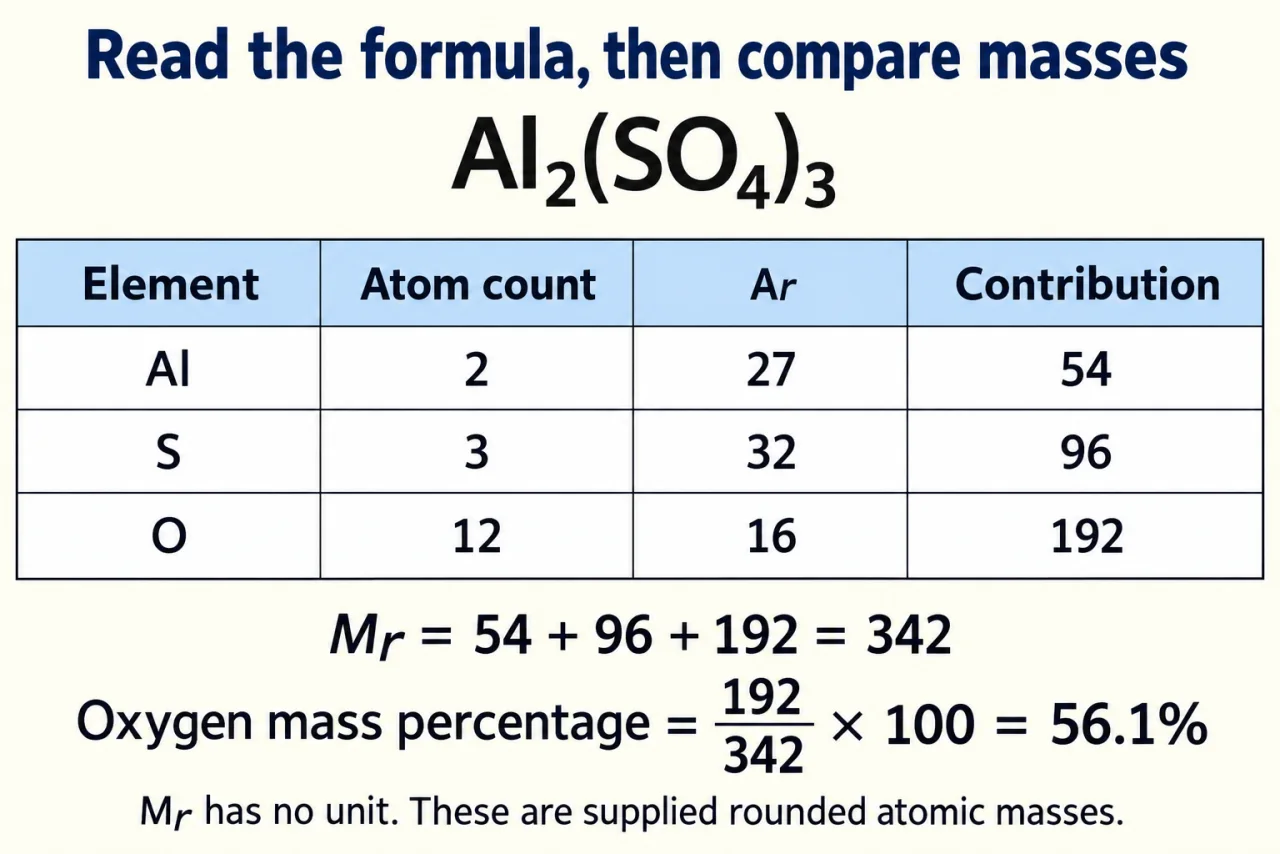
Reading formulae to calculate relative mass and mass percentage
Why an open balance can gain or lose mass
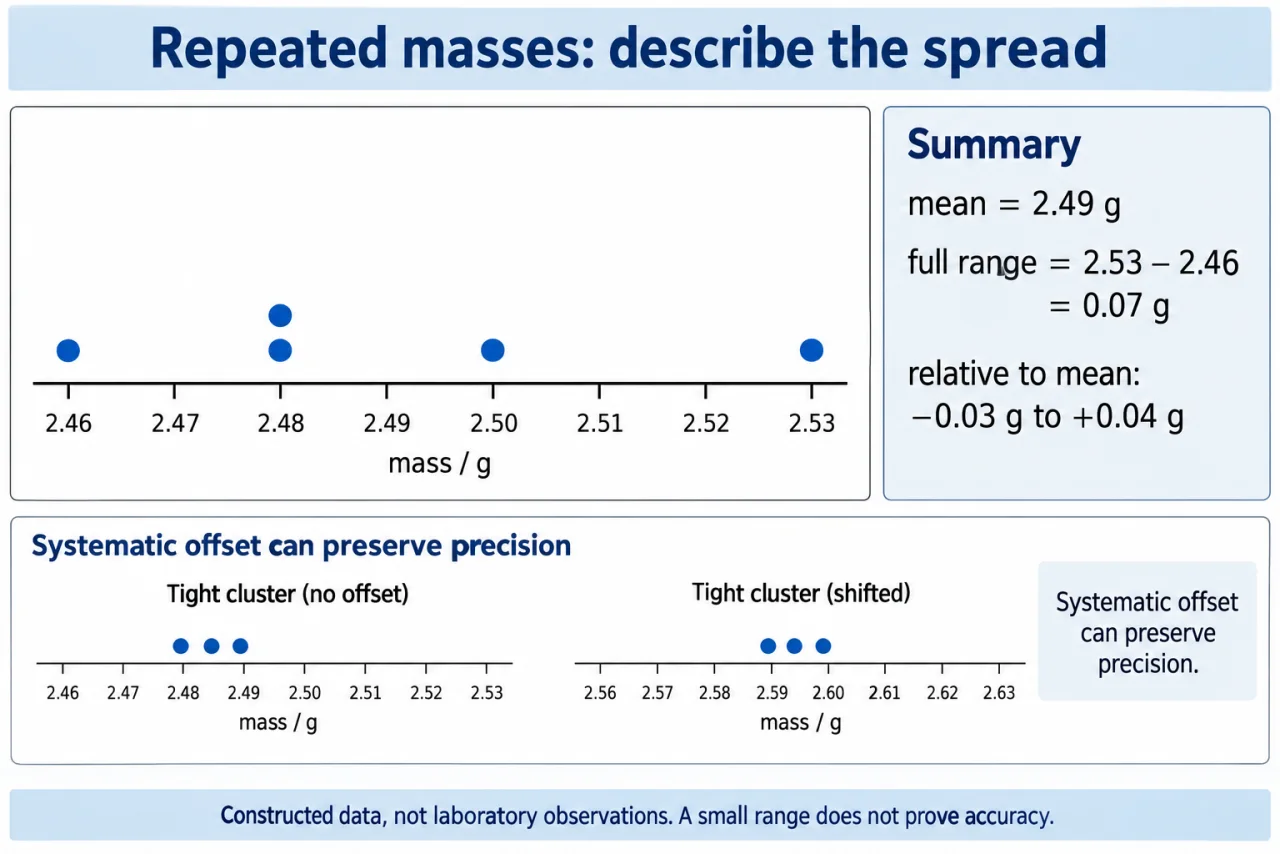
What repeated measurements can and cannot tell you
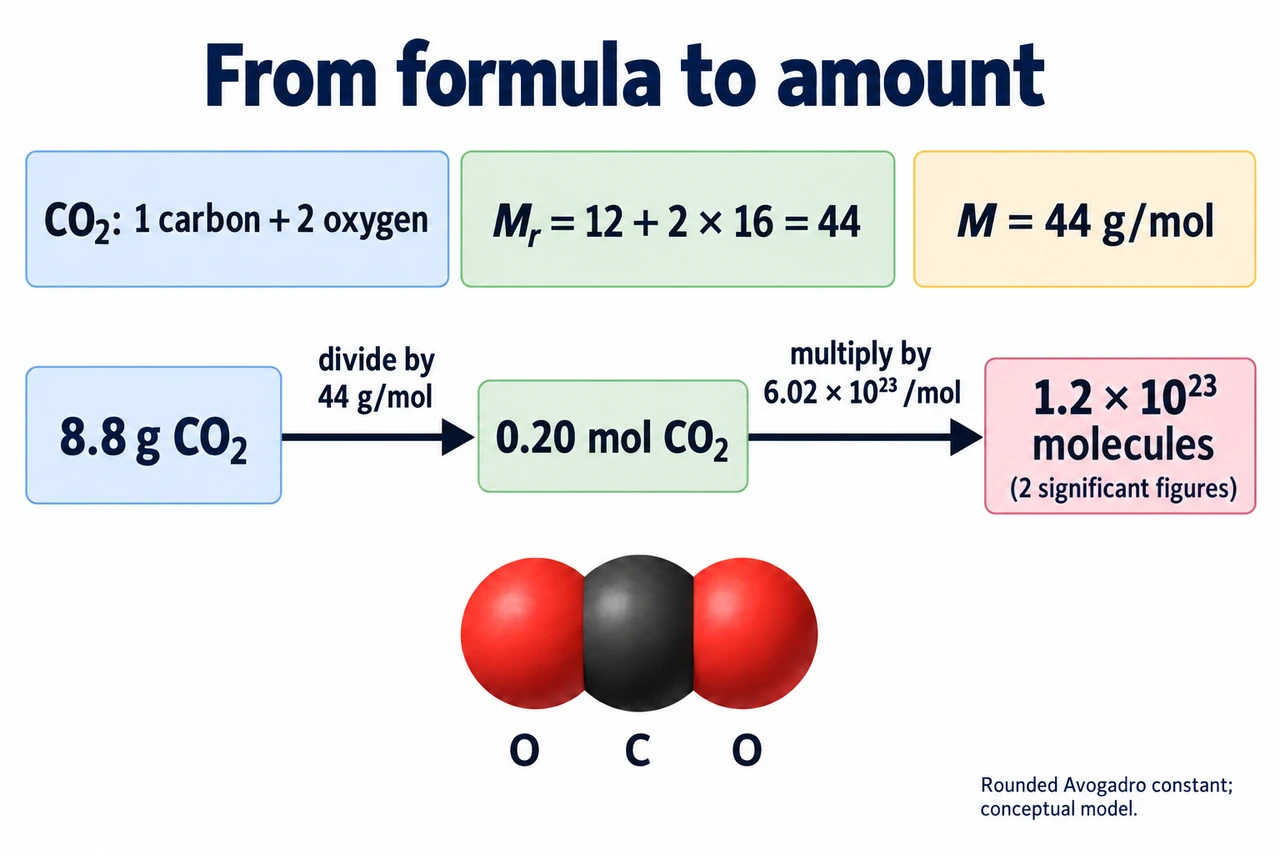
A mole counts a stated kind of entity — Higher
Converting mass and amount without confusing Mr with grams — Higher
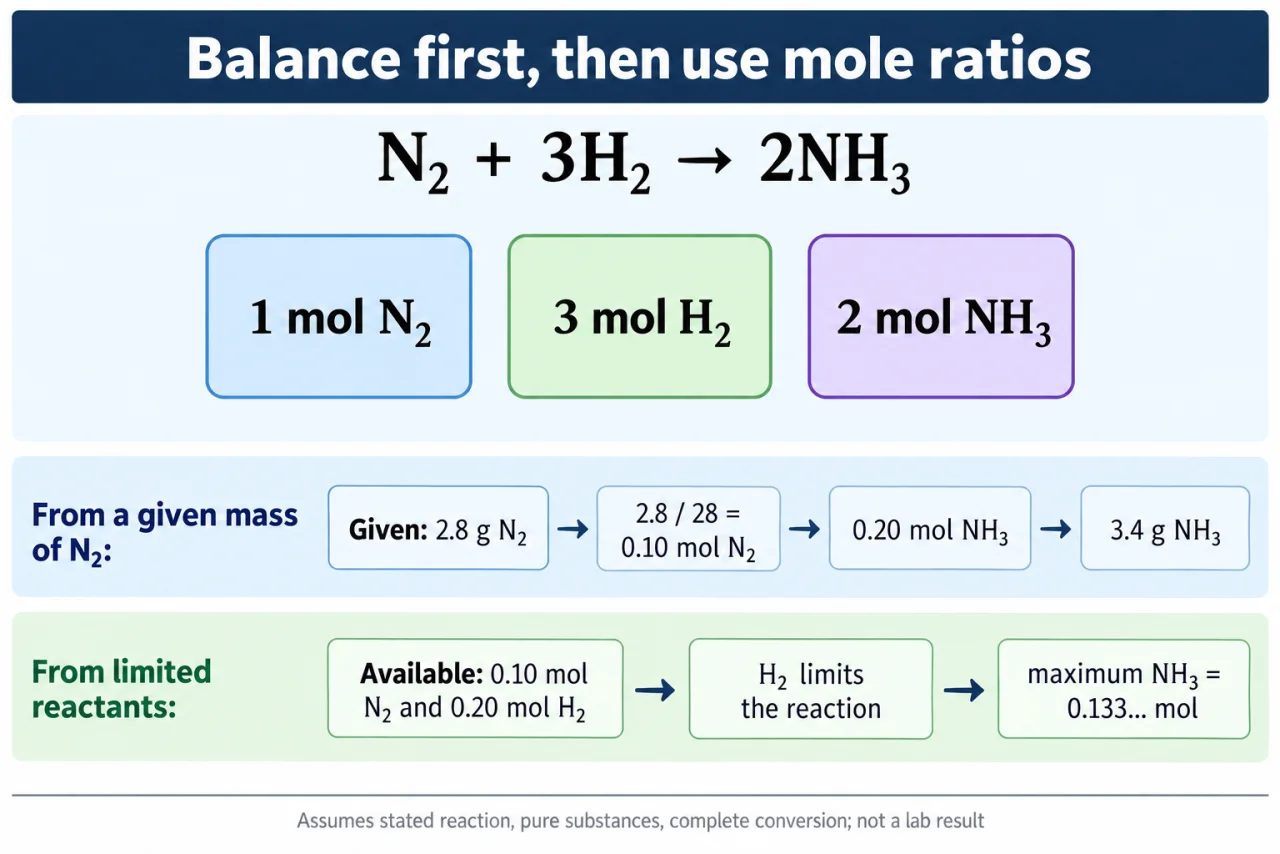
Using a balanced ratio to predict reacting masses — Higher
Recovering an equation from measured masses — Higher
Which reactant sets the maximum product? — Higher
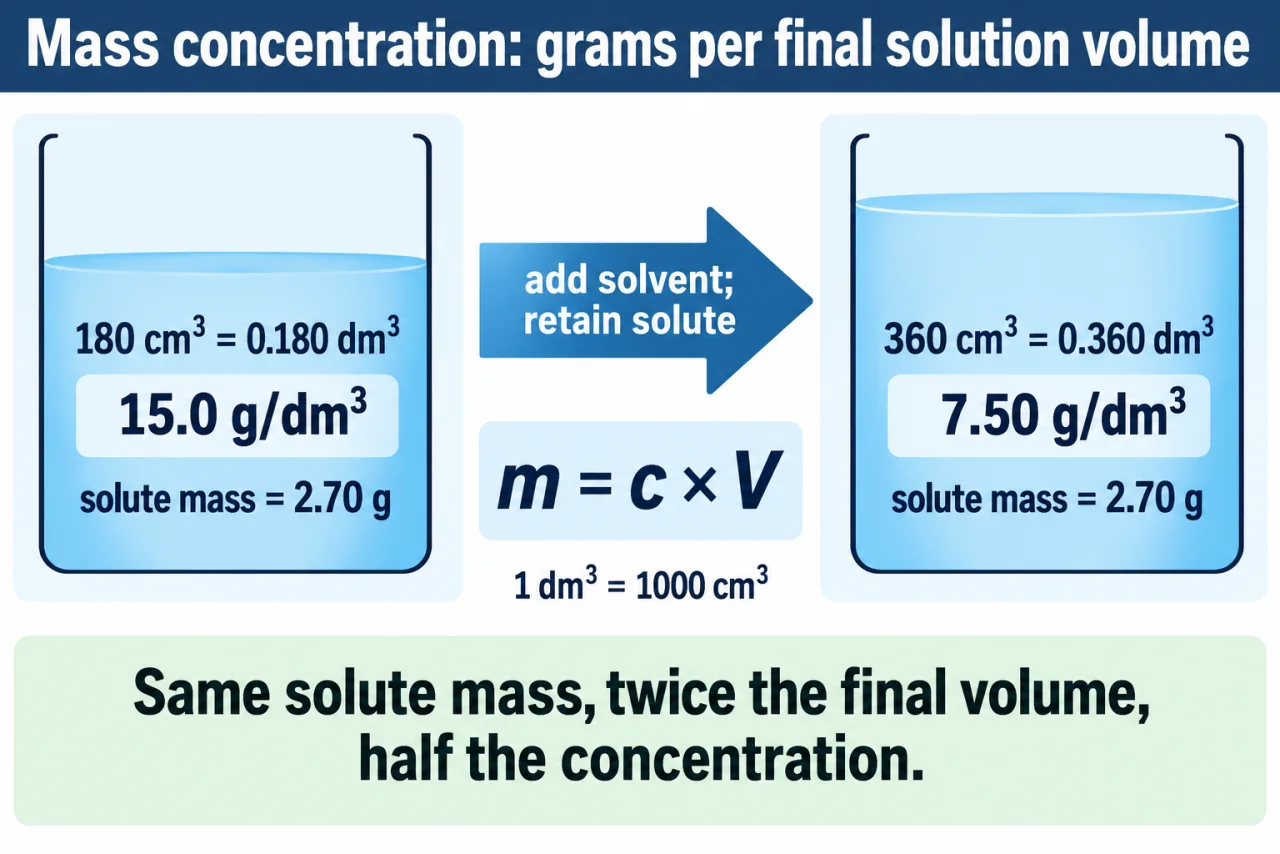
Mass concentration: an amount of solute per solution volume
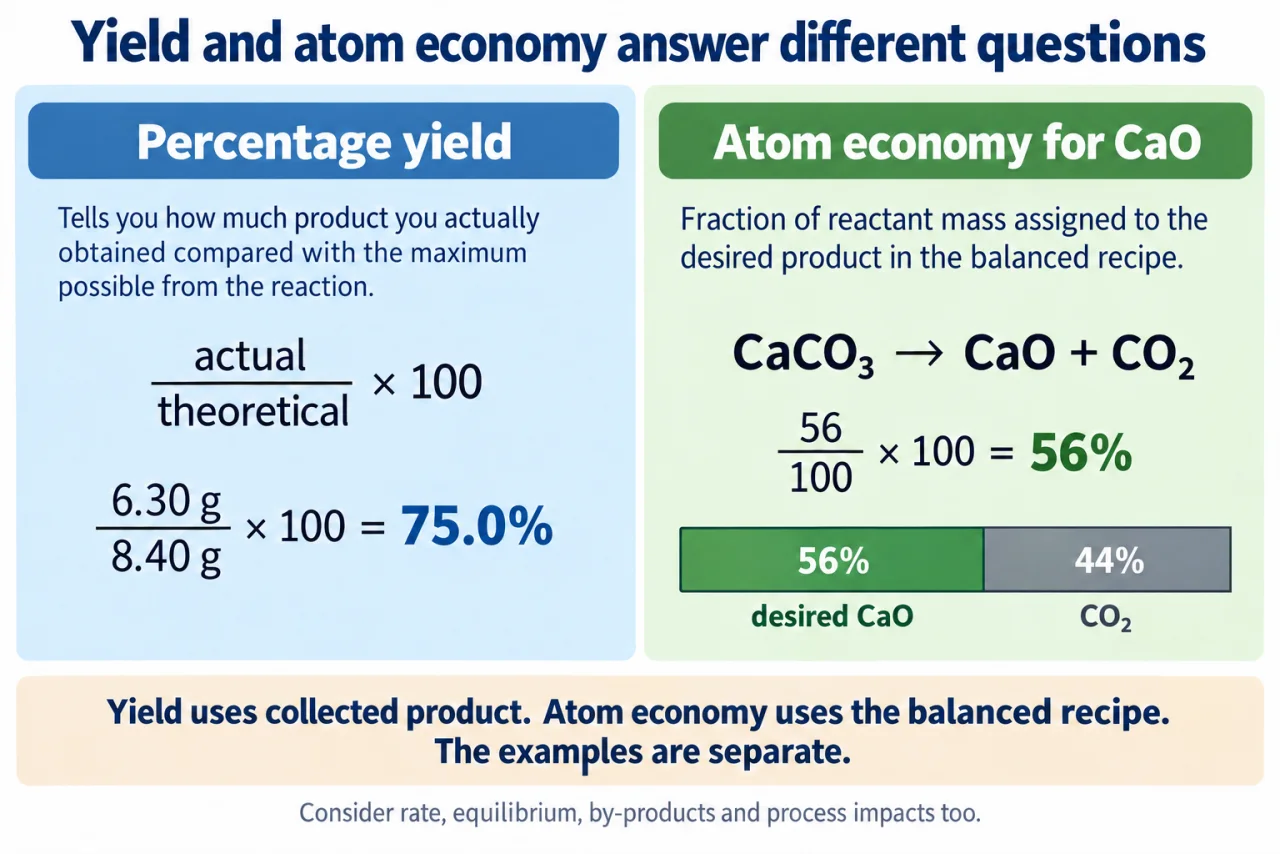
Yield compares collected product with a theoretical maximum
Atom economy follows the balanced recipe, not the collected yield
Choosing a reaction pathway from several kinds of evidence — Higher
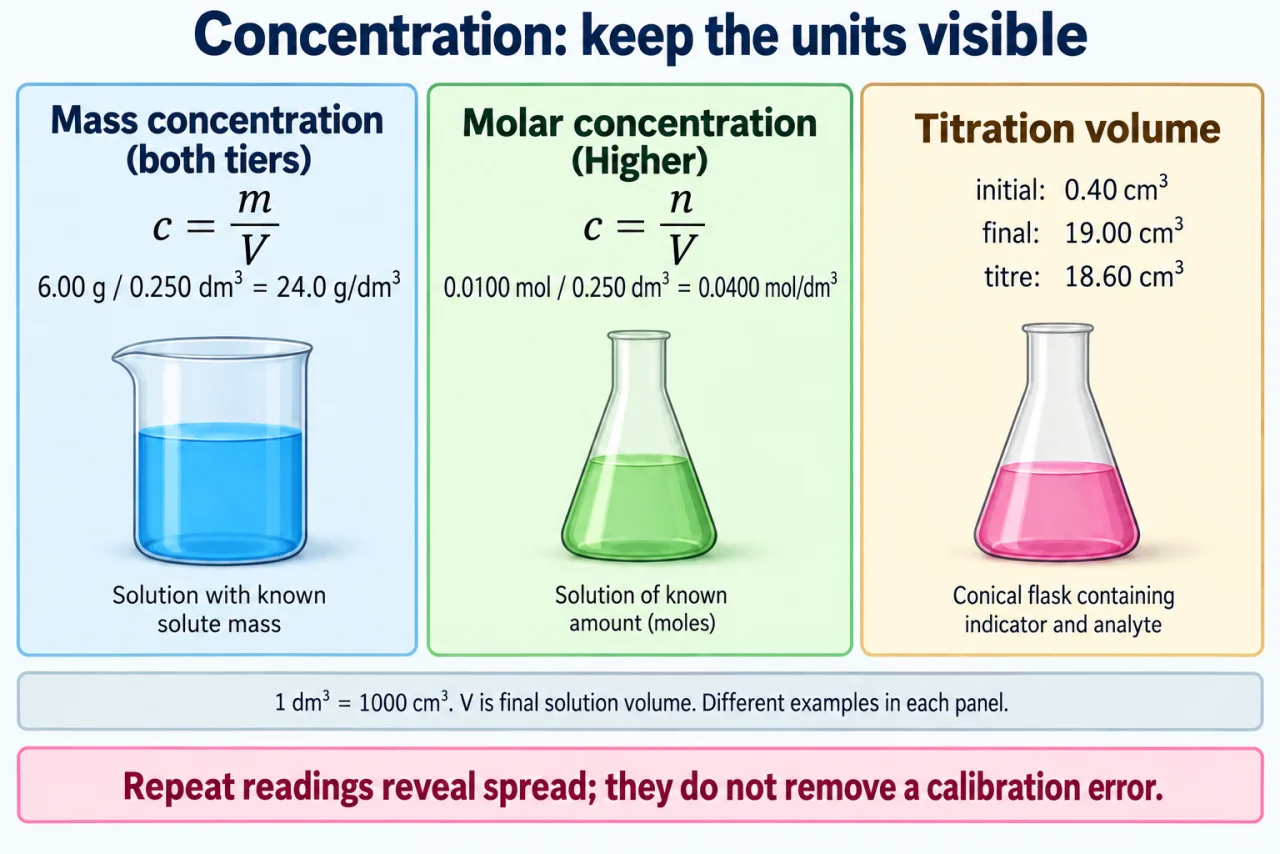
Connecting molar concentration, solute mass and volume — Higher
Reacting volumes reveal an unknown concentration — Higher
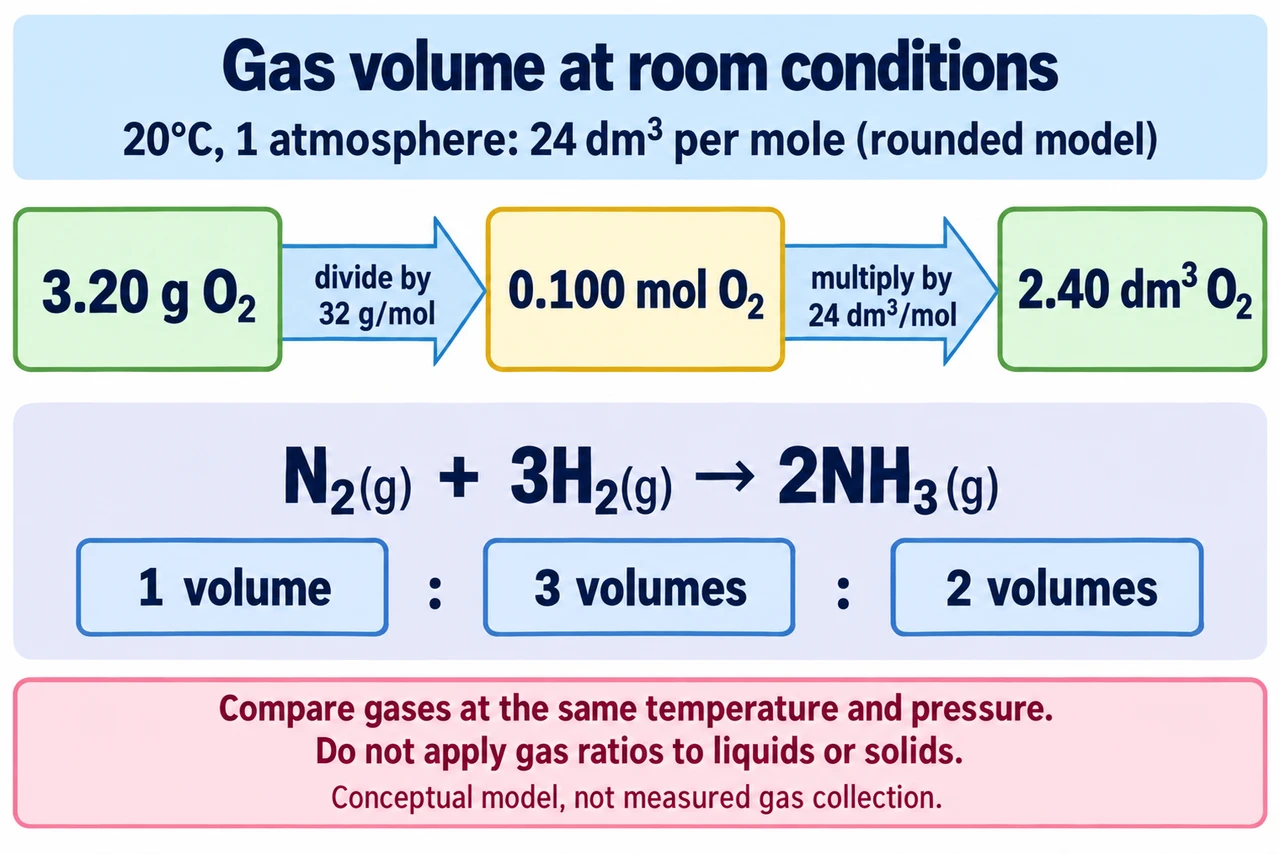
Gas volumes are mole ratios under matched conditions — Higher
Following oxygen: metal oxides and extraction
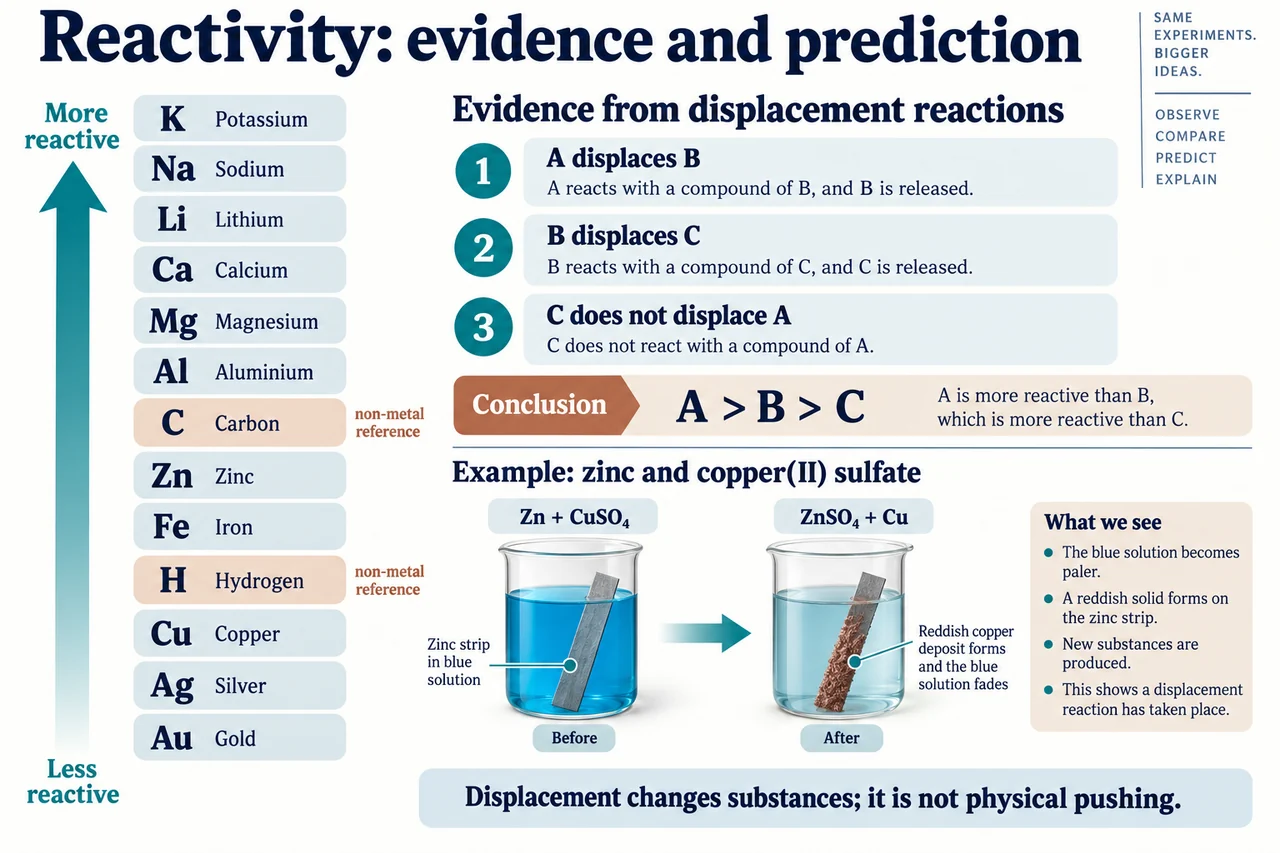
Reactivity from room-temperature evidence
Higher: displacement as an electron account
Metals and dilute acids: salts, hydrogen and redox
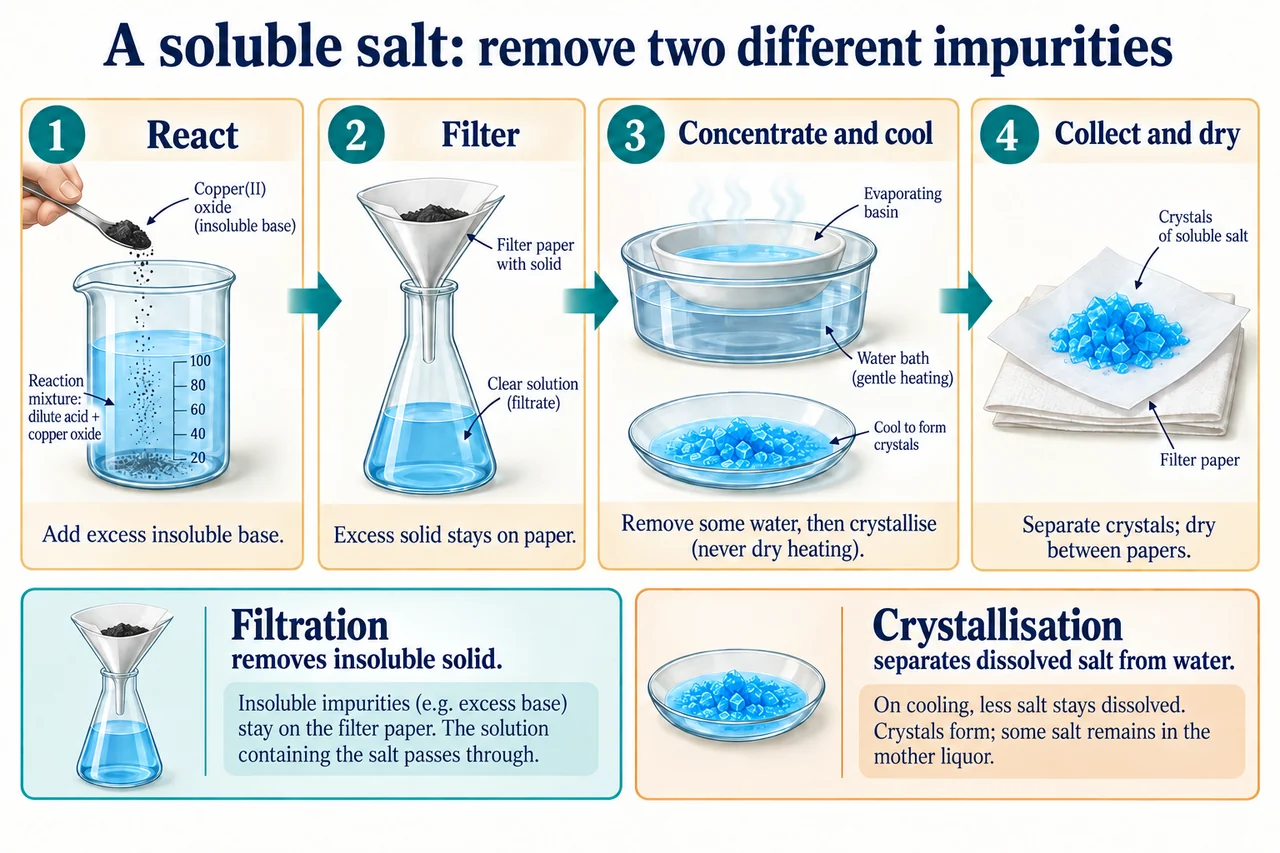
From ions to a named salt: neutralisation routes
This practical study: reasoning towards pure, dry crystals
pH, hydrogen ions and what neutralisation consumes
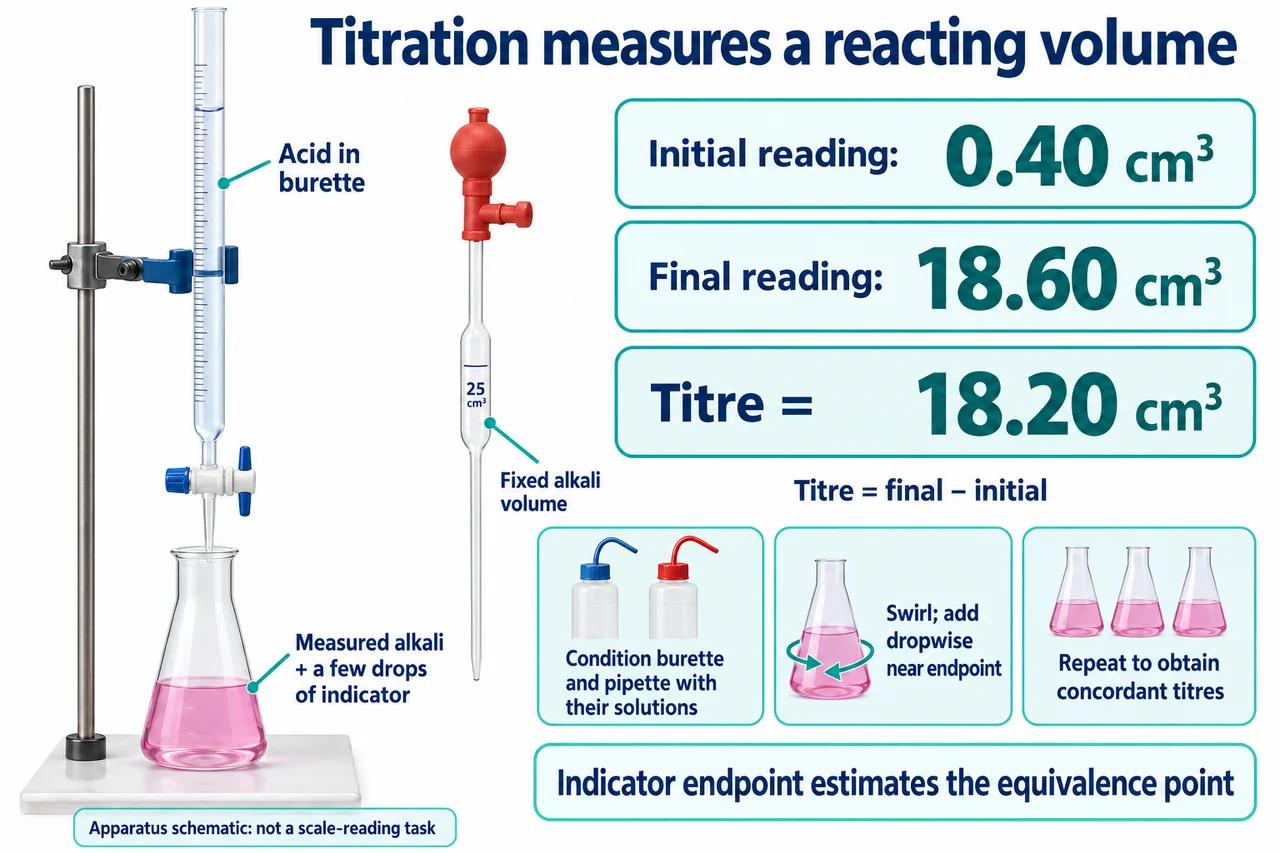
Chemistry only: an accurate reacting-volume titration
Higher Chemistry only: titration quantities and error direction
Higher: strong, weak, concentrated and dilute acids
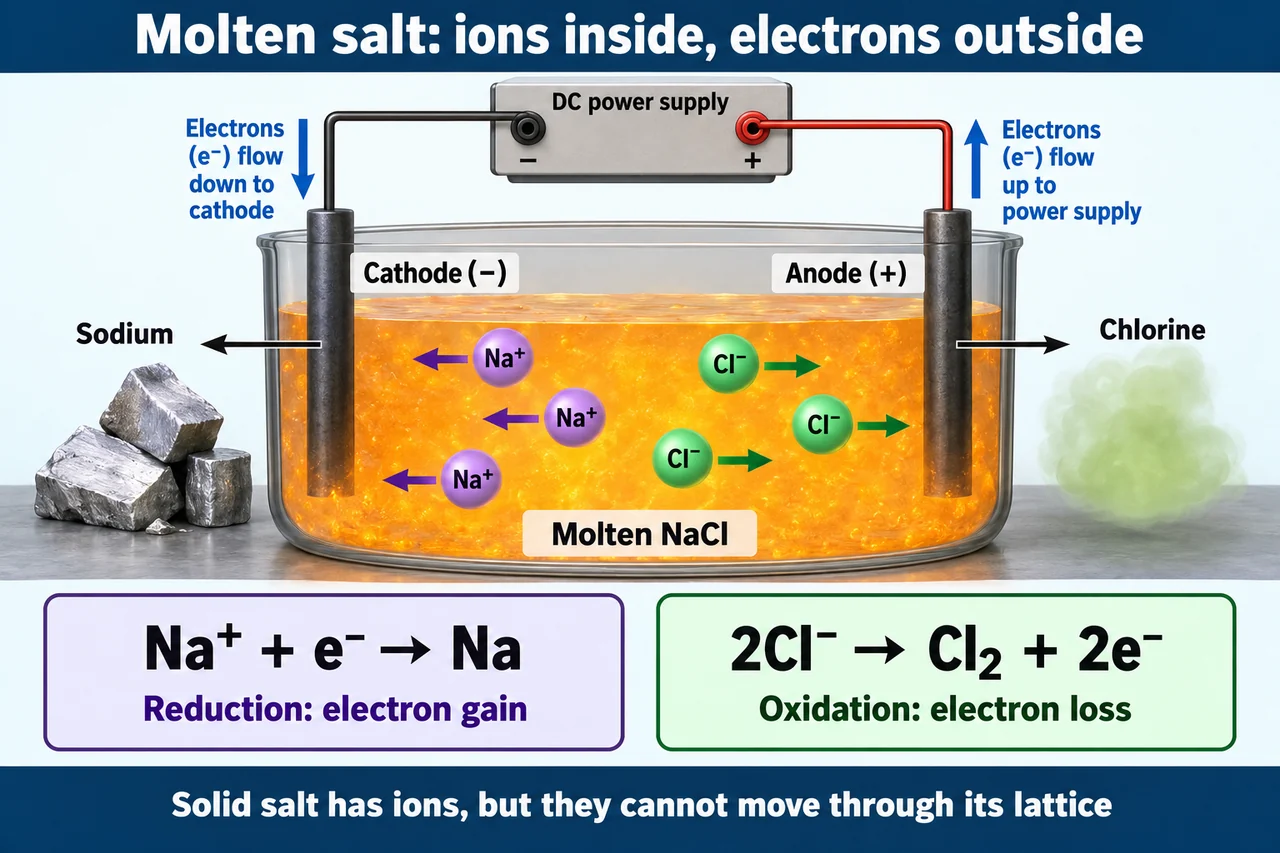
Electrolysis: completing a circuit with two charge carriers
Molten binary compounds: predict products before balancing
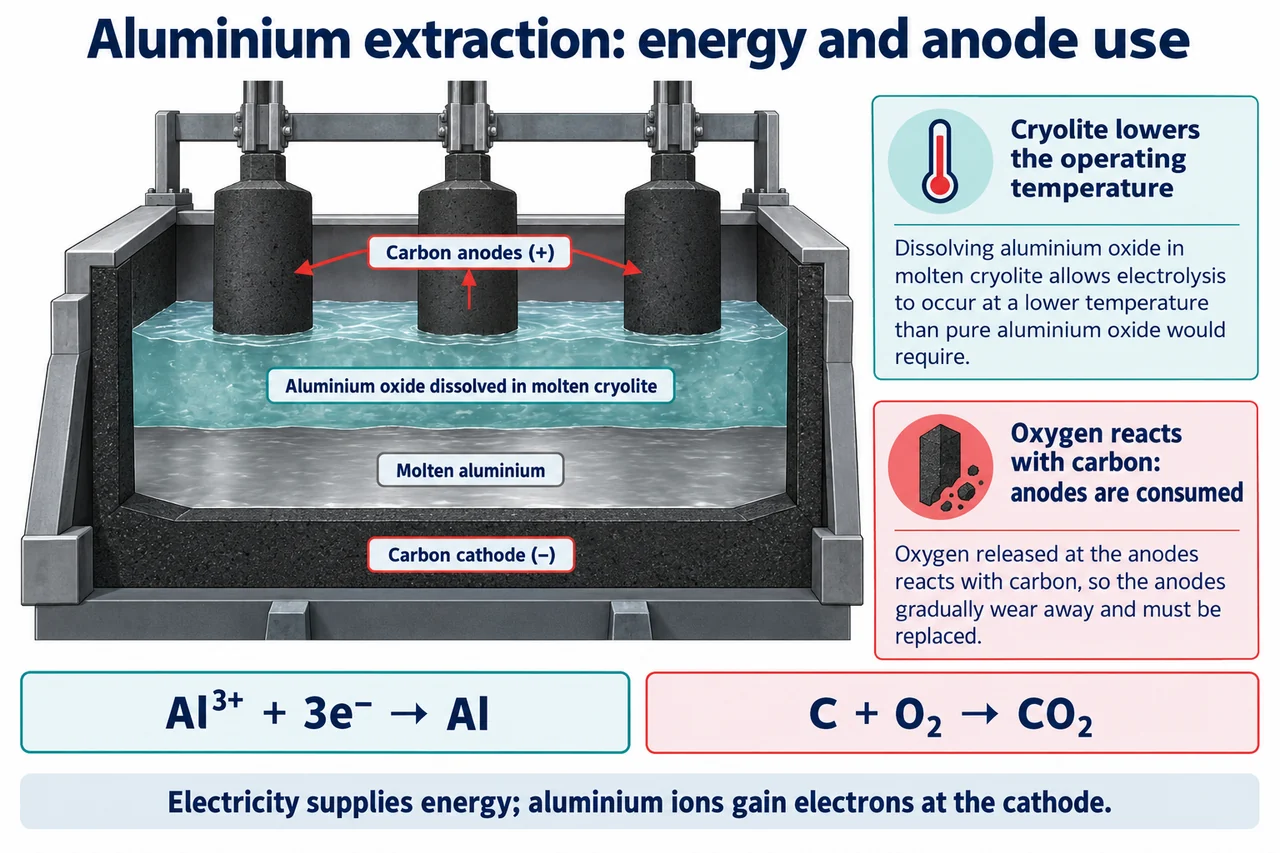
Aluminium: why the melt is a mixture and anodes wear away
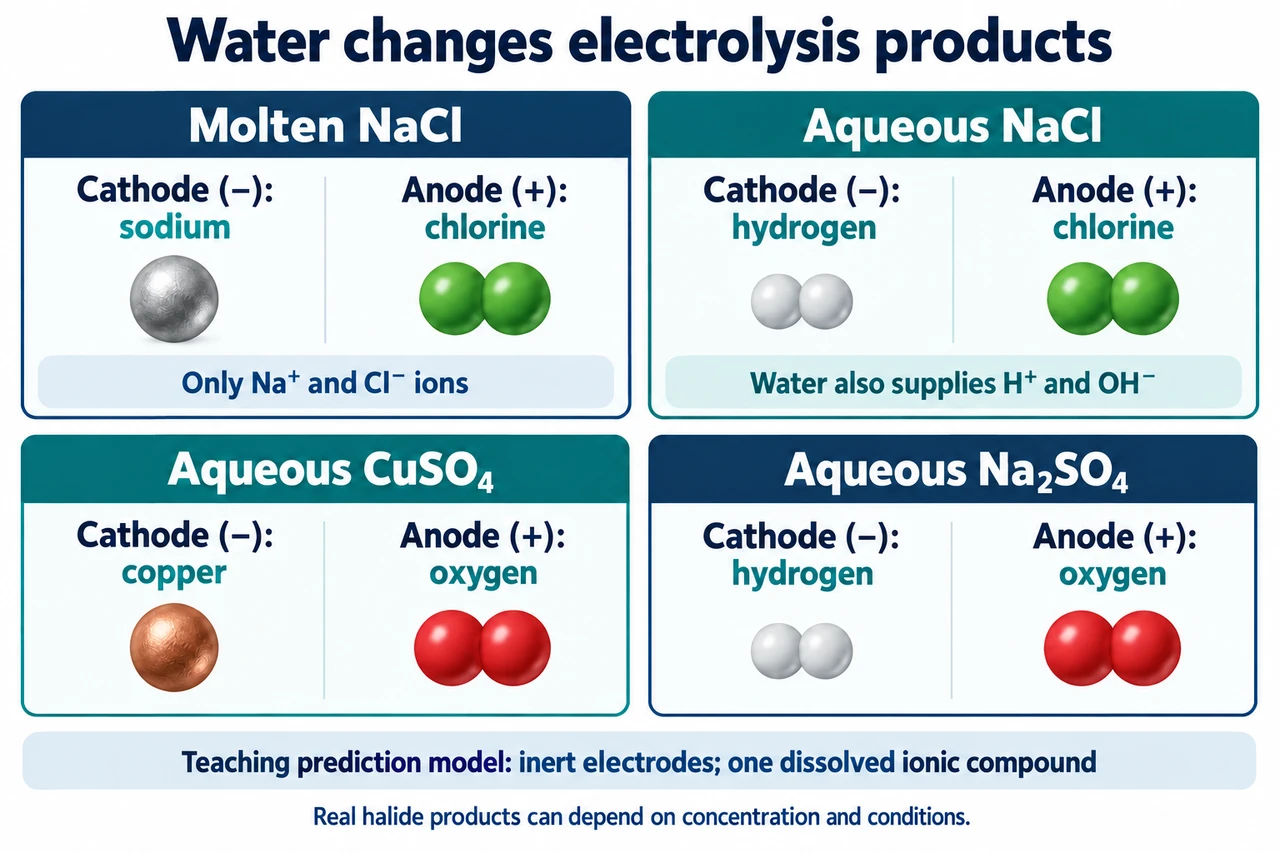
Aqueous electrolysis: water introduces competing products
Higher: construct, audit and combine electrode half-equations
This practical study: hypotheses, product tests and evidence limits
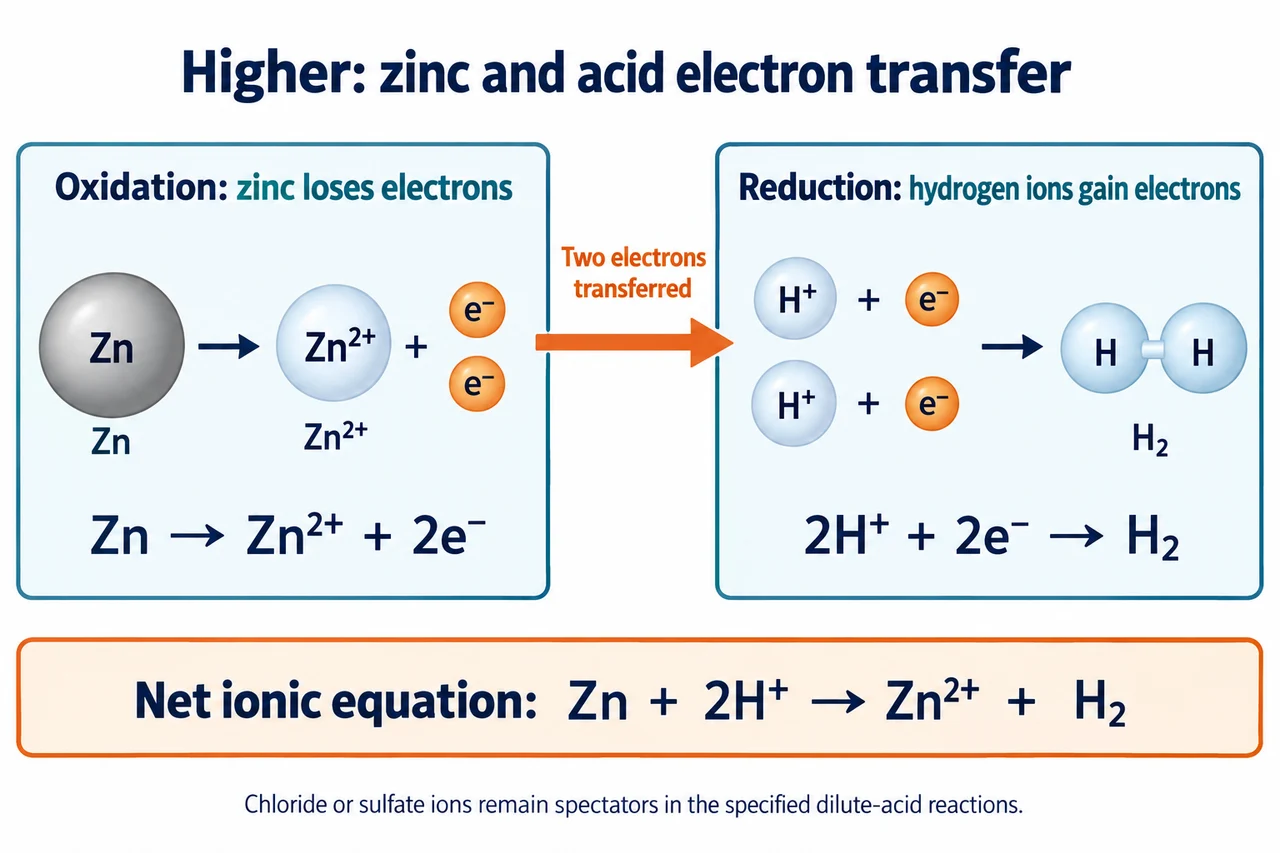
Higher: the electron account of metal–acid reactions
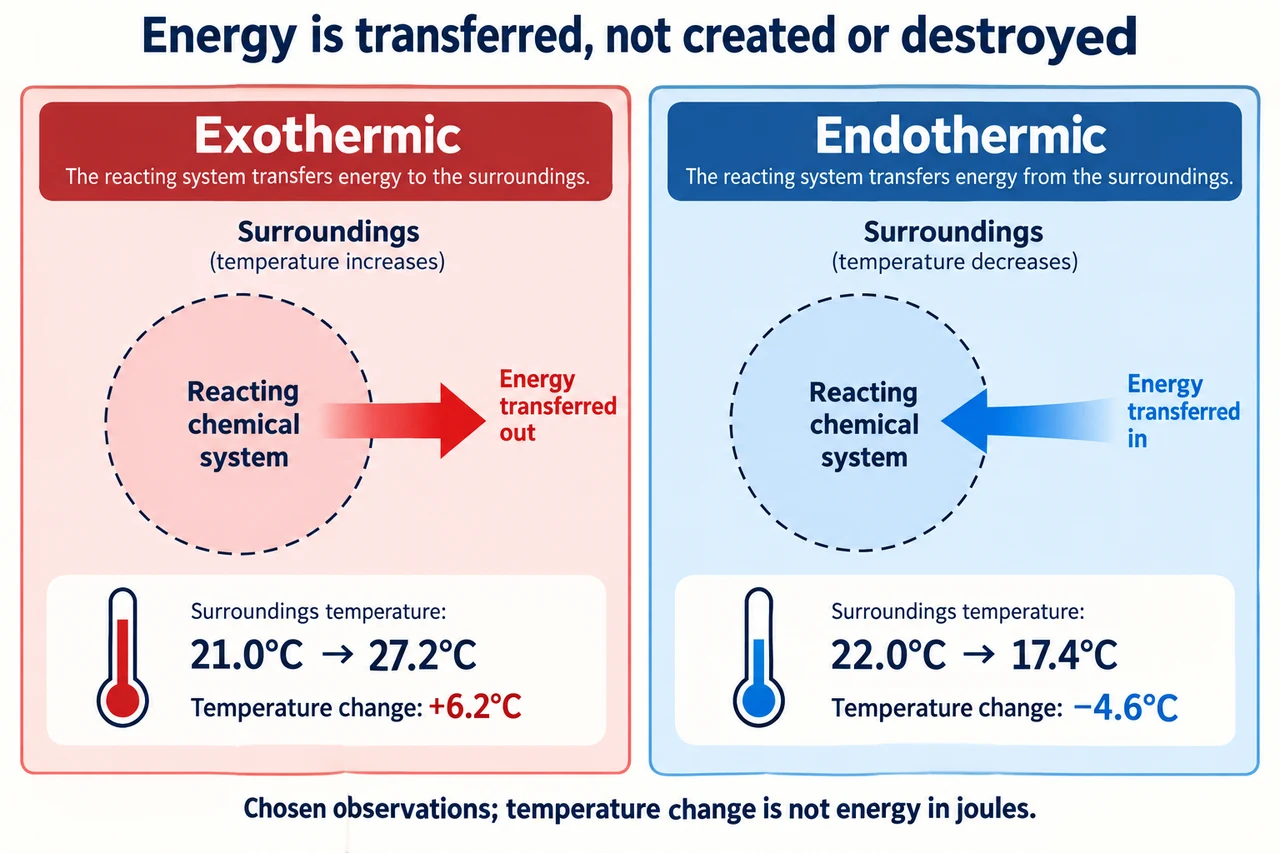
Energy goes somewhere: warming and cooling
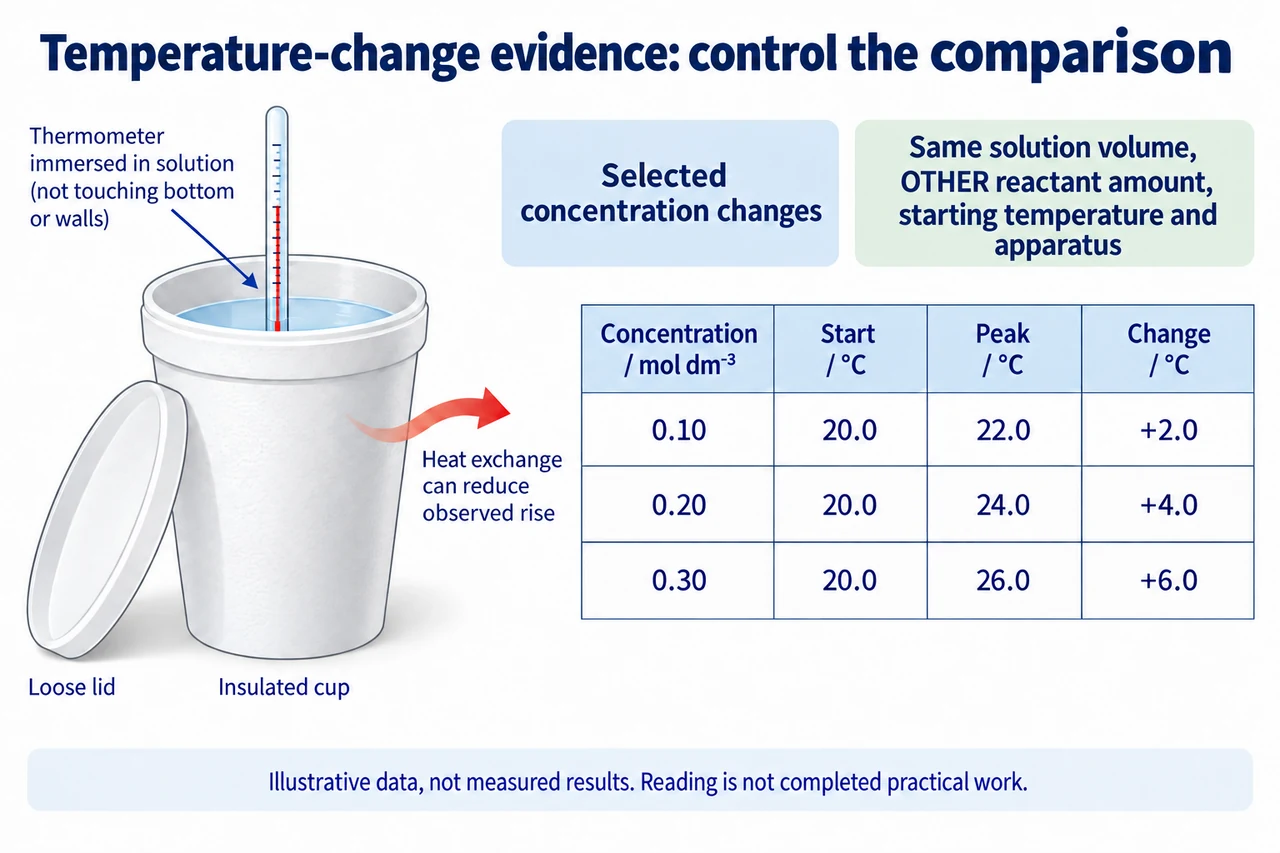
practical study: compare temperature changes without confusing variables
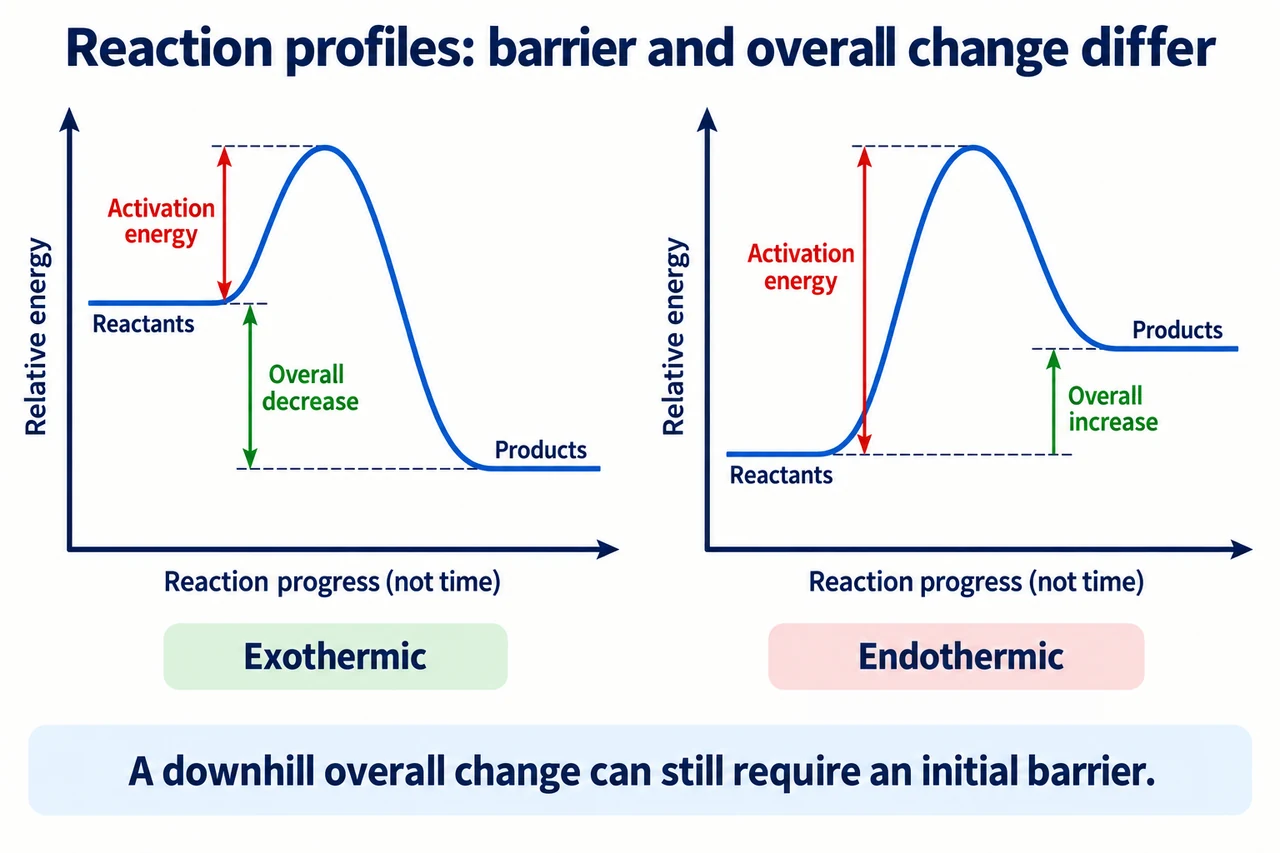
Read the barrier, not just the finish
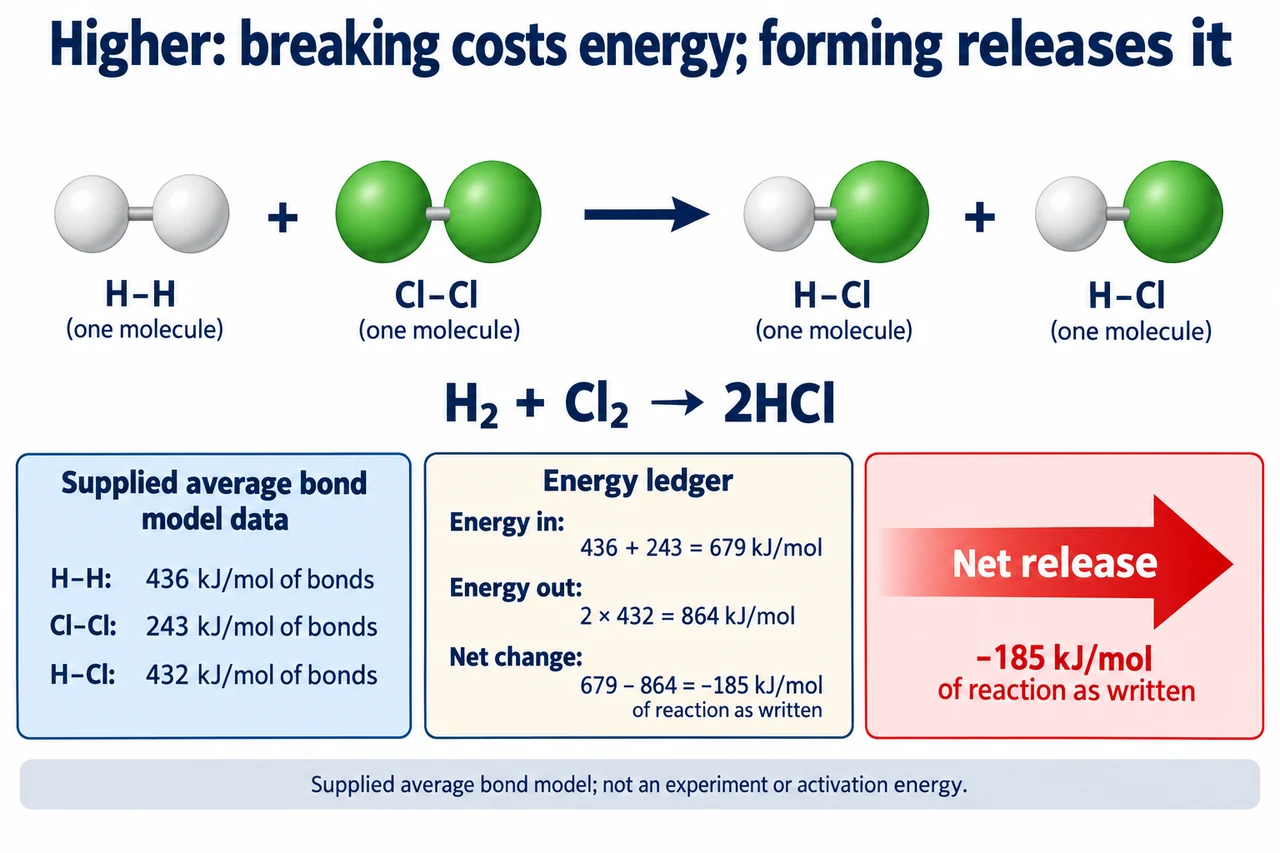
Higher: count bonds and keep the energy sign
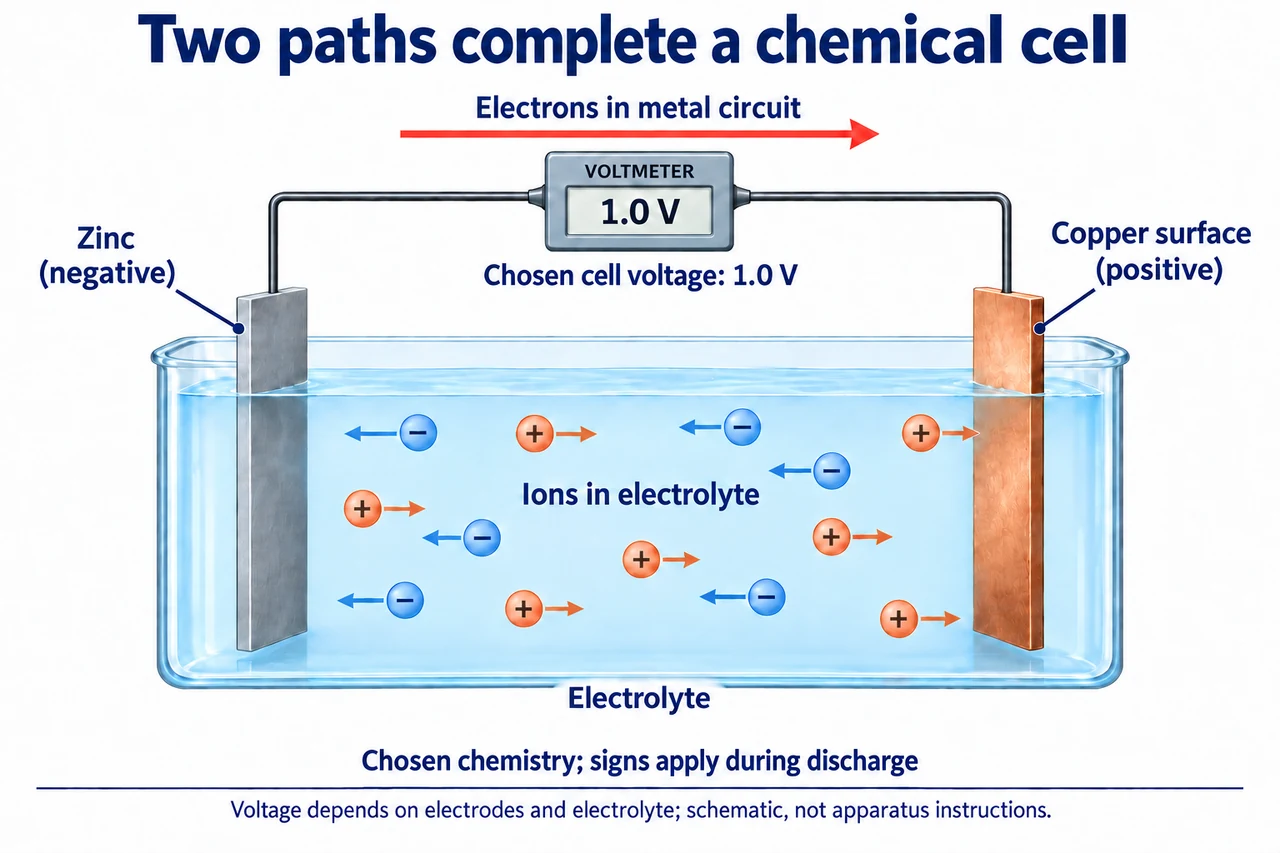
A chemical cell needs two paths
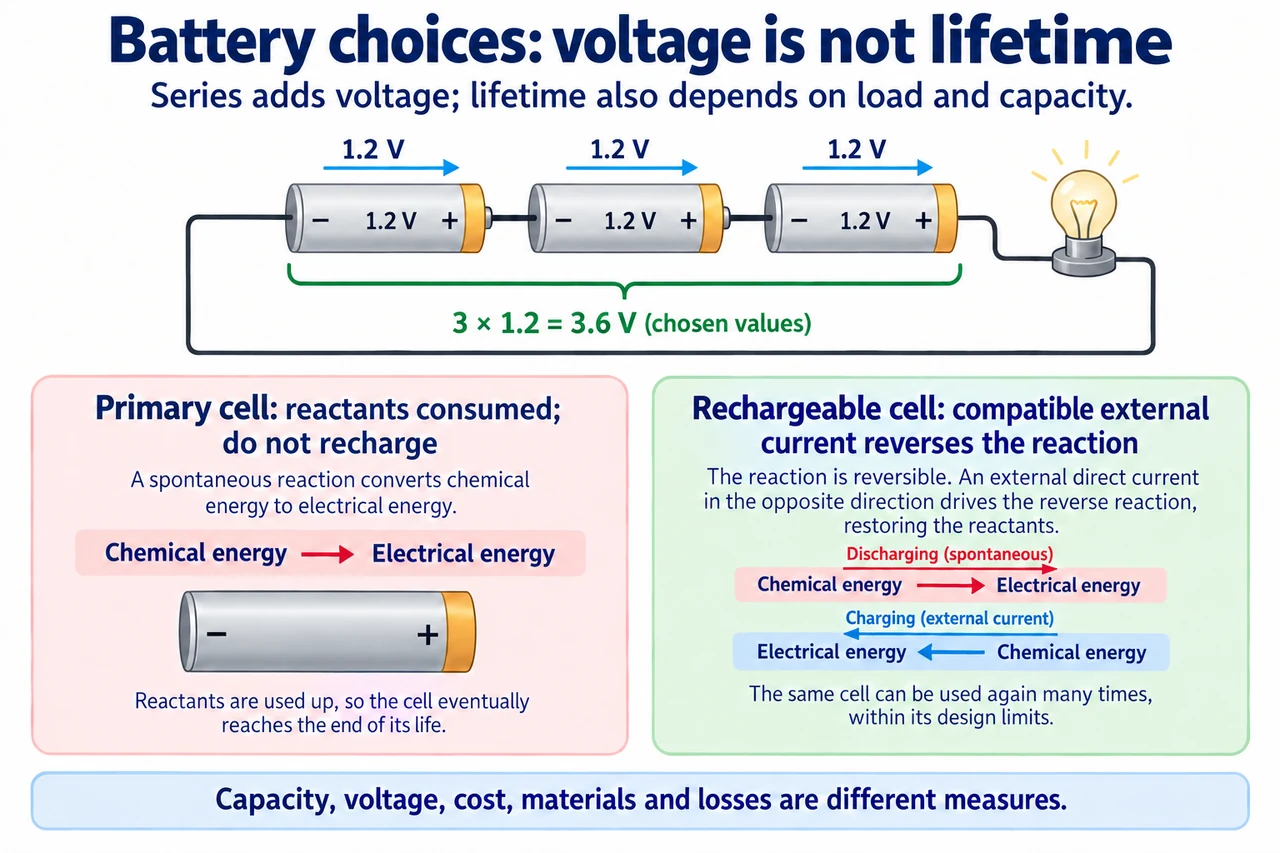
Stored reactants, series voltage and rechargeable choices
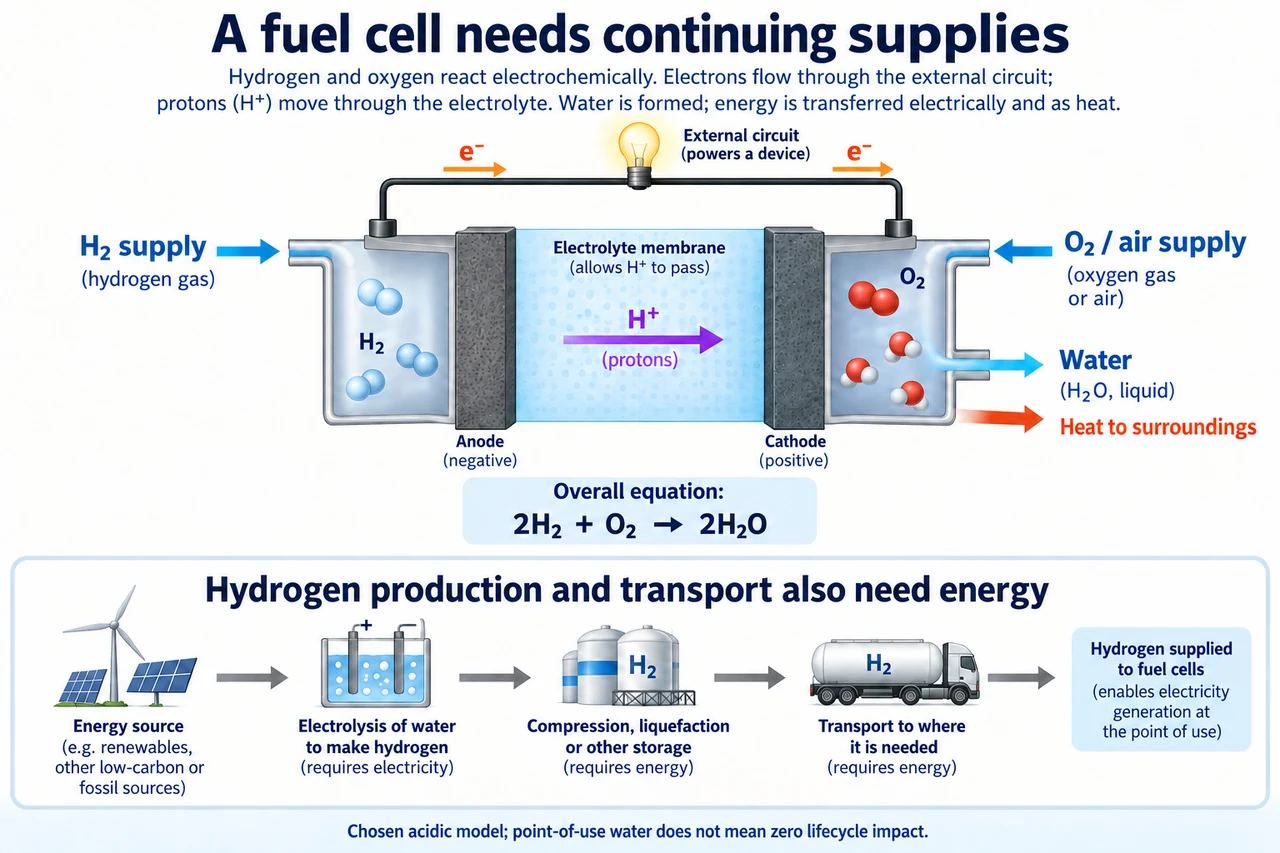
Hydrogen fuel cells: continuous supply, bounded claims
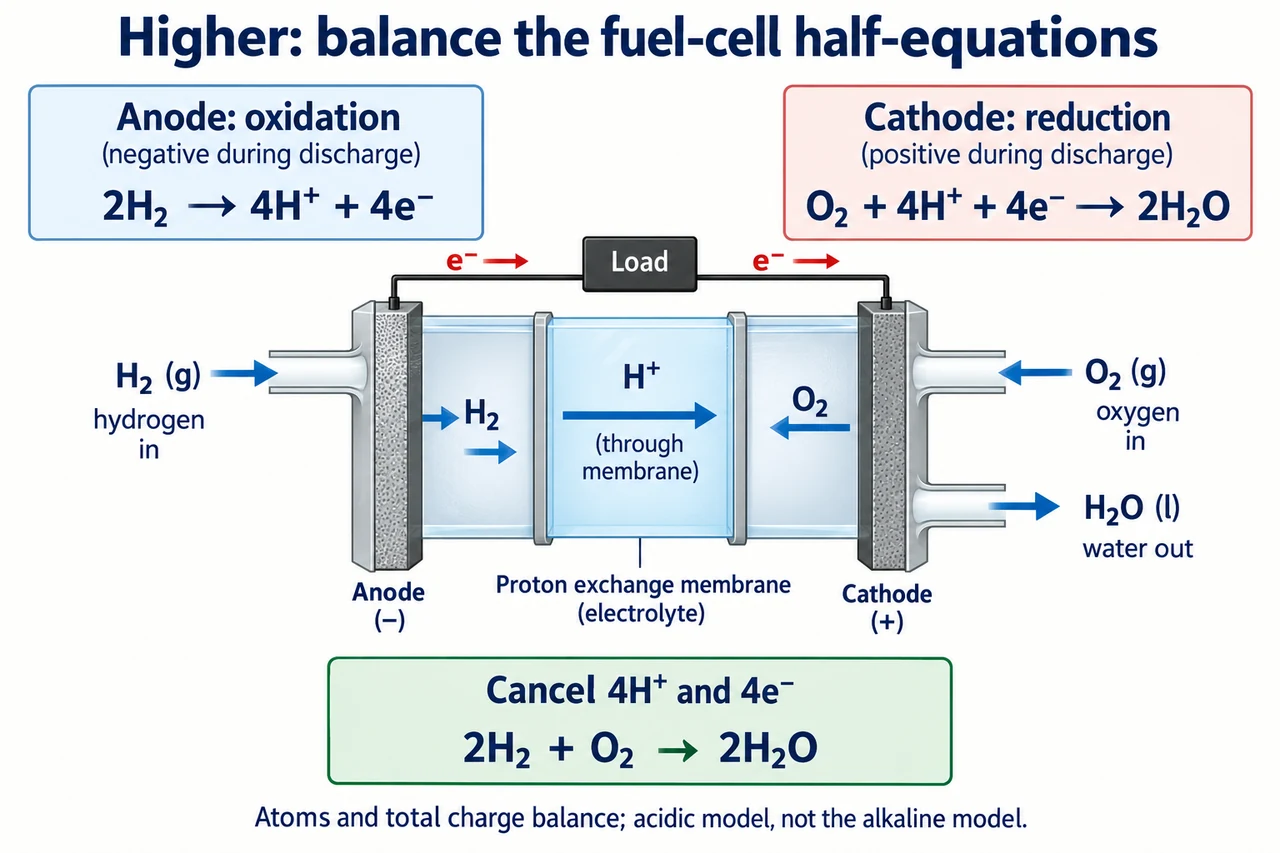
Higher: balance the fuel-cell electron account
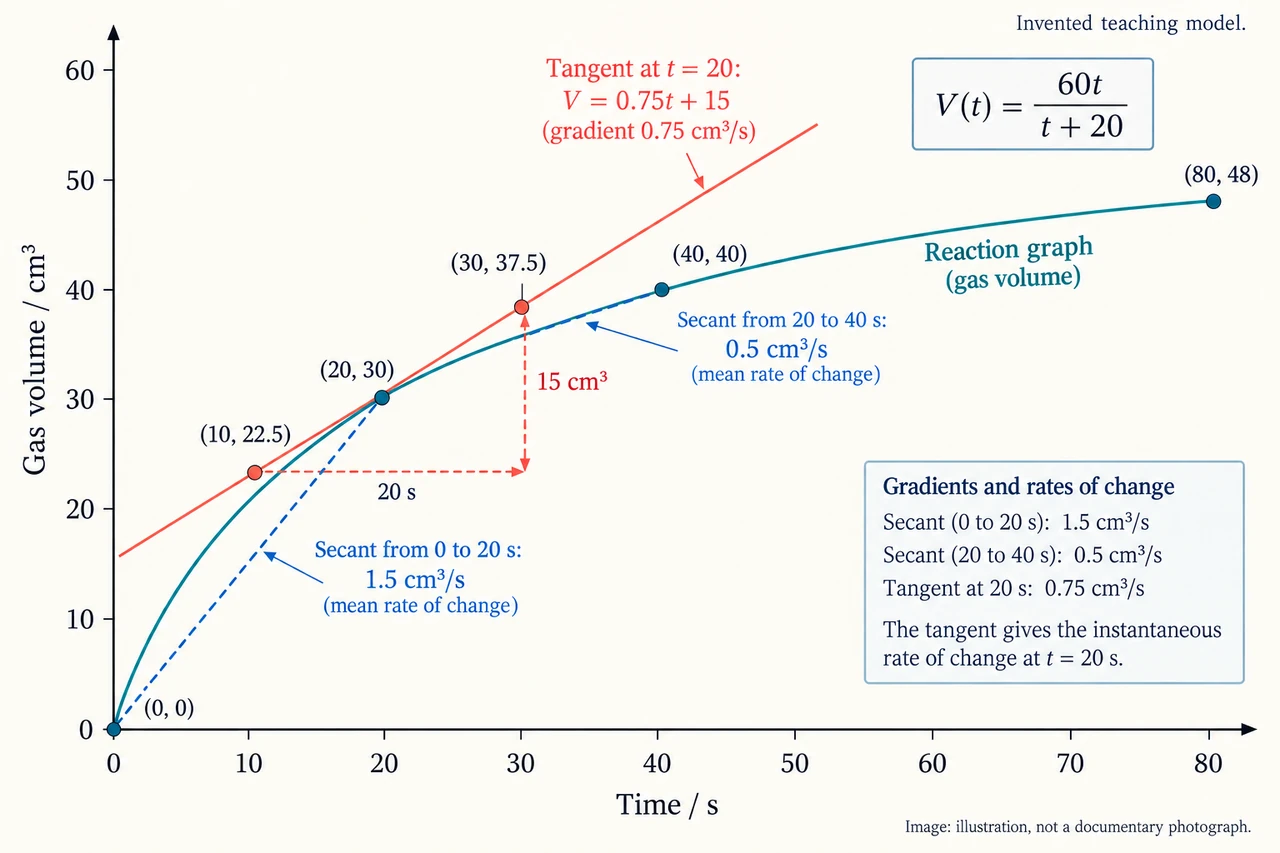
A rate belongs to an interval or a moment
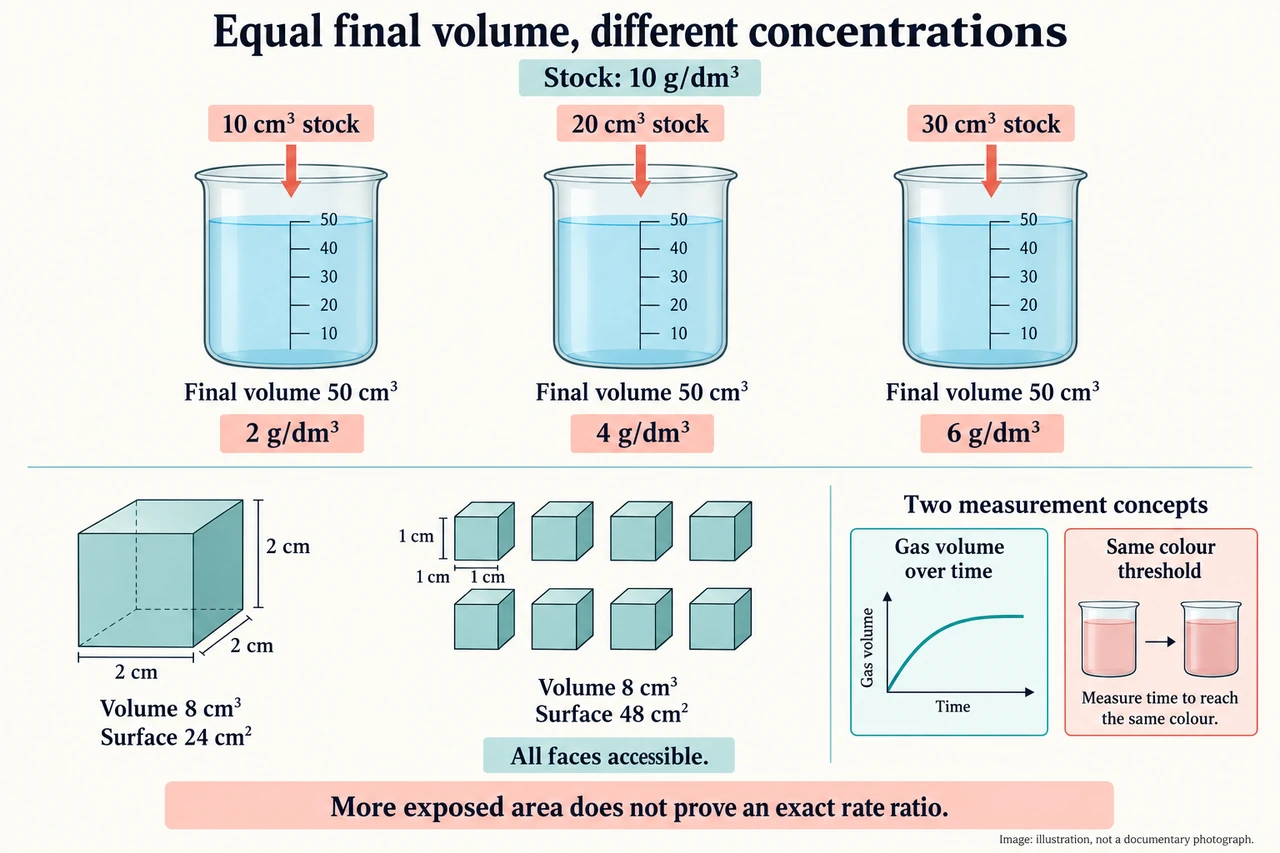
Change the cause, keep the comparison fair
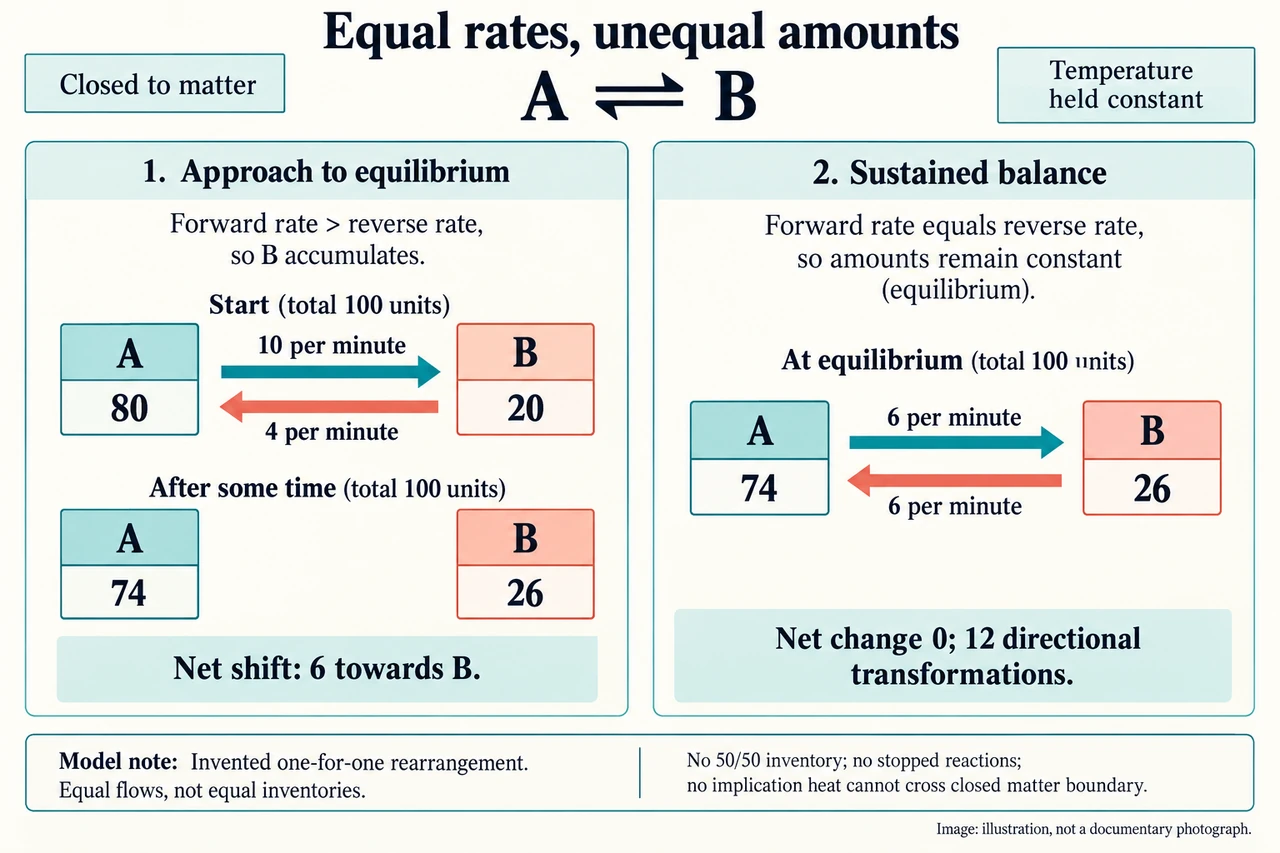
Equal rates do not mean equal amounts
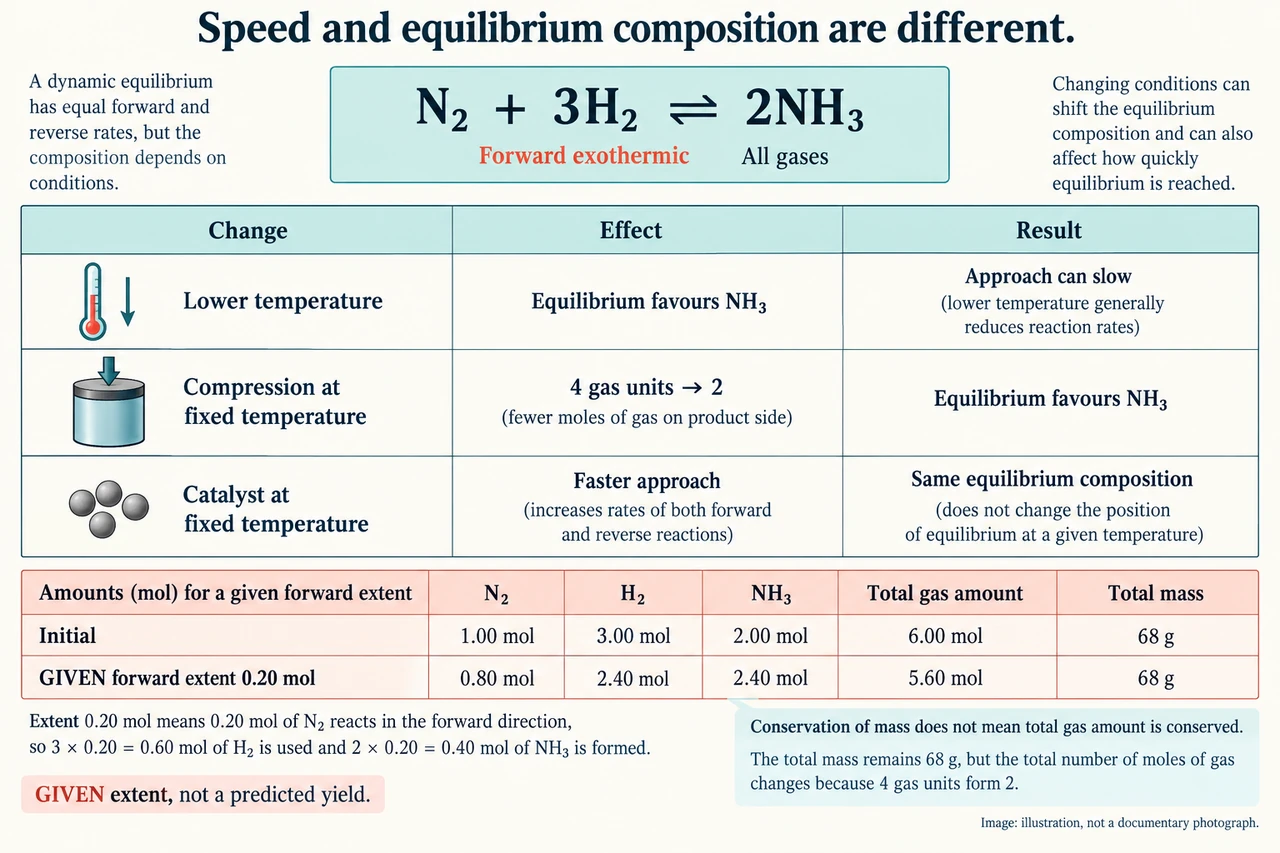
Faster production and a larger equilibrium fraction are different questions
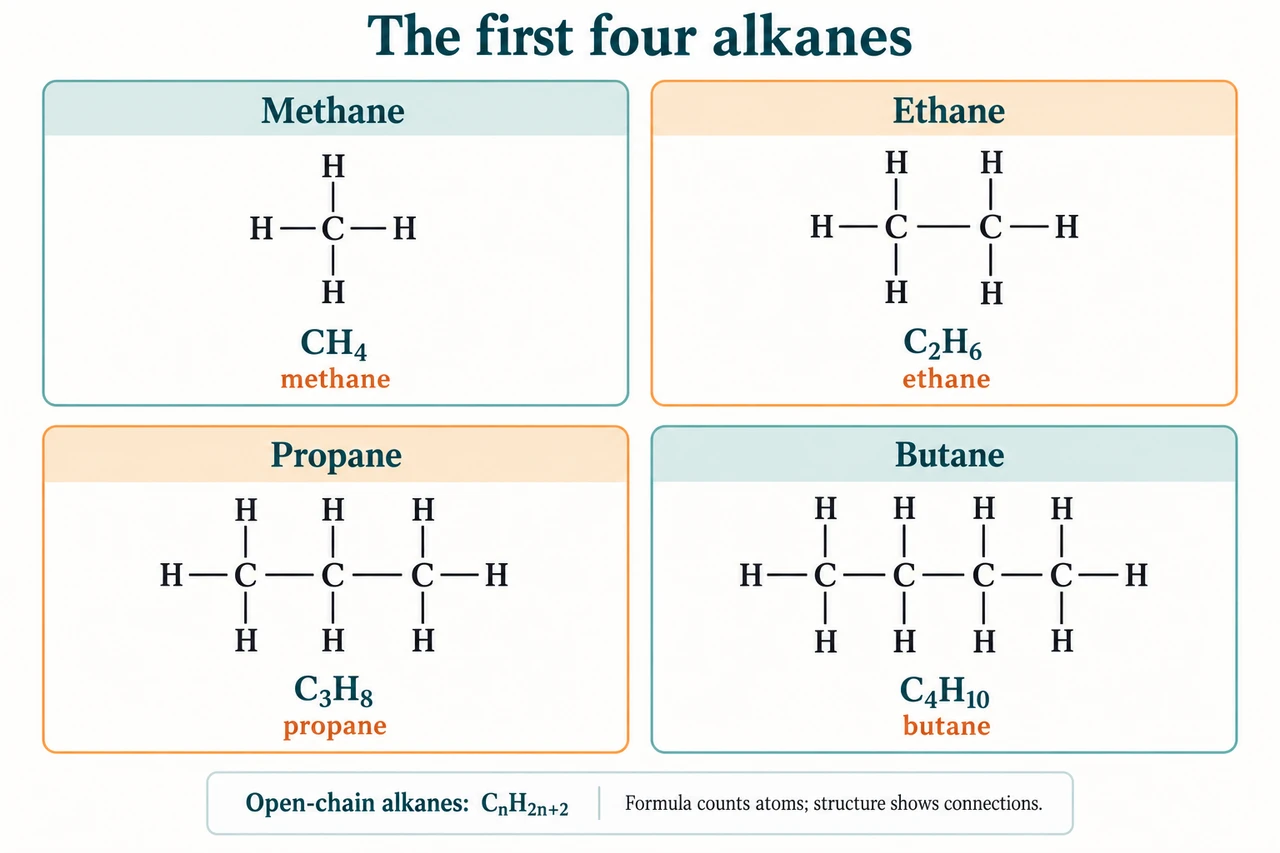
A formula counts atoms; a structure shows their connections
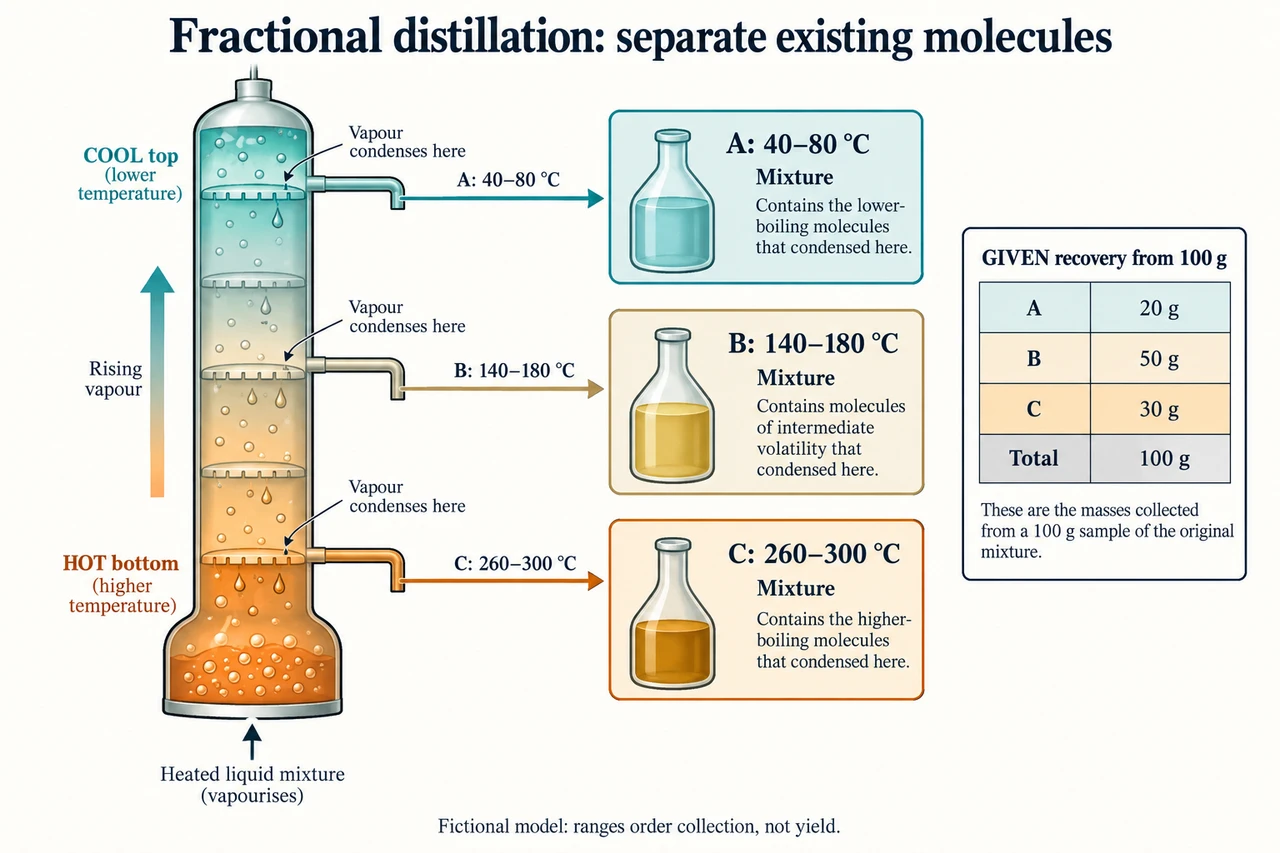
A fraction is a collected mixture, not a new molecule
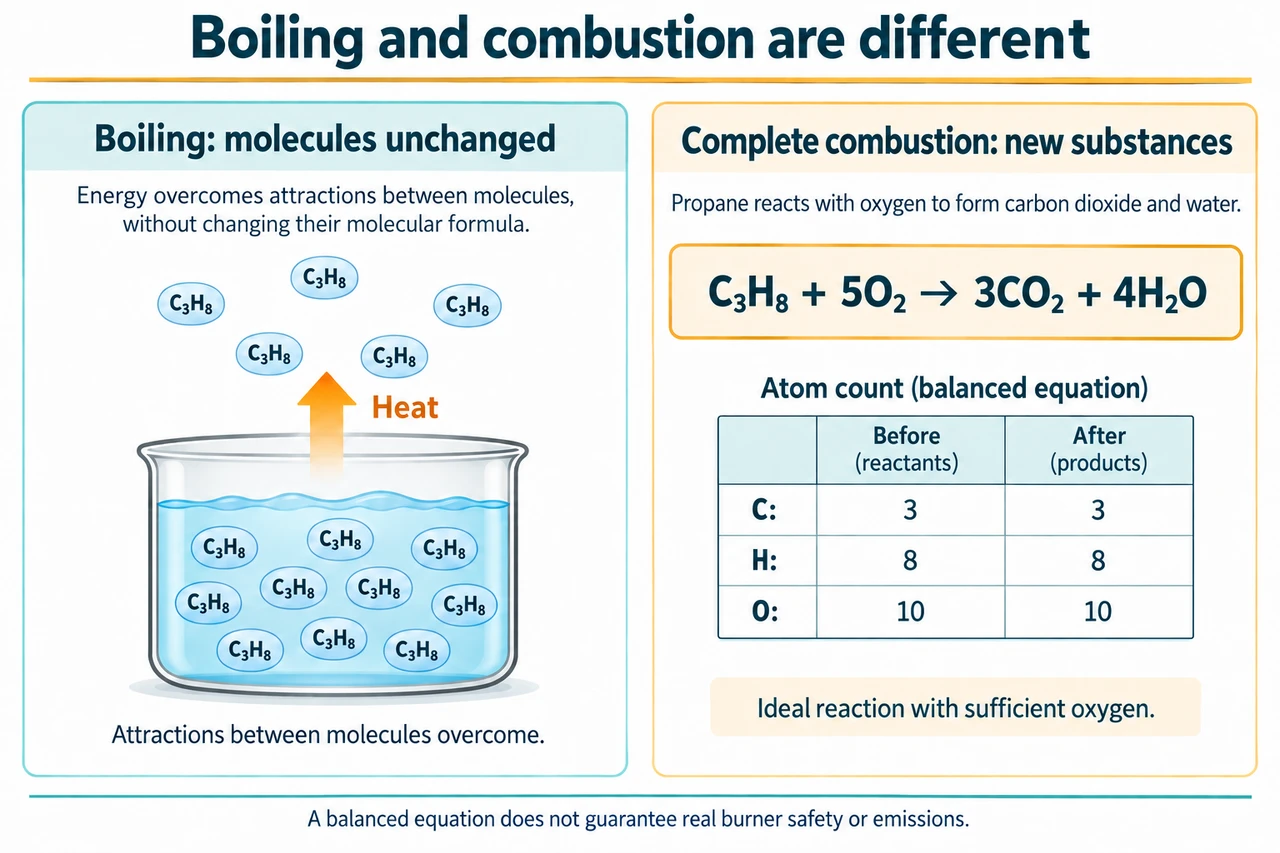
Boiling separates molecules; combustion rearranges their atoms
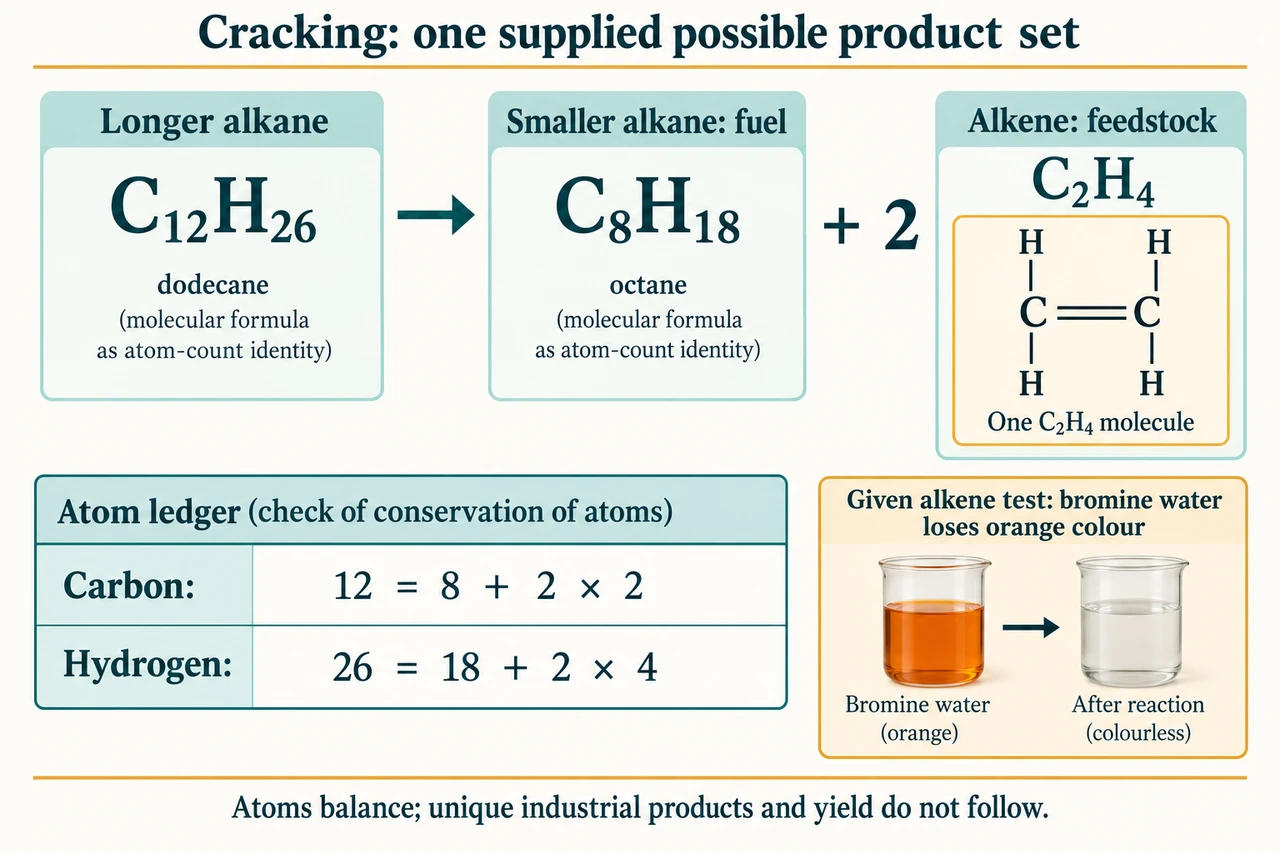
A balanced cracking example is one possible product set