← Explore learning guidesIndependent learning guide
UK GCSE Mathematics · independent study
Independent myAudience subject study using references for England. Published readings cover selected topics; full curriculum, assessment and practical coverage are not verified. No awarding-body affiliation, endorsement, qualification or grade guarantee is offered. Check the source specification and your centre for the requirements of your chosen course.
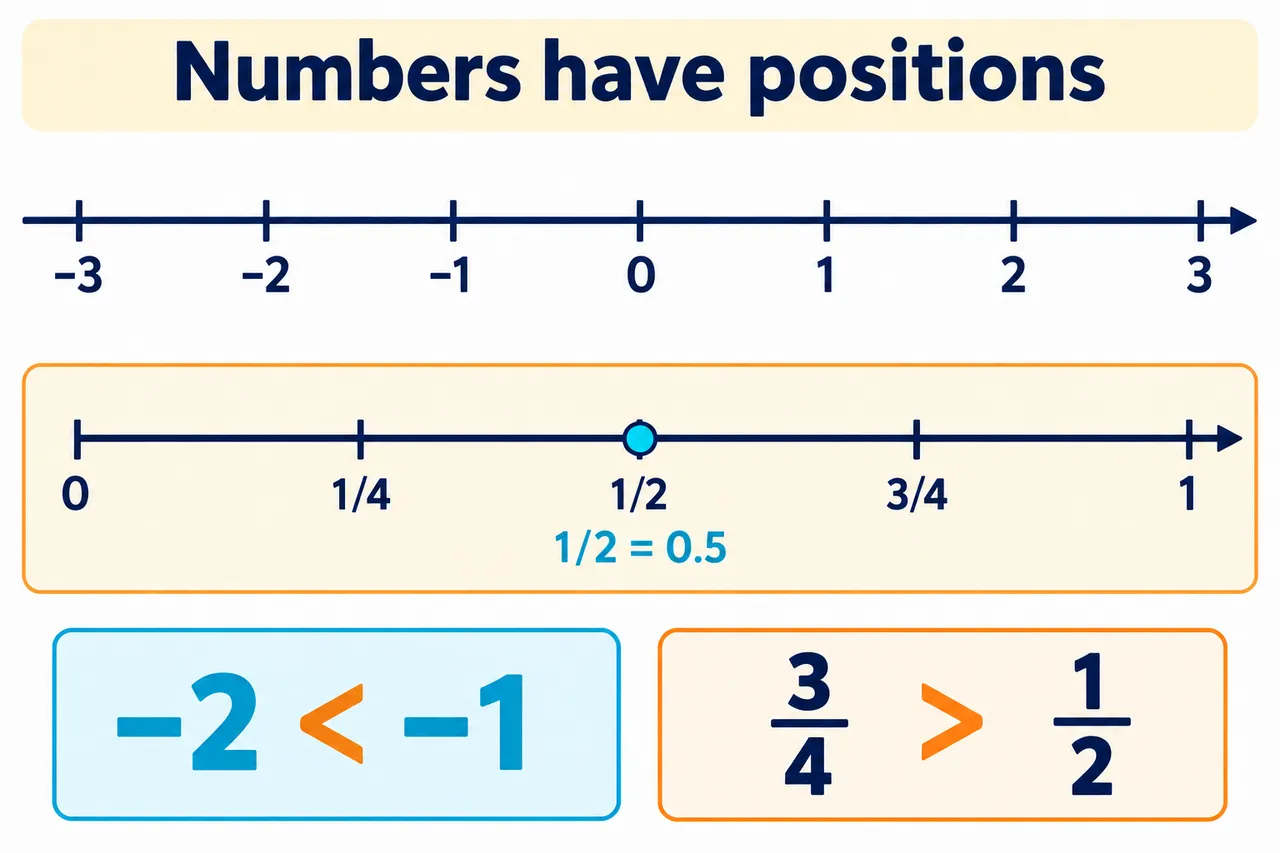
Put numbers in order
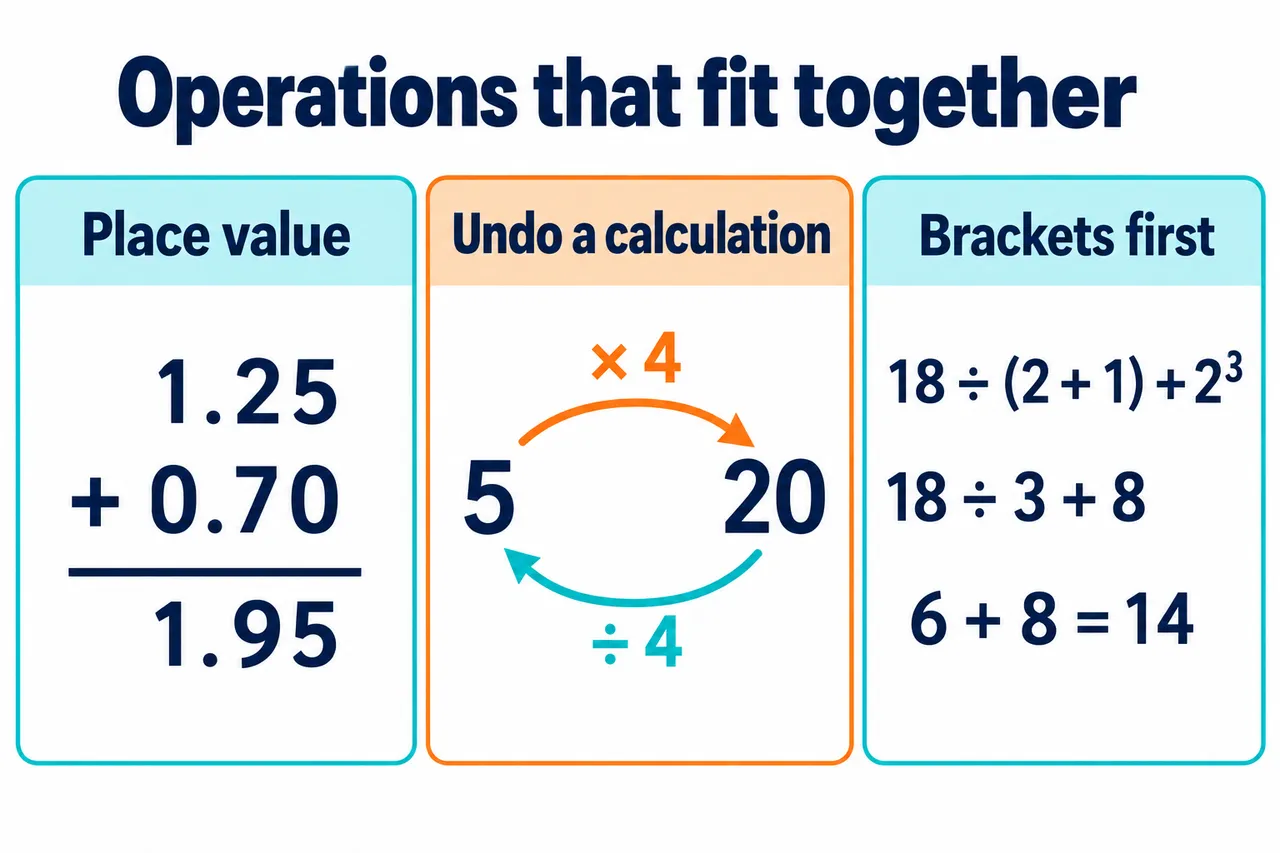
Calculate with signed numbers and decimals
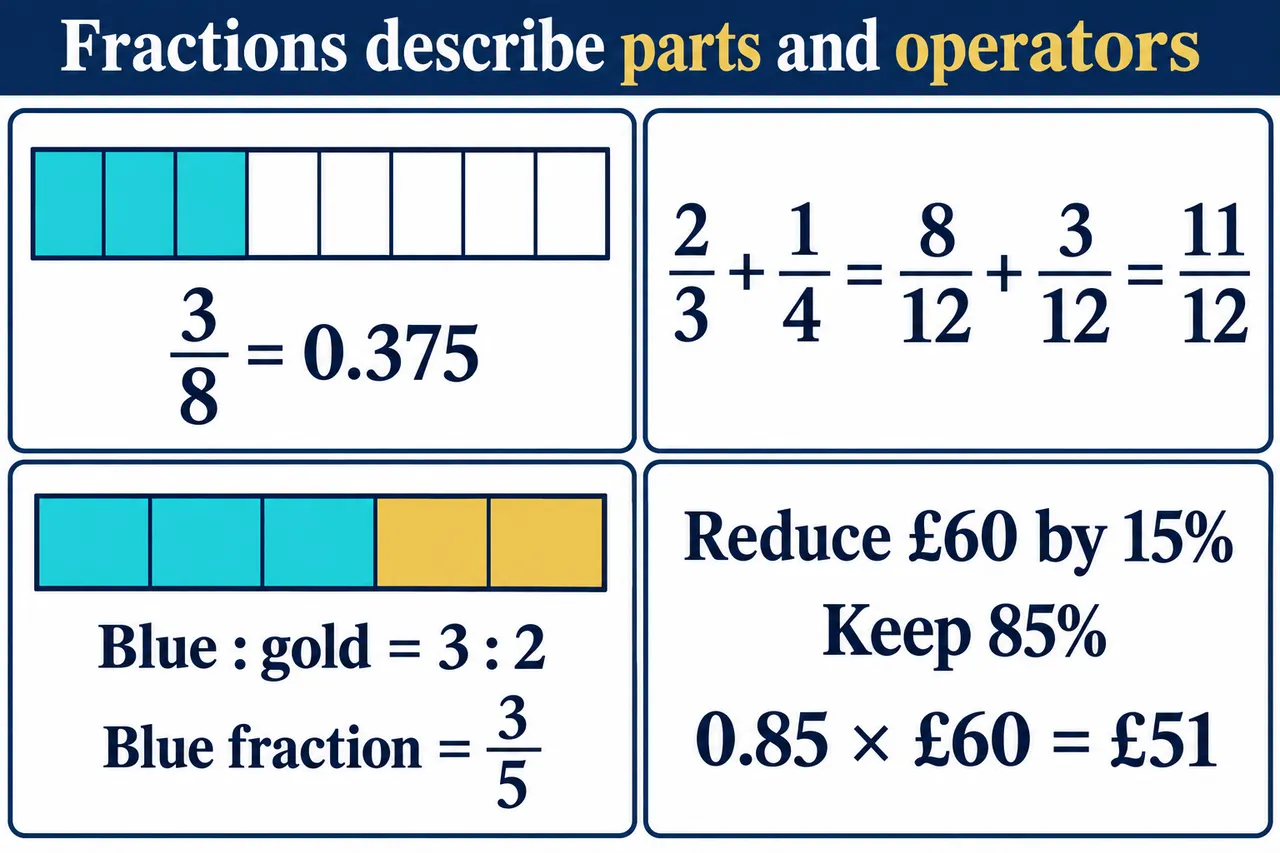
Operate with fractions and mixed numbers
Use inverses and operation priority
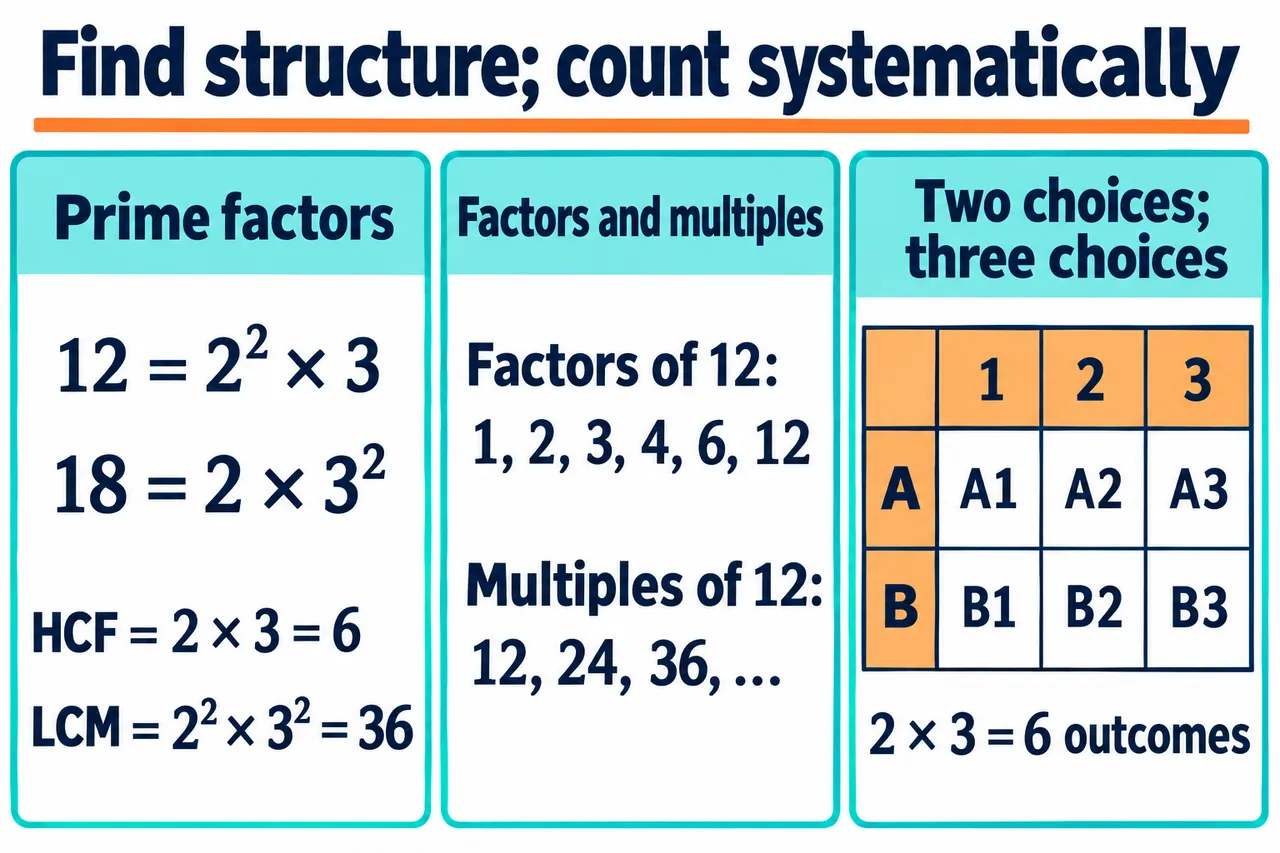
Use primes to find common factors and multiples
List possibilities without missing or repeating them
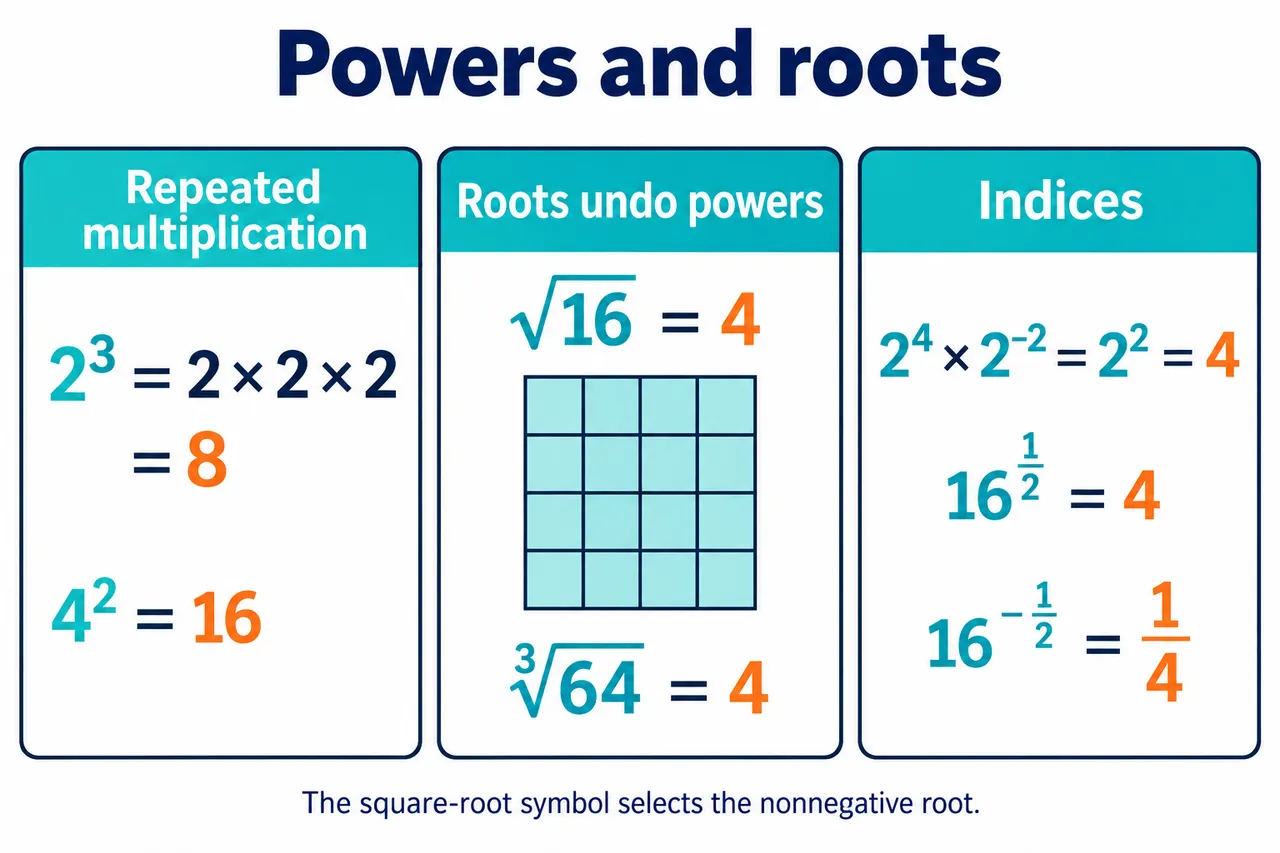
Understand powers and real roots
Calculate with integer indices
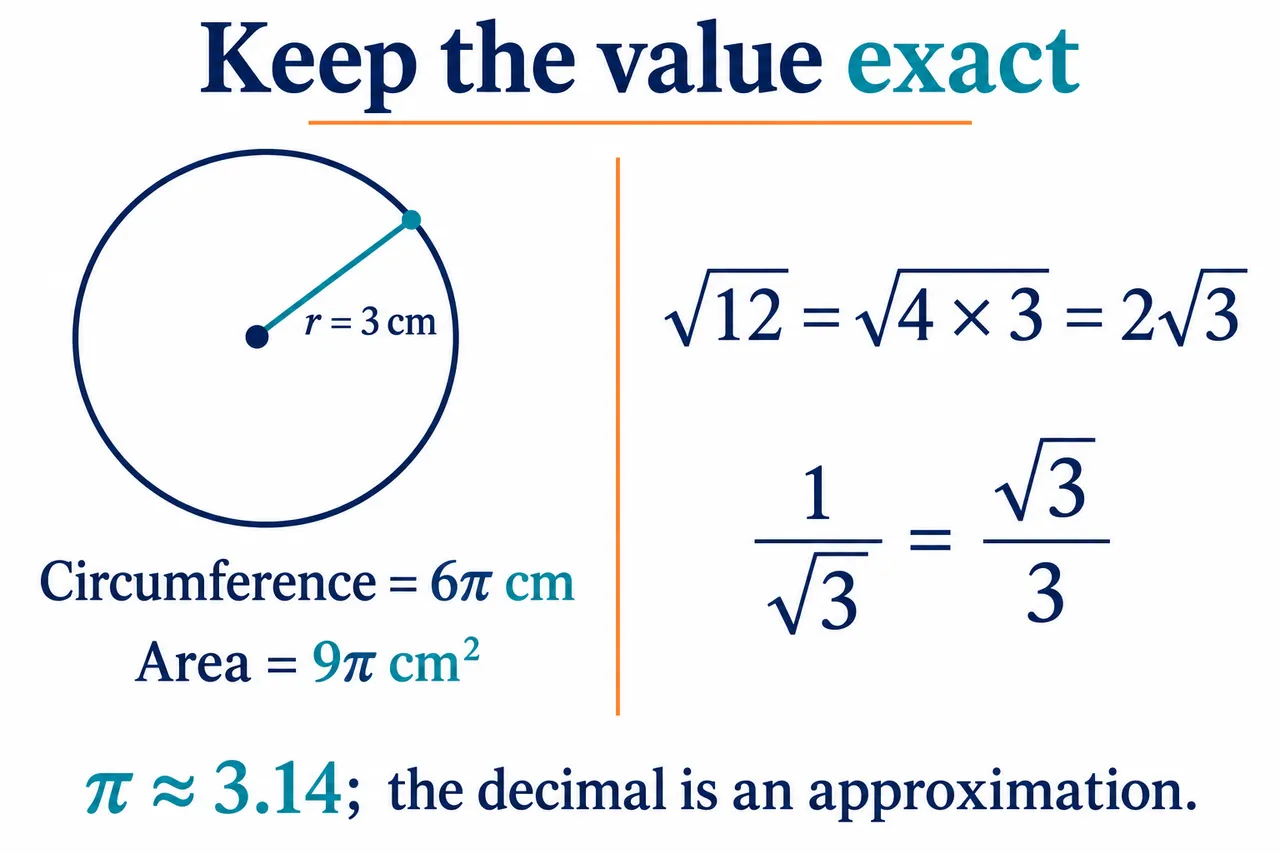
Keep fractions and multiples of pi exact
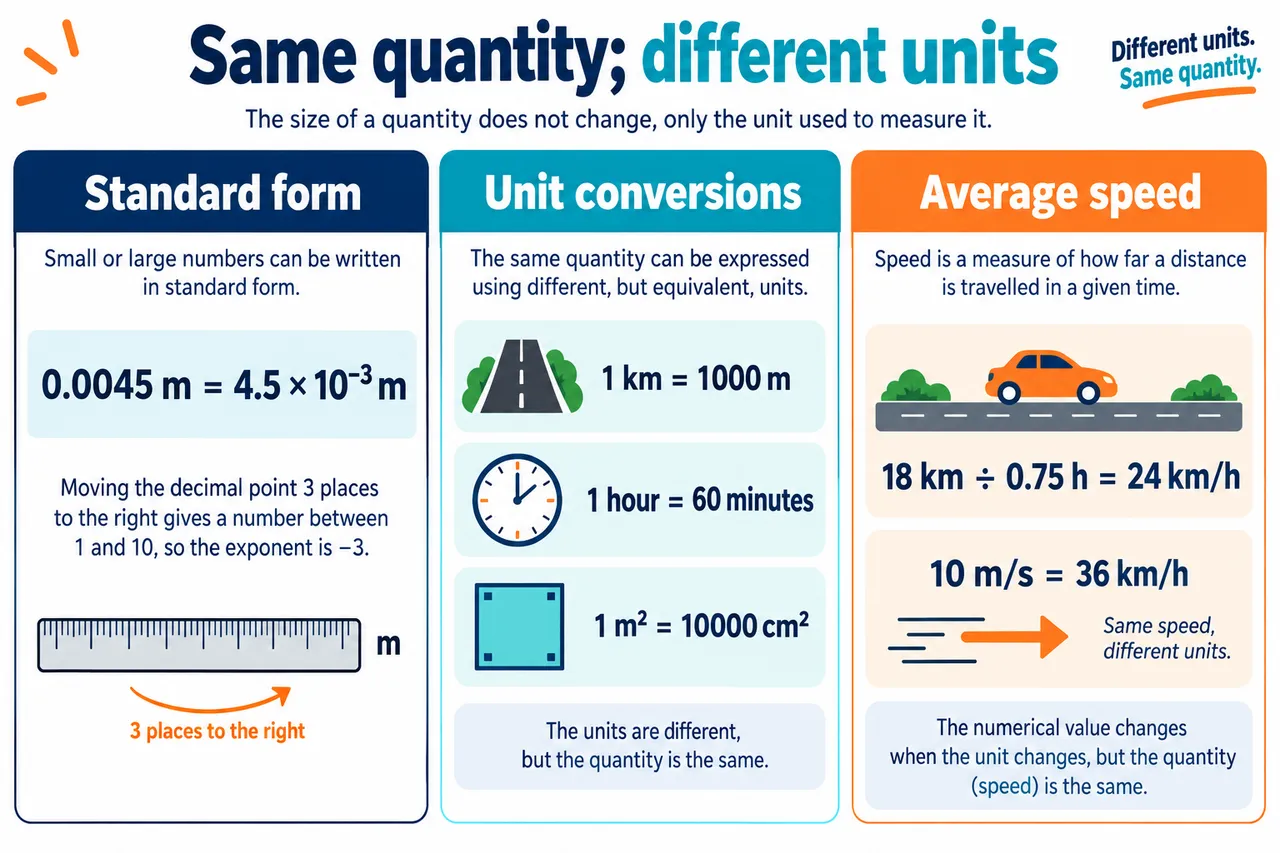
Use powers of ten to represent scale
Move between terminating decimals and fractions
Connect ratios with fractions of a whole
Apply a fraction or percentage to a quantity
Convert units without changing the quantity
Read rates and compound measures
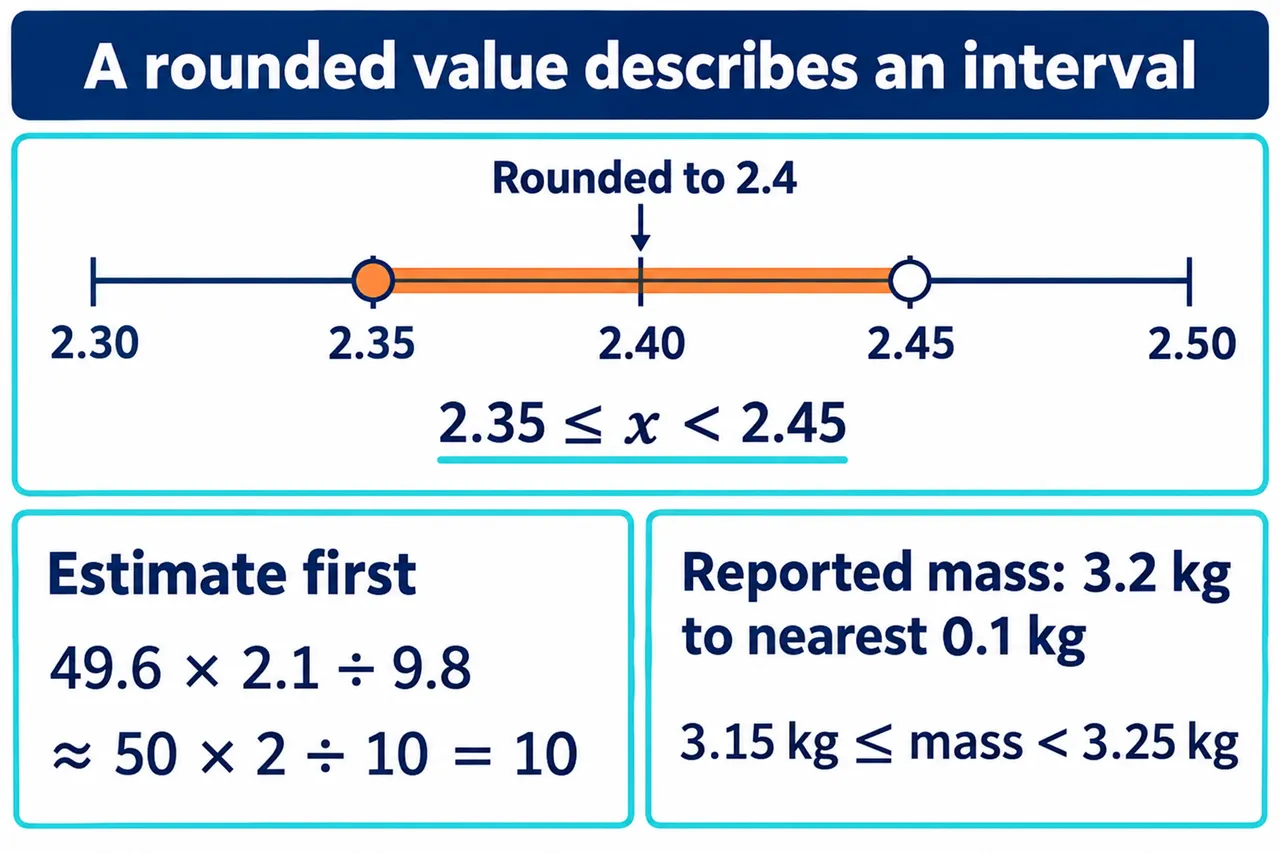
Use estimates to catch implausible answers
Round values and describe their intervals
Interpret the precision of a reported measurement
Count linked choices with a product
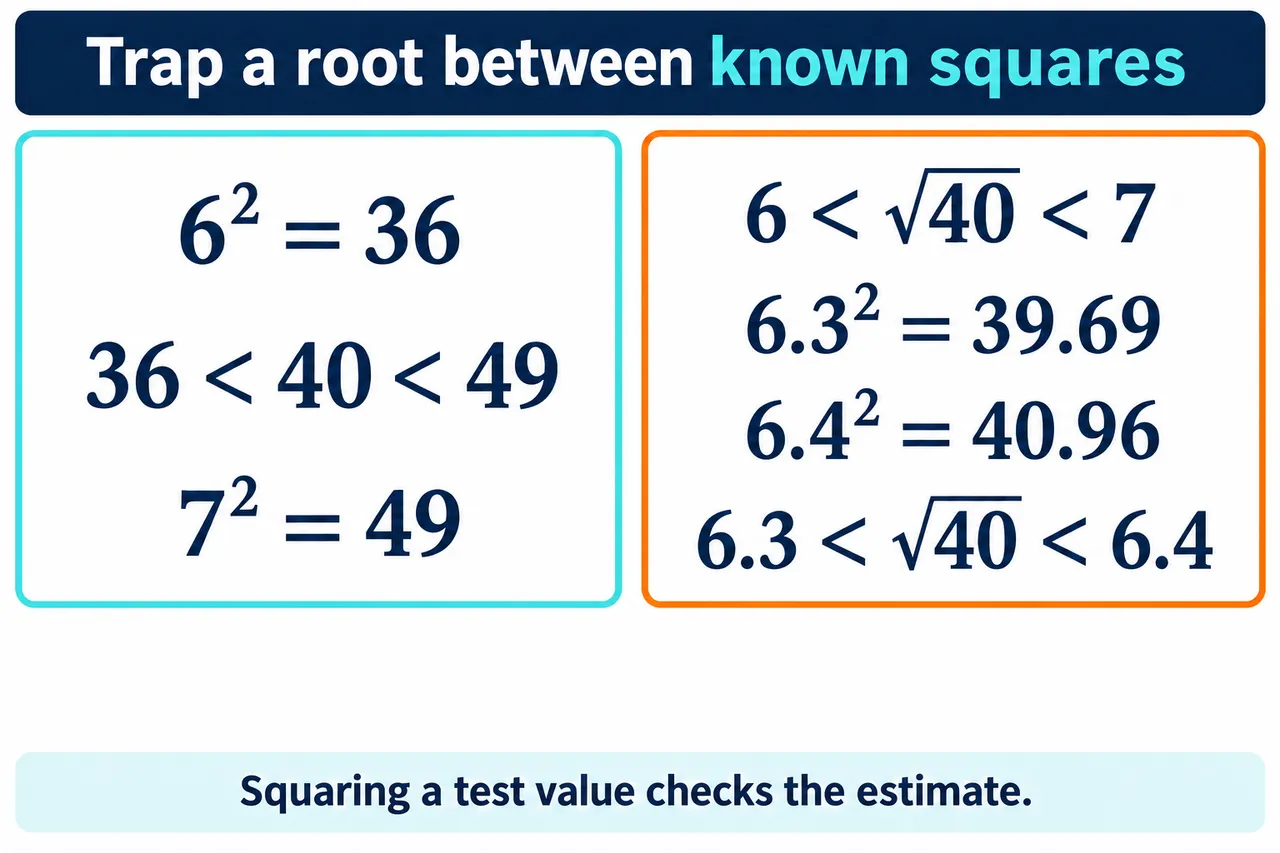
Locate a root between familiar powers
Read fractional powers as roots
Simplify roots without approximating them
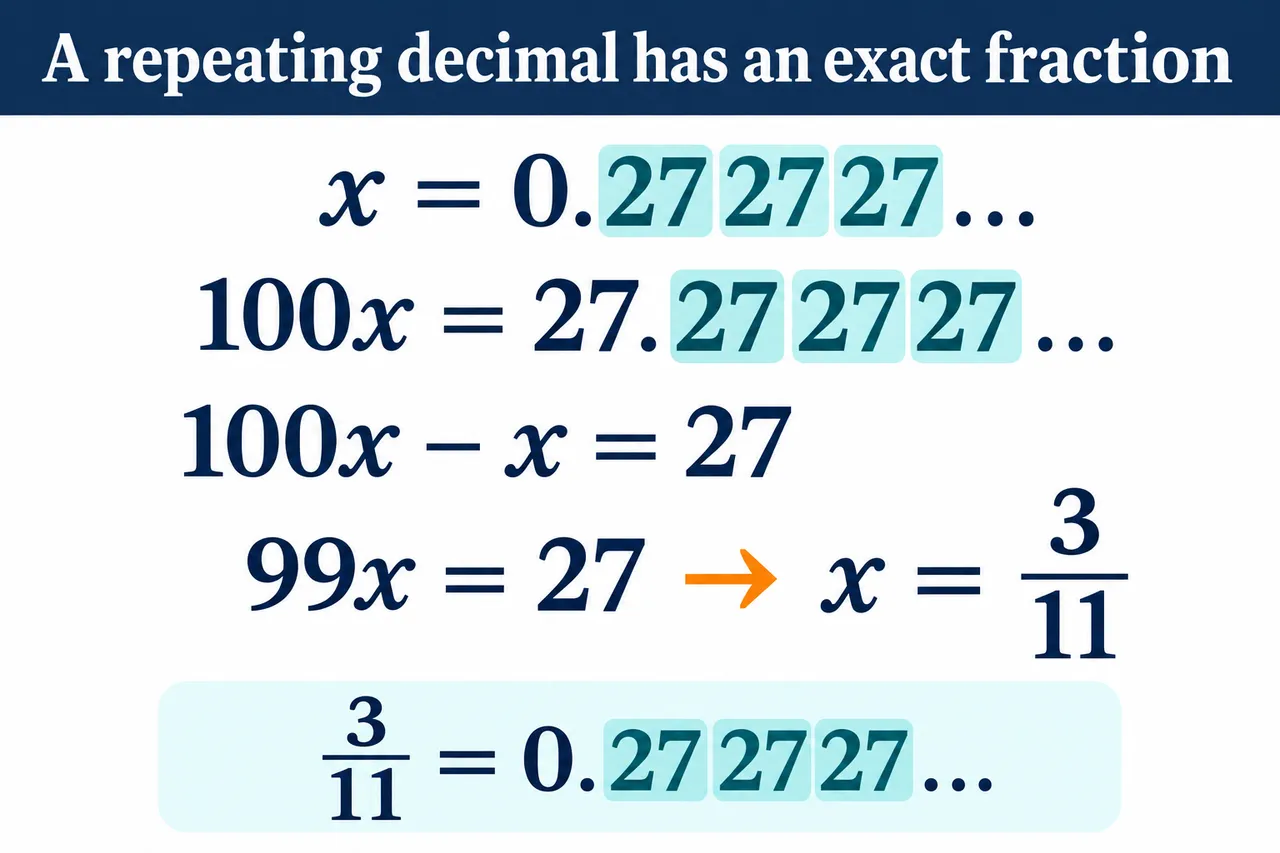
Convert a recurring decimal to an exact fraction
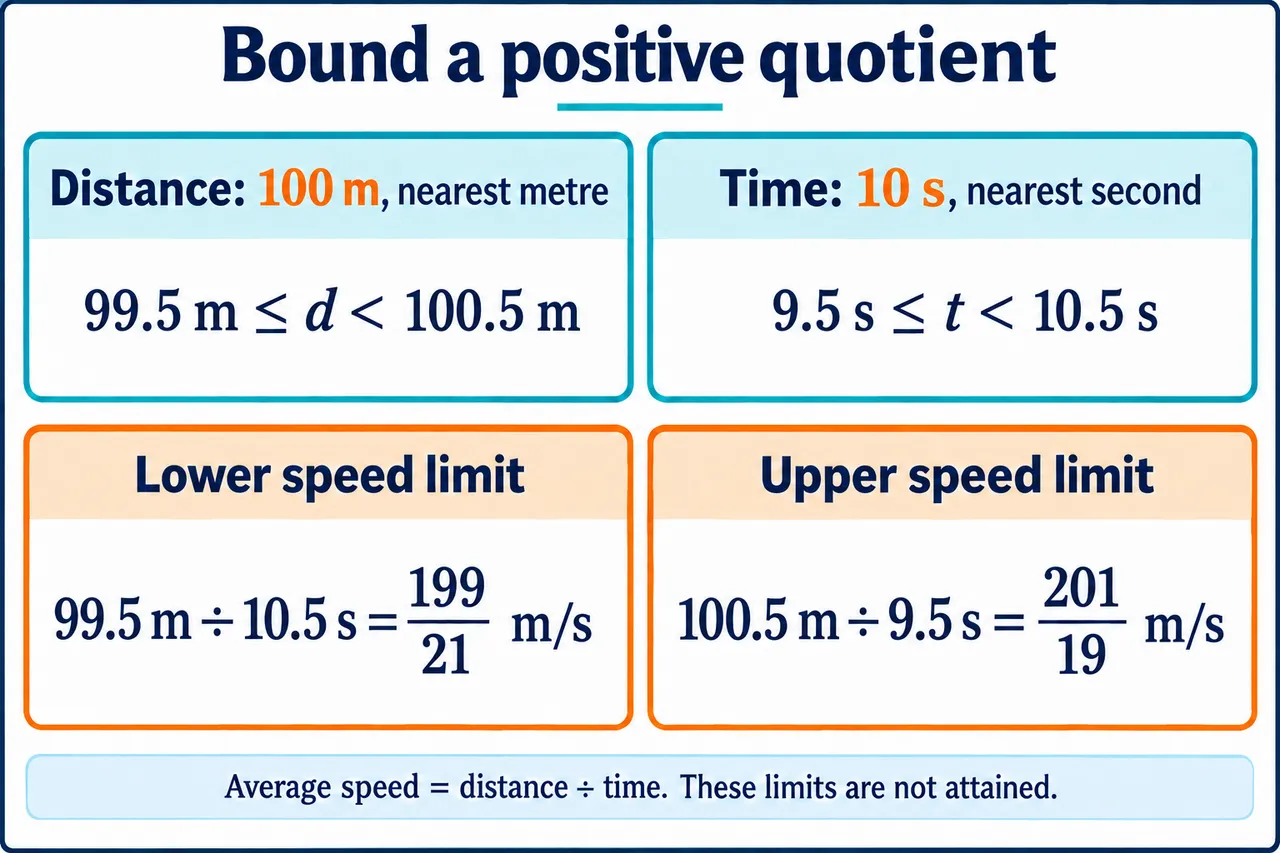
Bound a calculation from rounded measurements
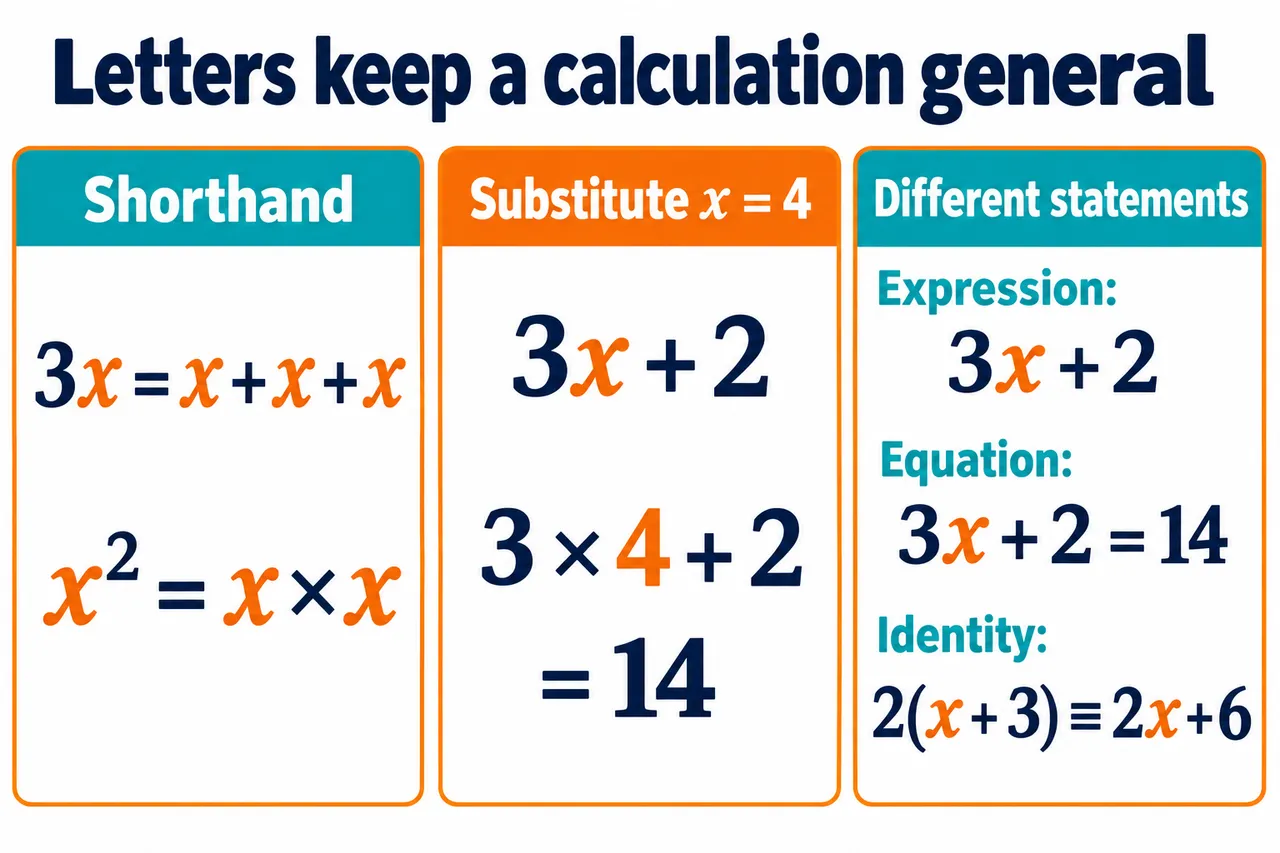
Read the shorthand of algebra
Replace variables and keep the operations
Distinguish expressions, equations and identities
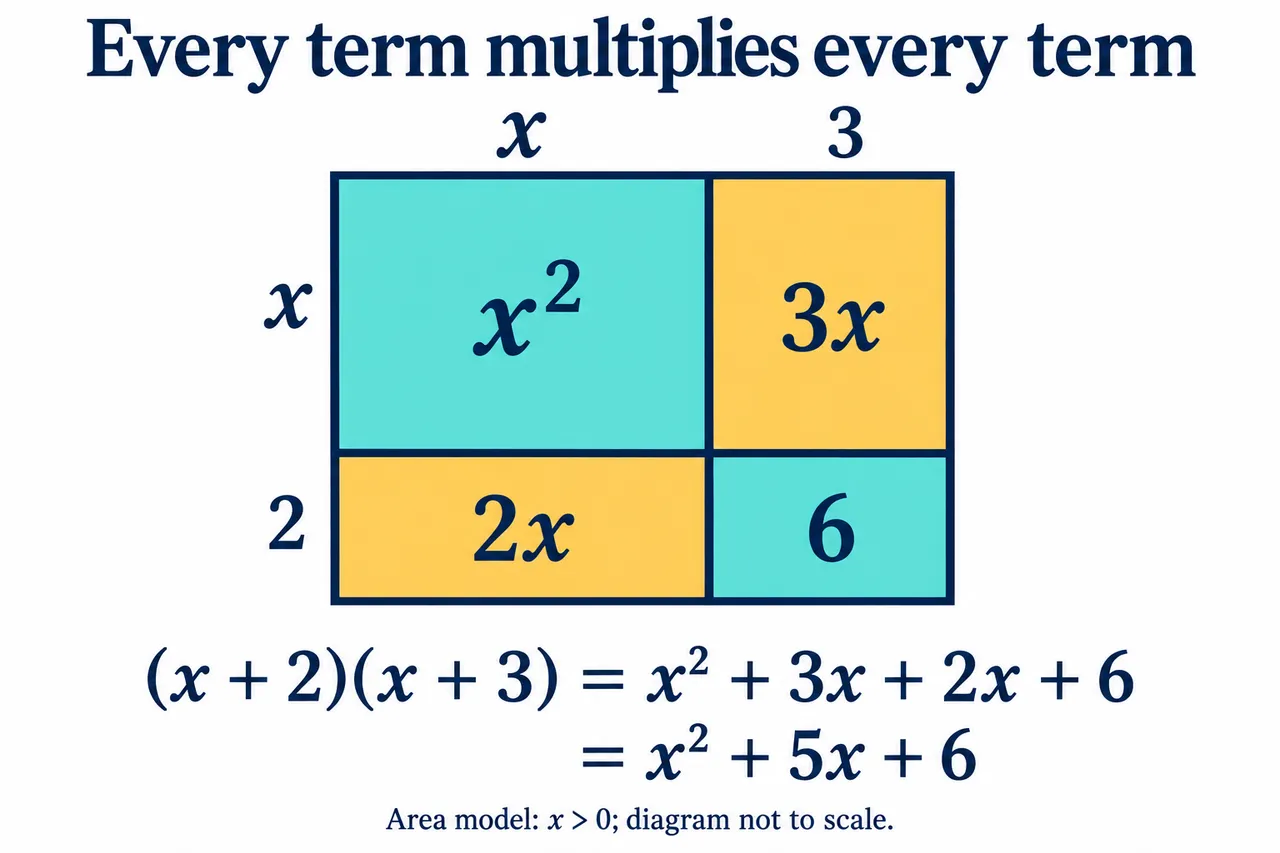
Combine terms with matching variable structure
Distribute a factor and reverse the operation
Expand and factorise simple quadratics
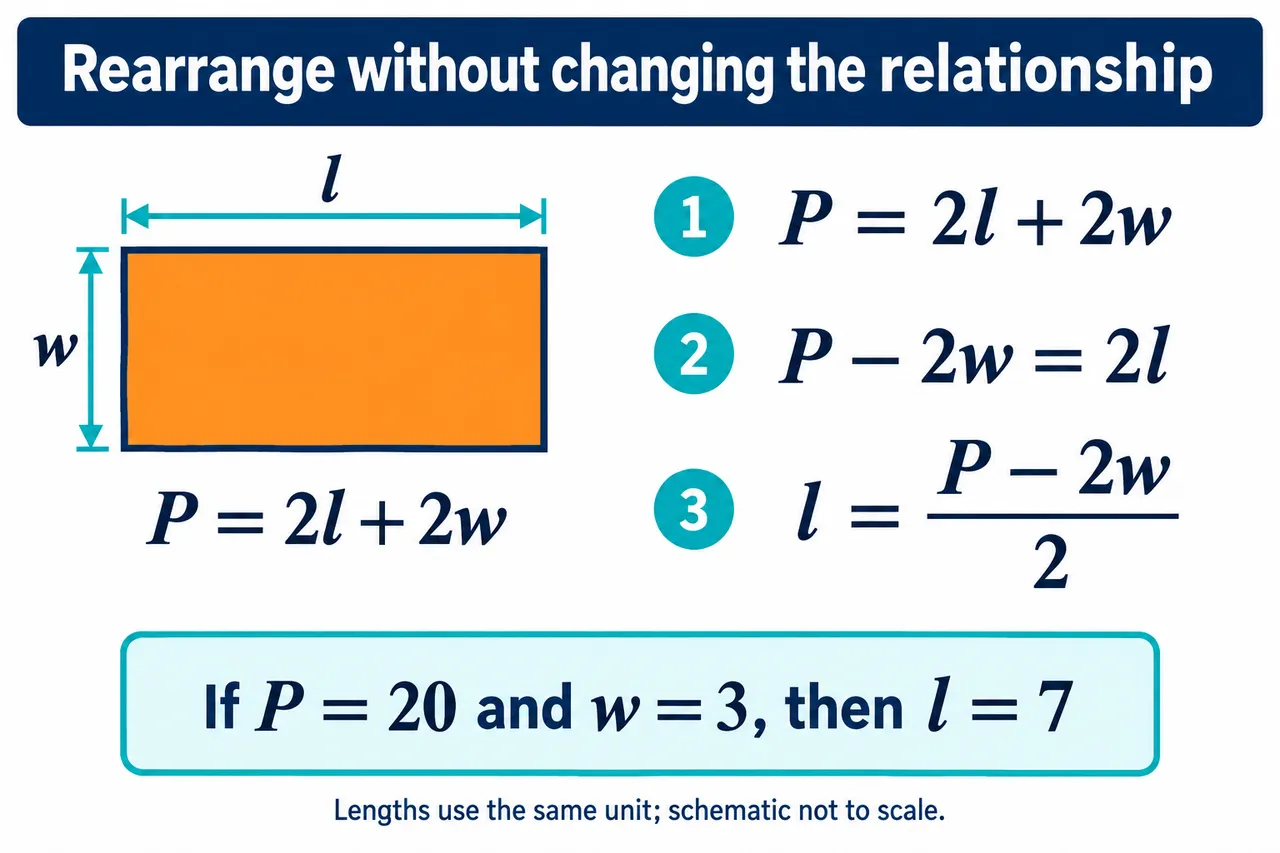
Change the subject of a formula
Show why a relationship holds
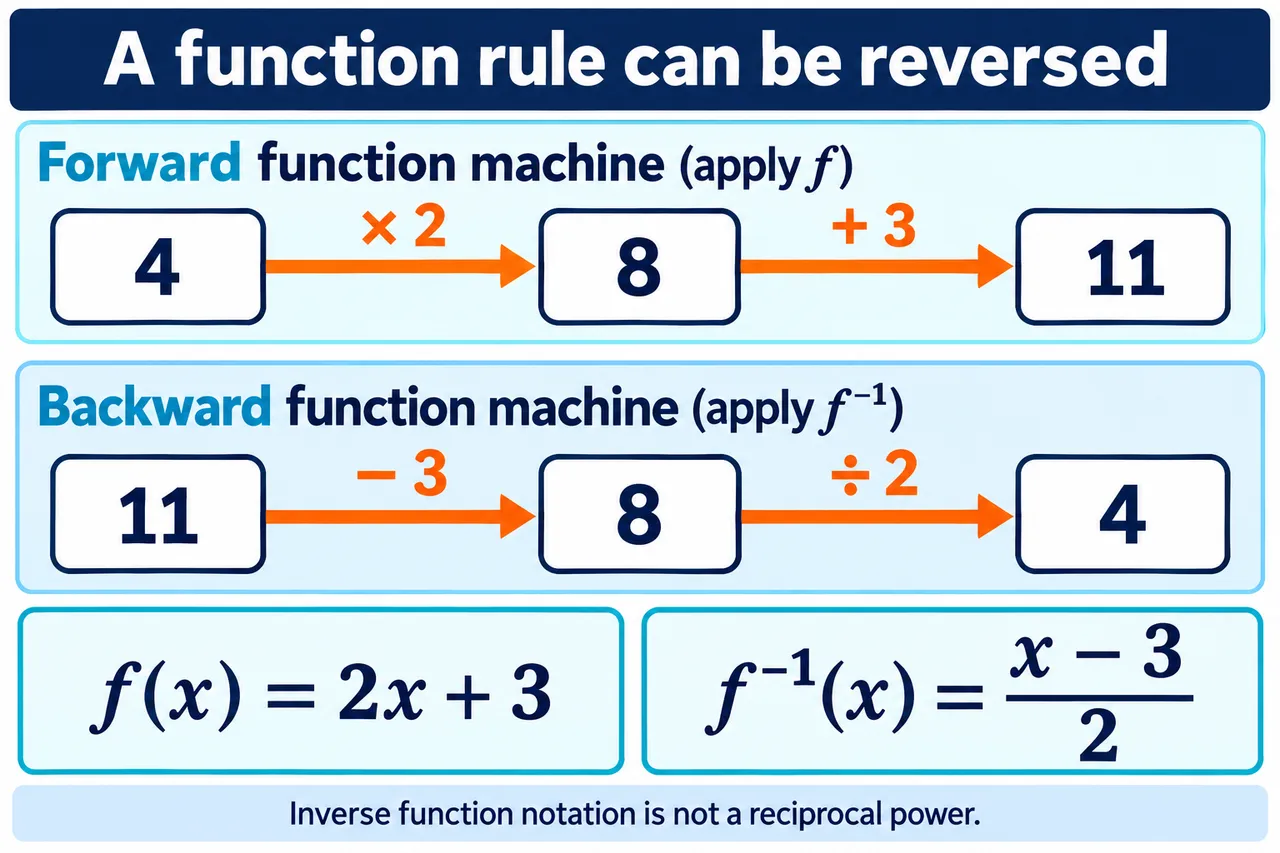
Treat an expression as an input-output rule
Factorise a quadratic with a non-unit leading coefficient
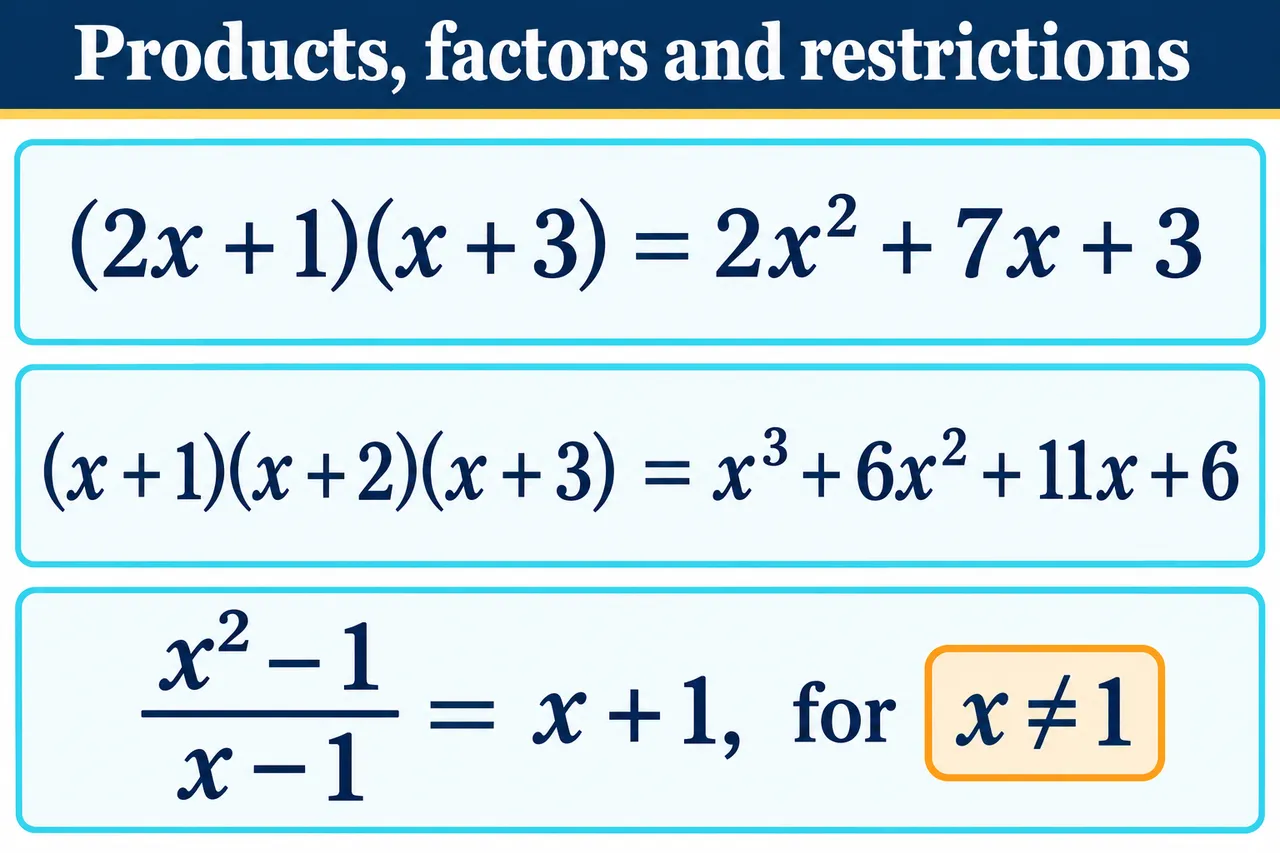
Multiply more than two brackets in stages
Simplify rational expressions while keeping restrictions
Reverse and combine function rules
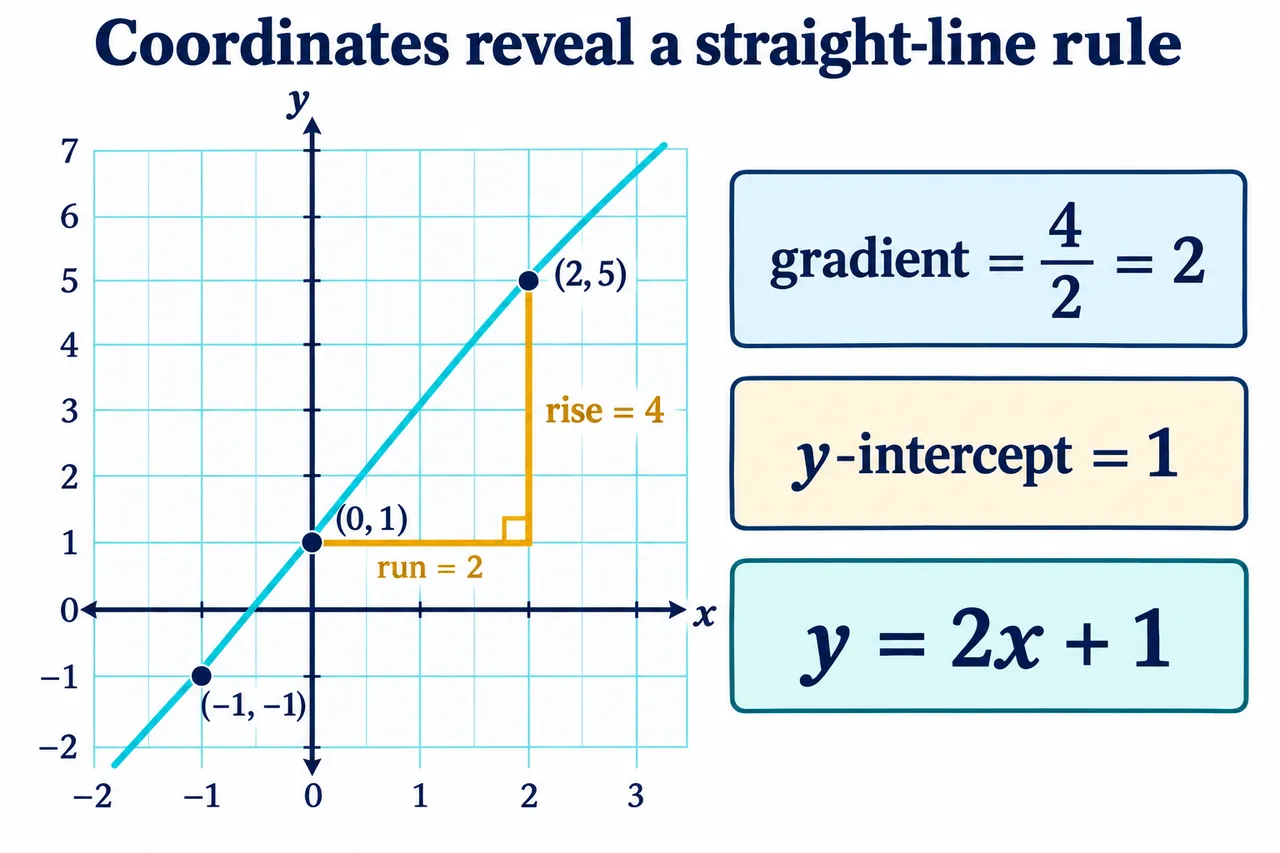
Locate points in all four quadrants
Build a line from a gradient and an intercept
Interpret a gradient as a rate of change
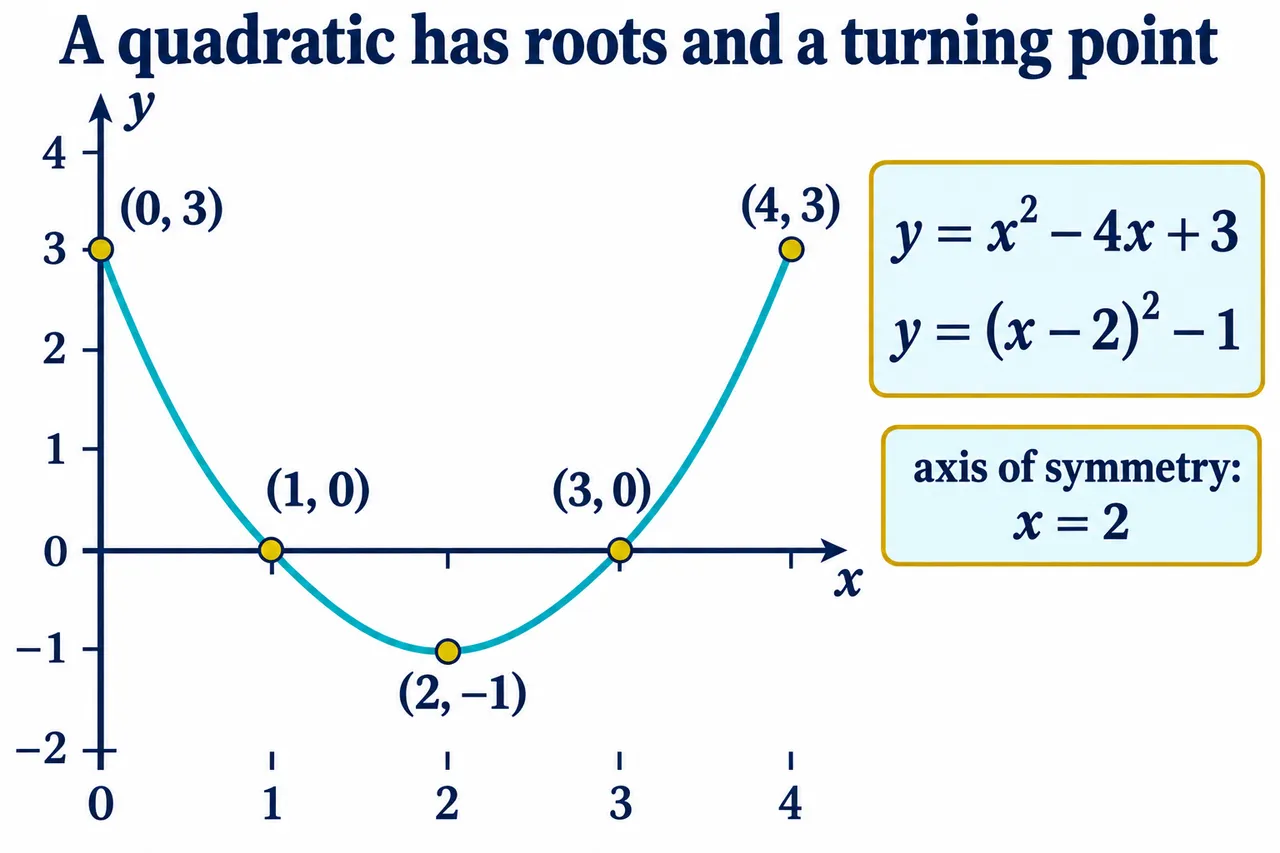
Read roots, intercepts and turning points
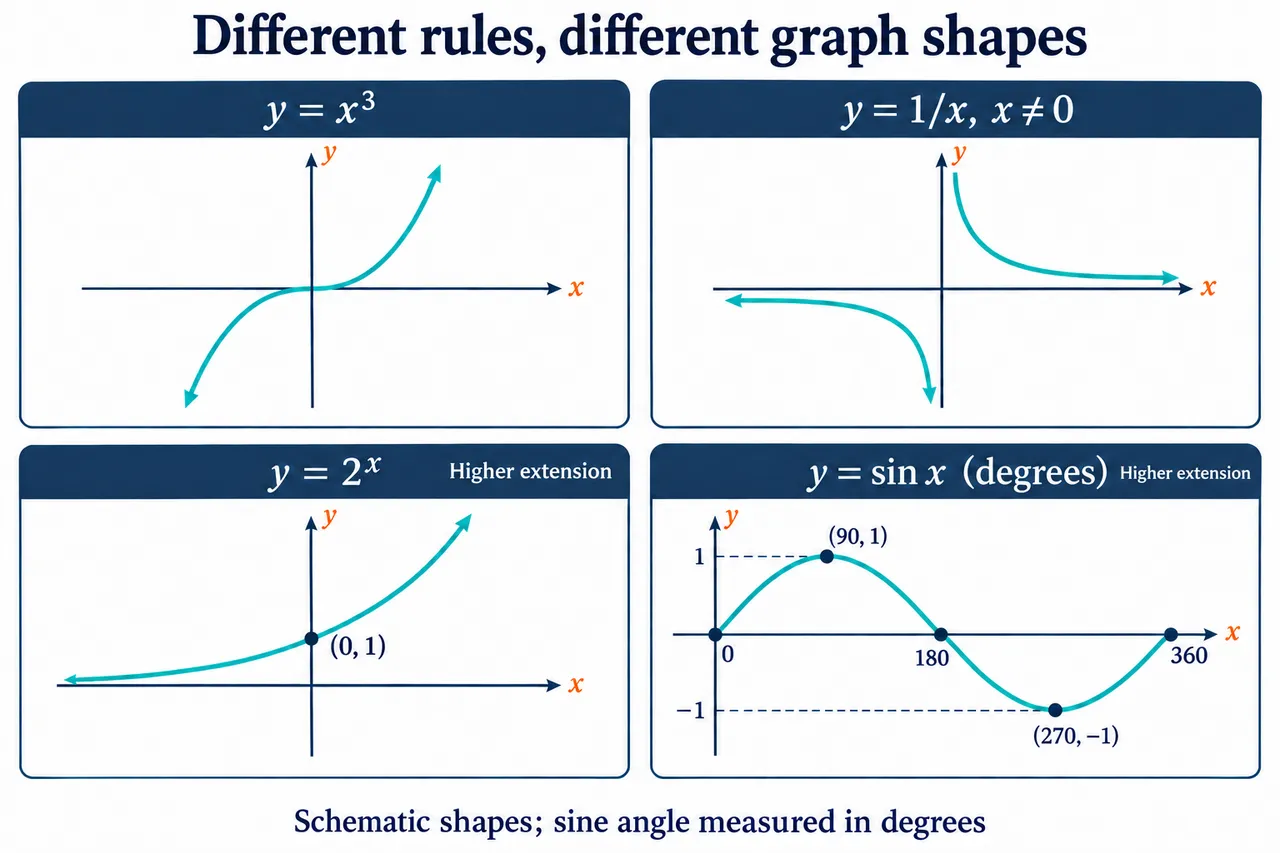
Recognise linear, quadratic and cubic shapes
Understand the gap in a reciprocal graph
Use a graph to estimate a solution in context
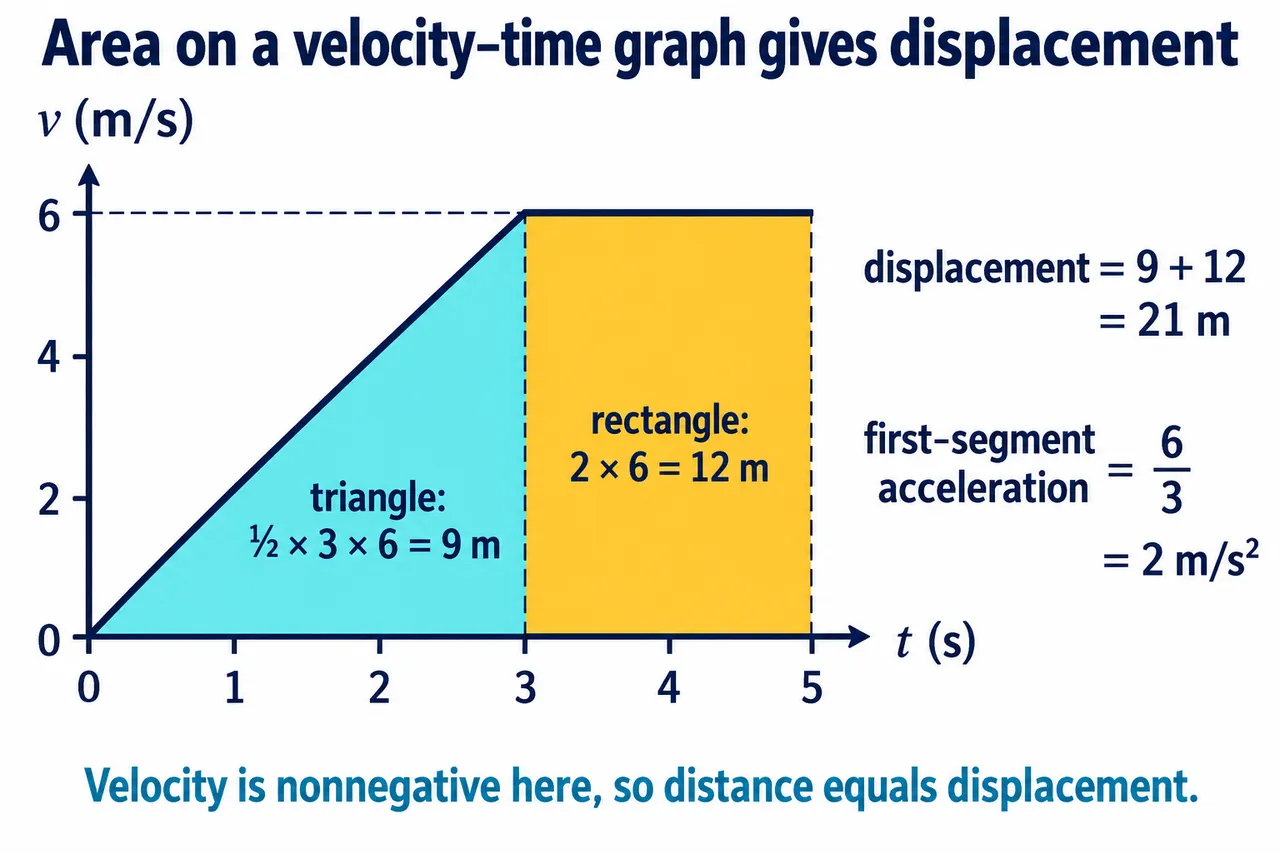
Distinguish position-time and velocity-time graphs
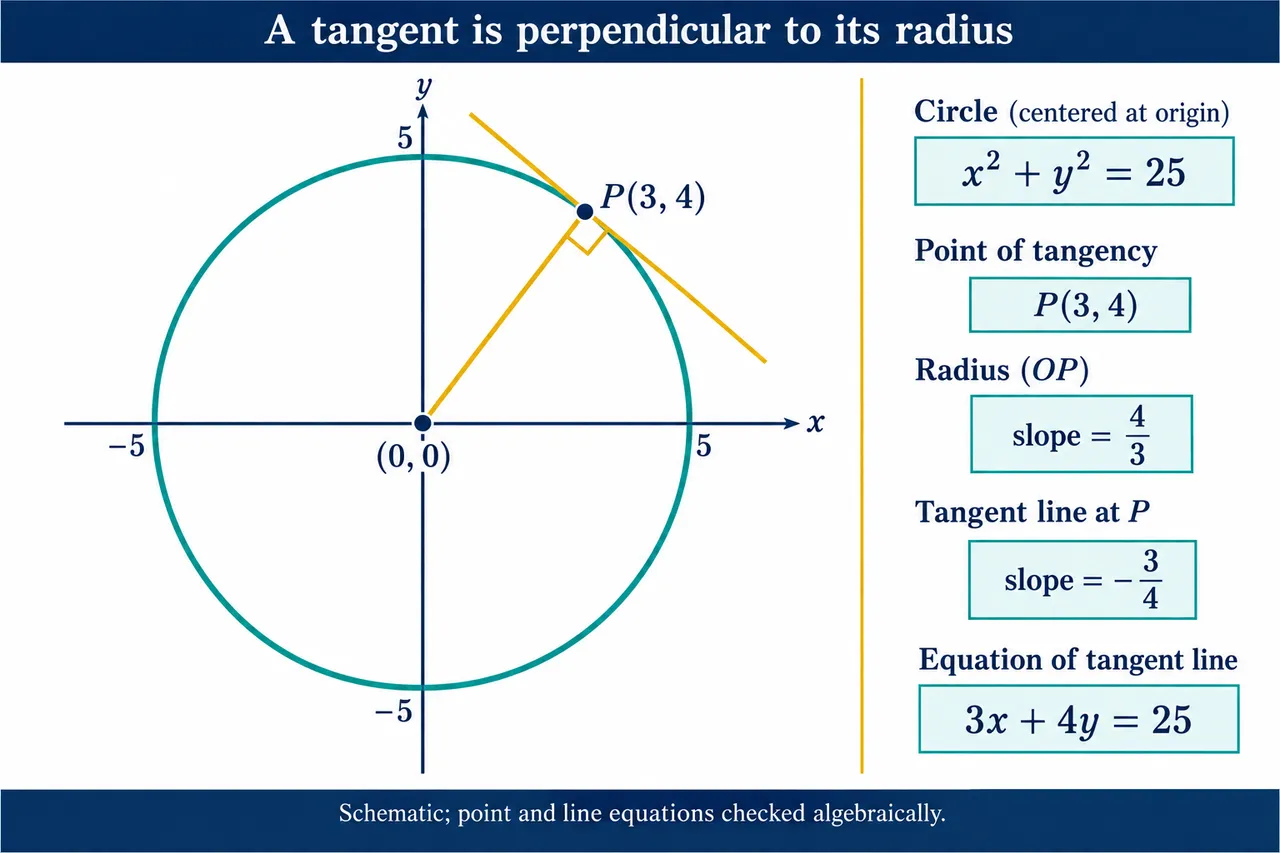
Find a perpendicular line using reciprocal gradients
Complete the square to locate a turning point
Recognise exponential growth and decay
Read sine, cosine and tangent graphs in degrees
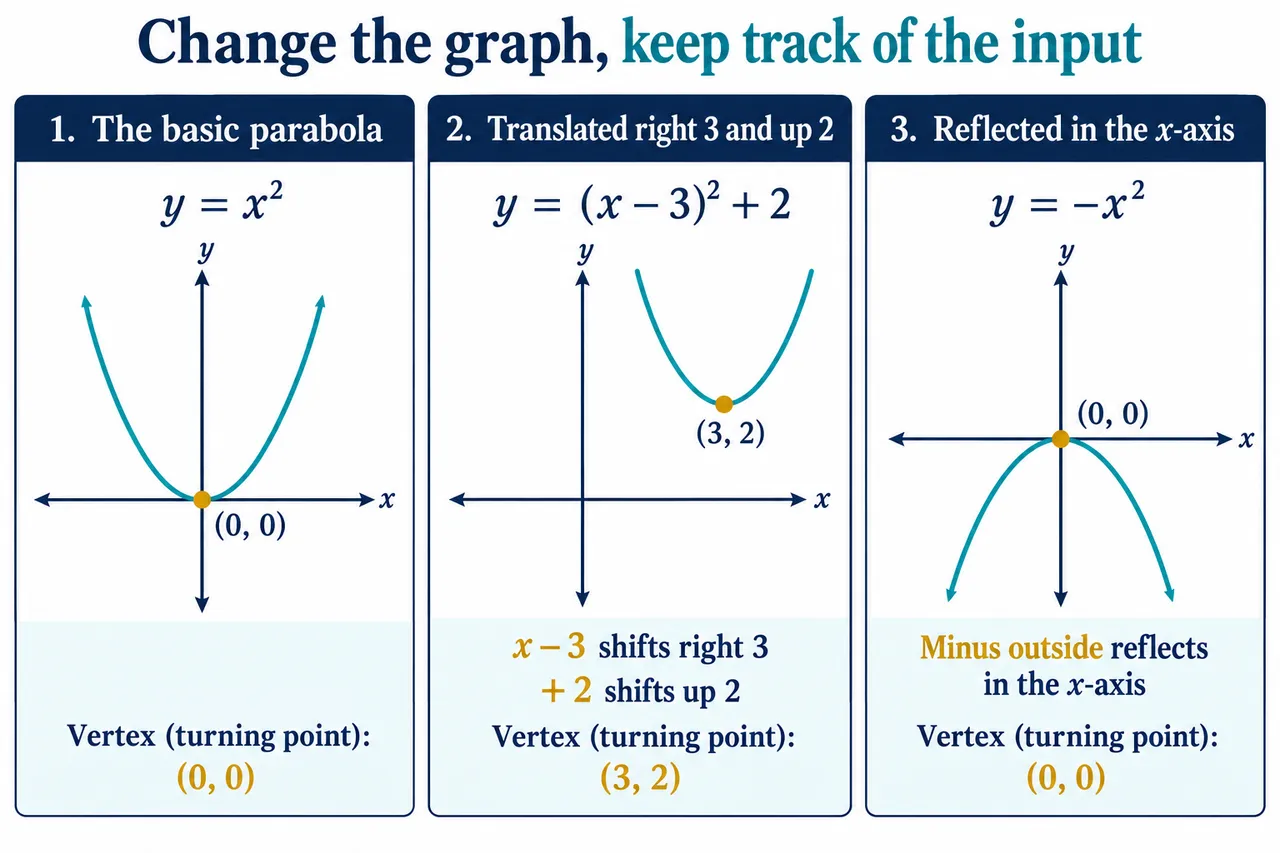
Translate and reflect a whole function graph
Interpret an exponential graph in a real context
Estimate the gradient of a curve with a tangent
Calculate and estimate area under a graph
Use the equation of a circle centred at the origin
Find a tangent at a point on an origin circle
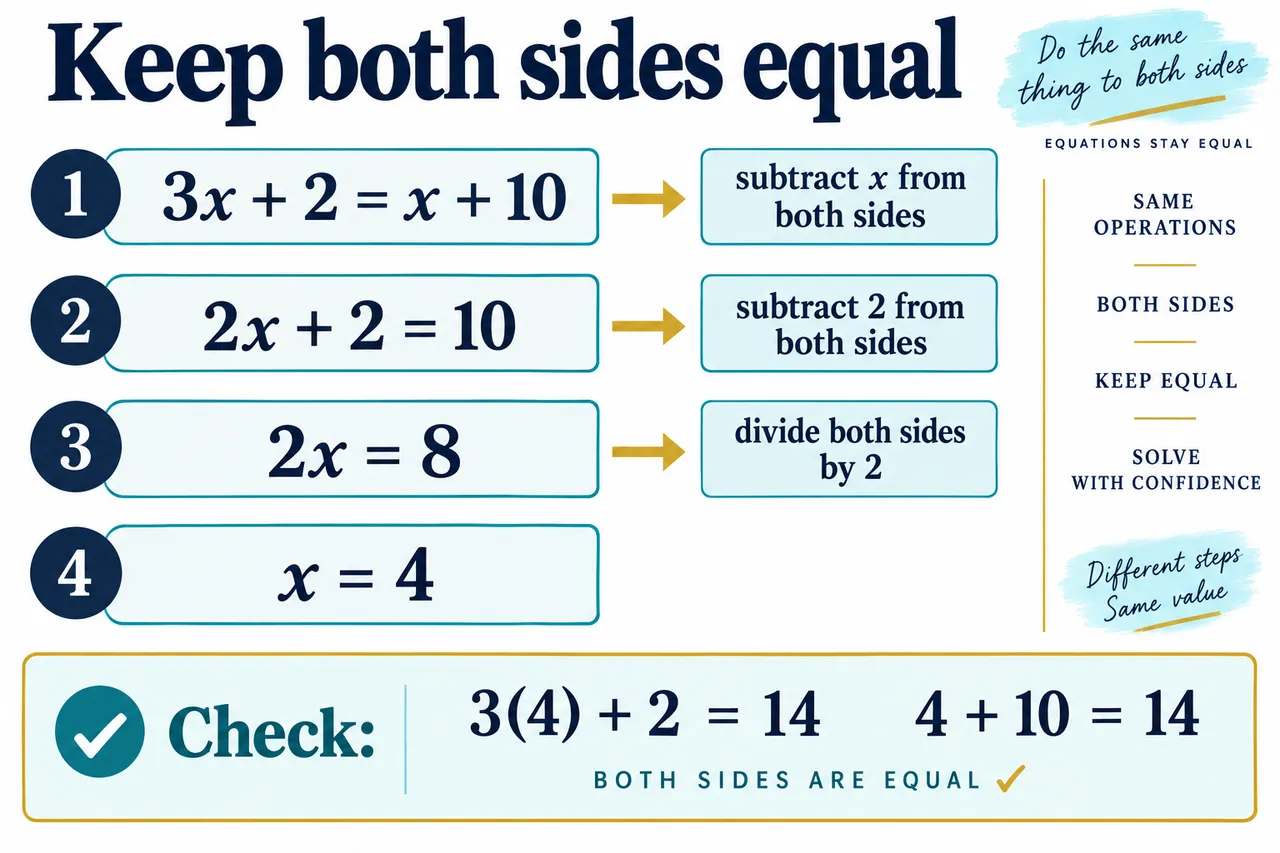
Solve a linear equation without breaking equality
Use factors to solve a quadratic equation
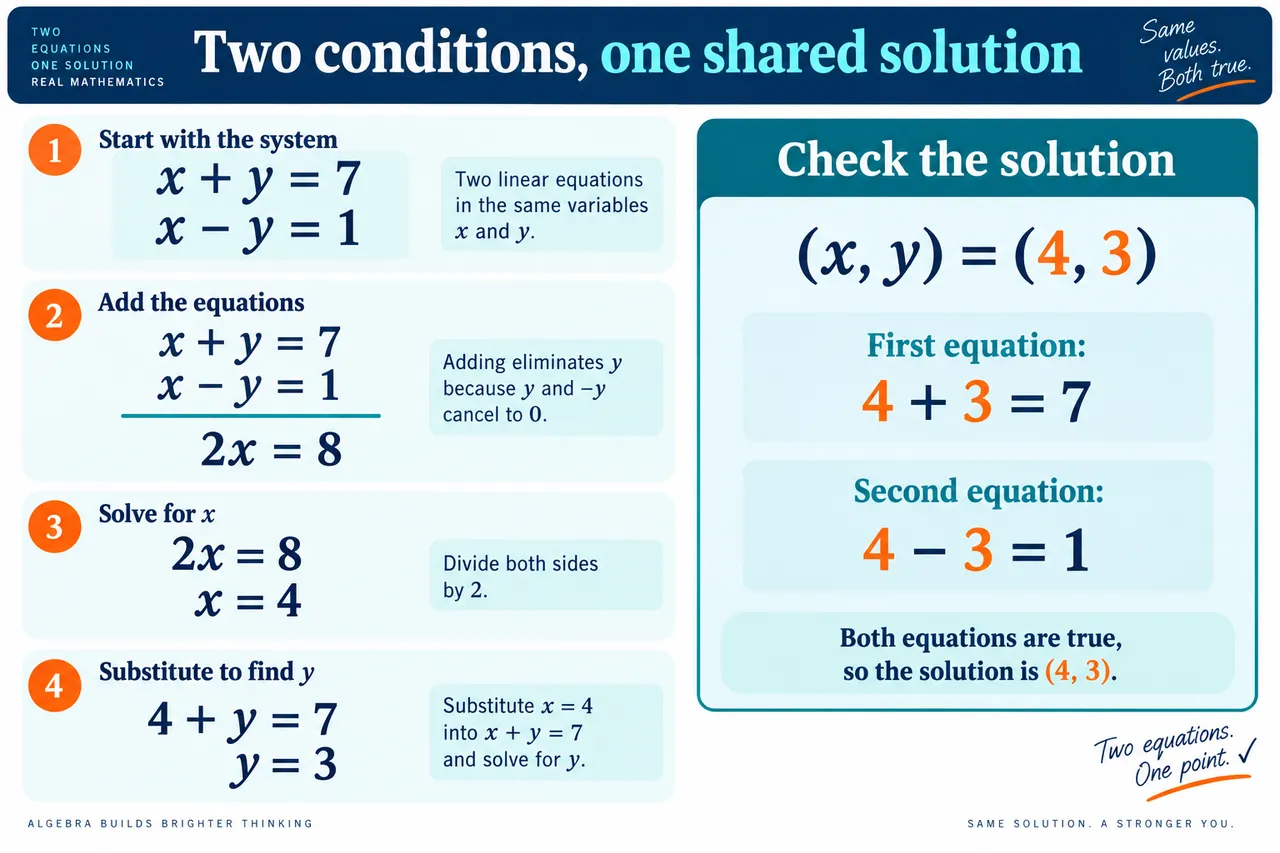
Find values satisfying two equations together
Translate a situation into equations and interpret the result
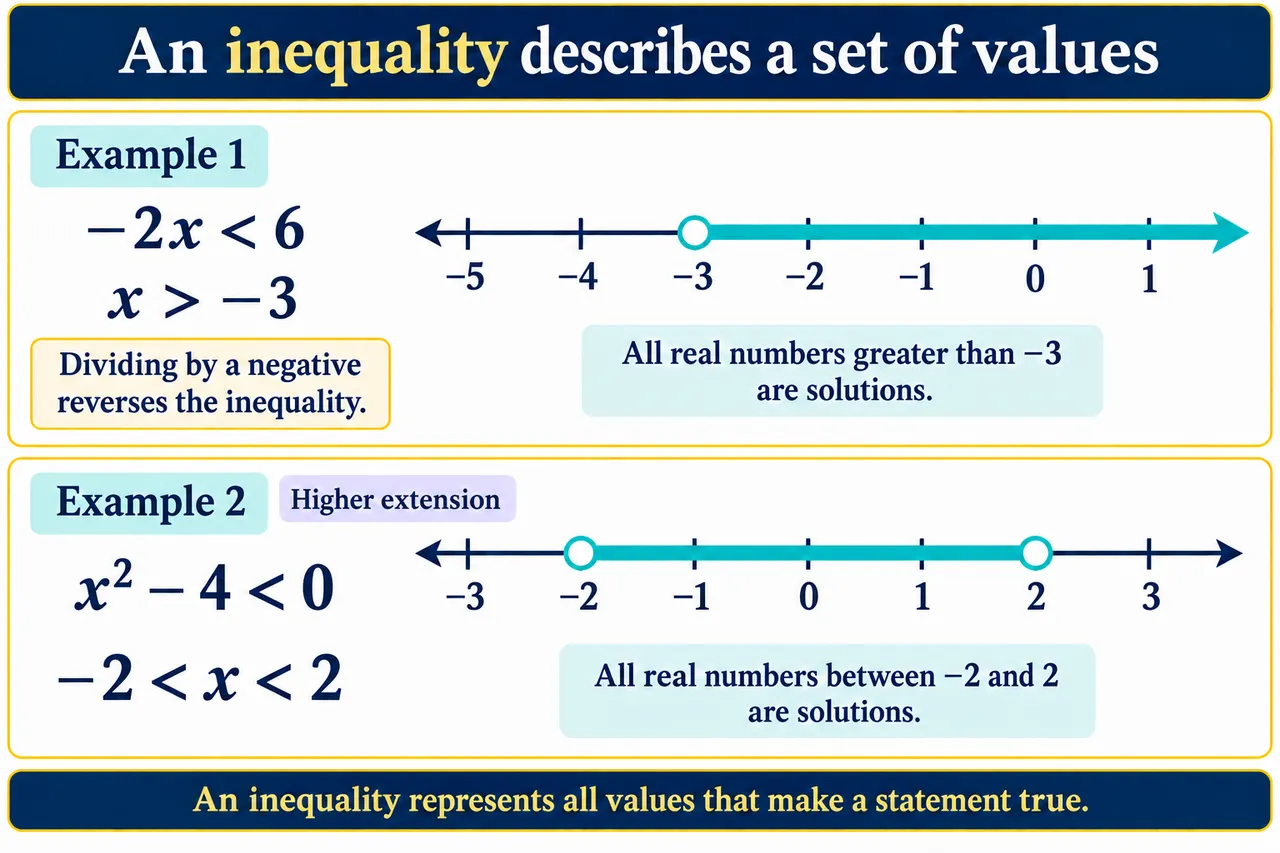
Solve an inequality and represent its solution set
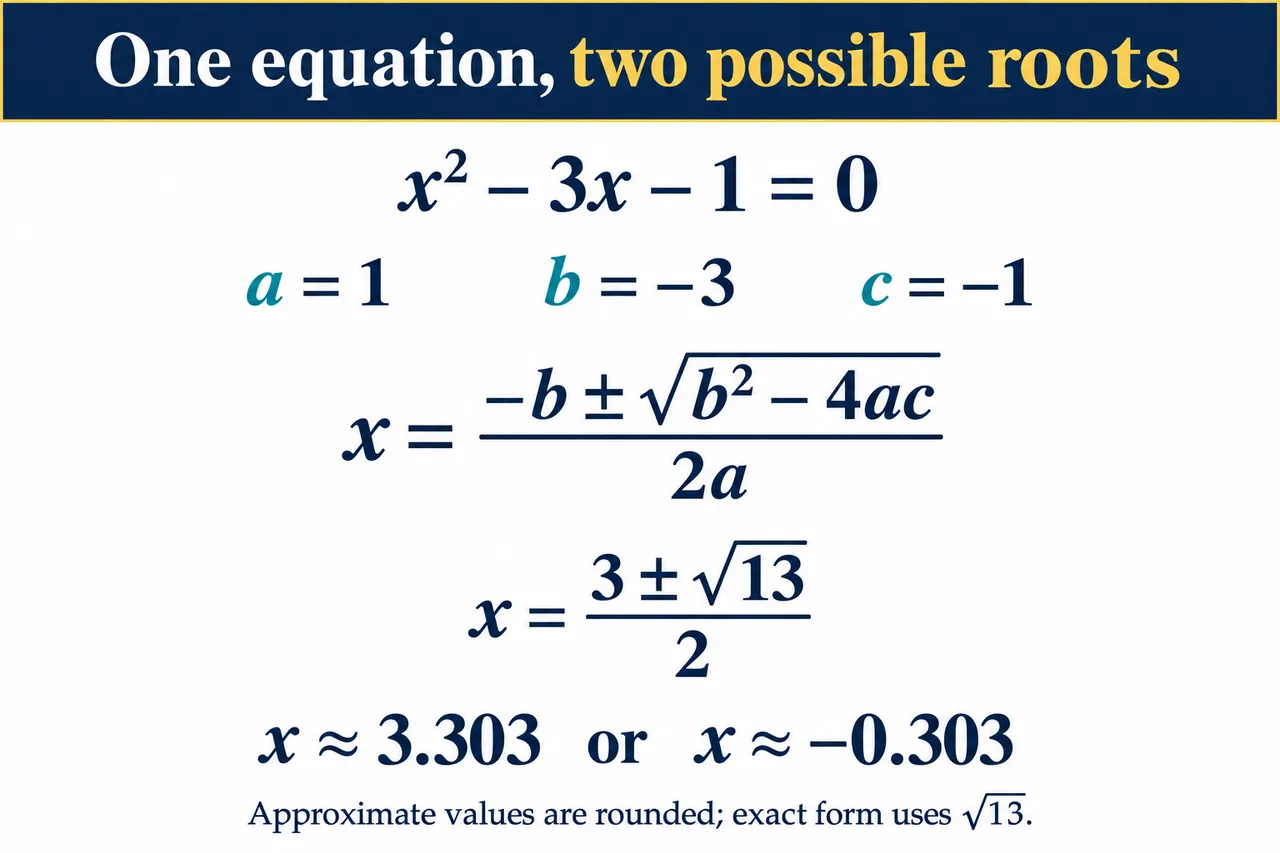
Find roots using the quadratic formula
Solve by completing the square
Solve a line and a quadratic together
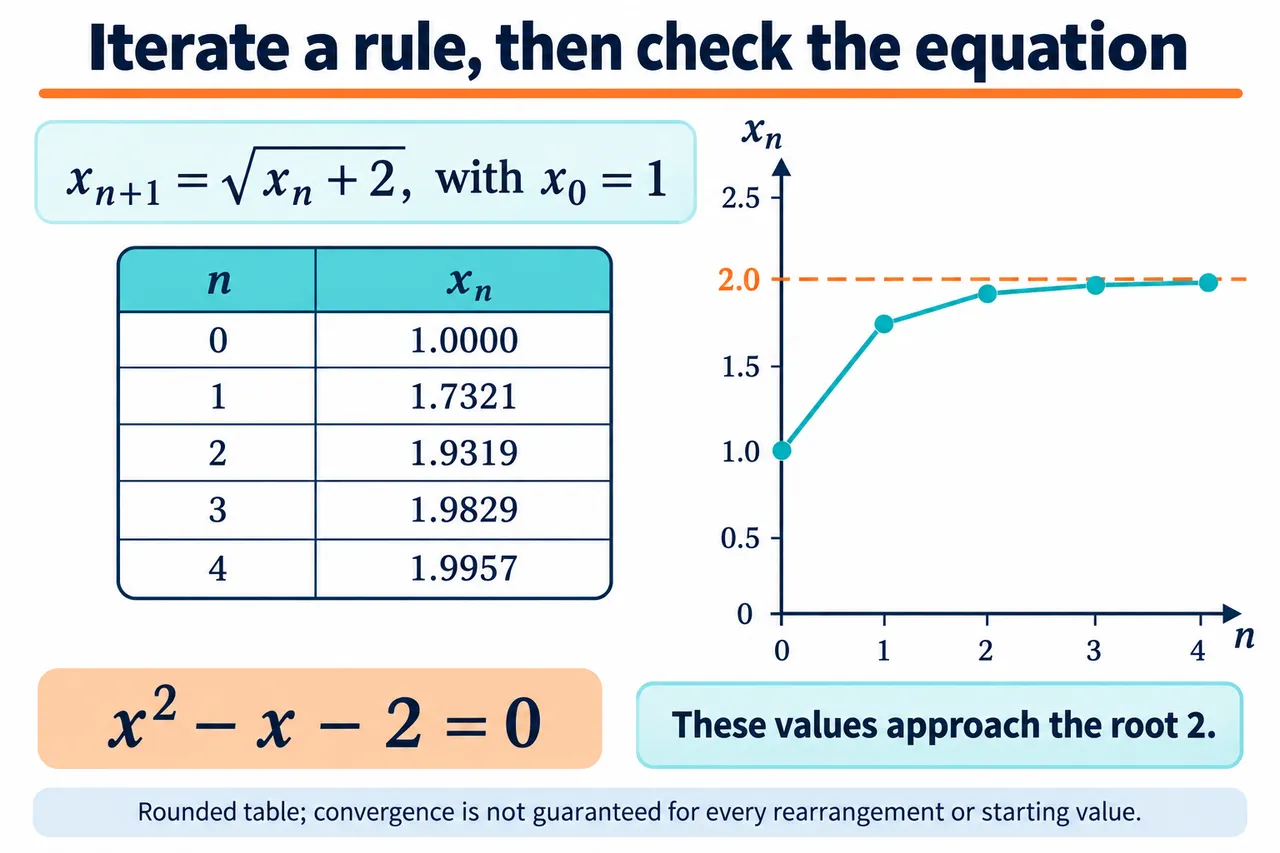
Use iteration to approximate a root
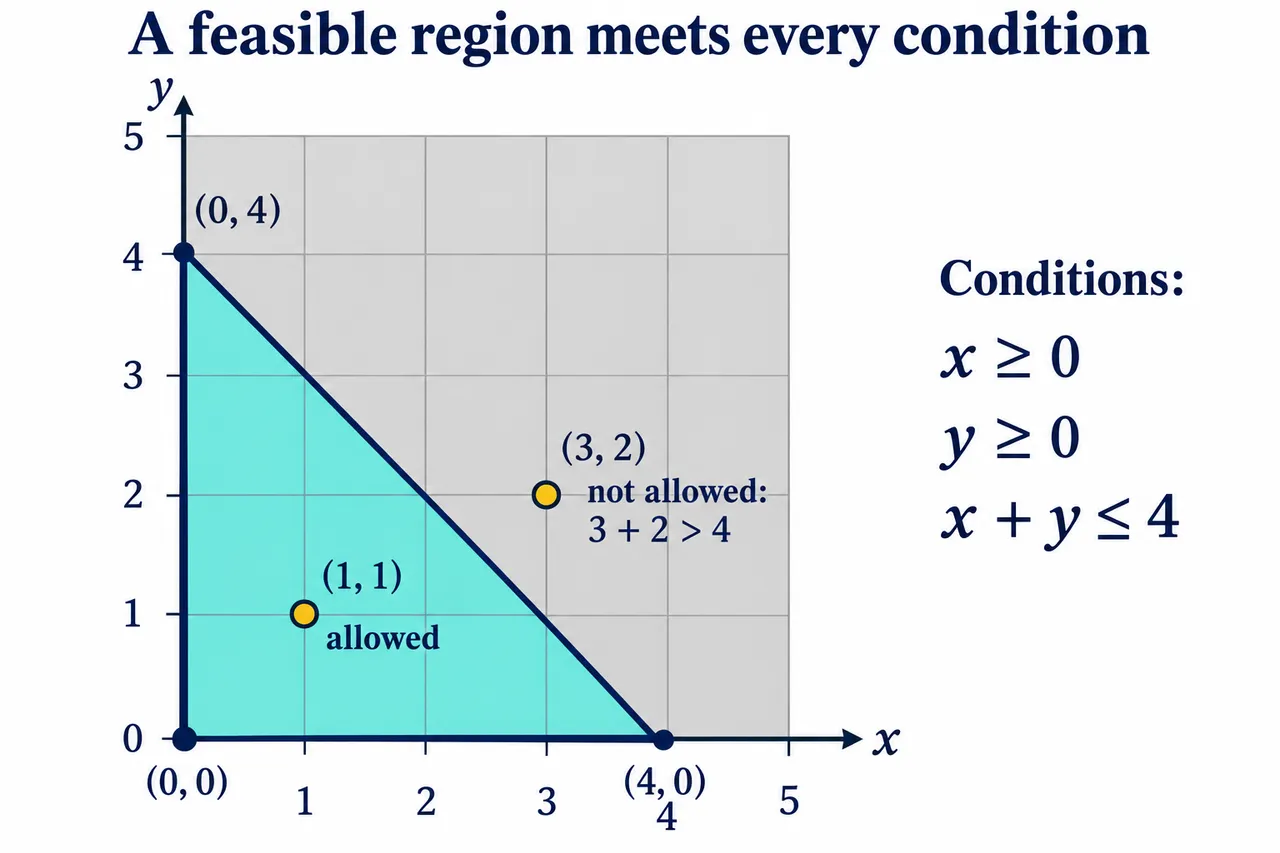
Represent two-variable inequalities as regions
Find intervals where a quadratic has the required sign
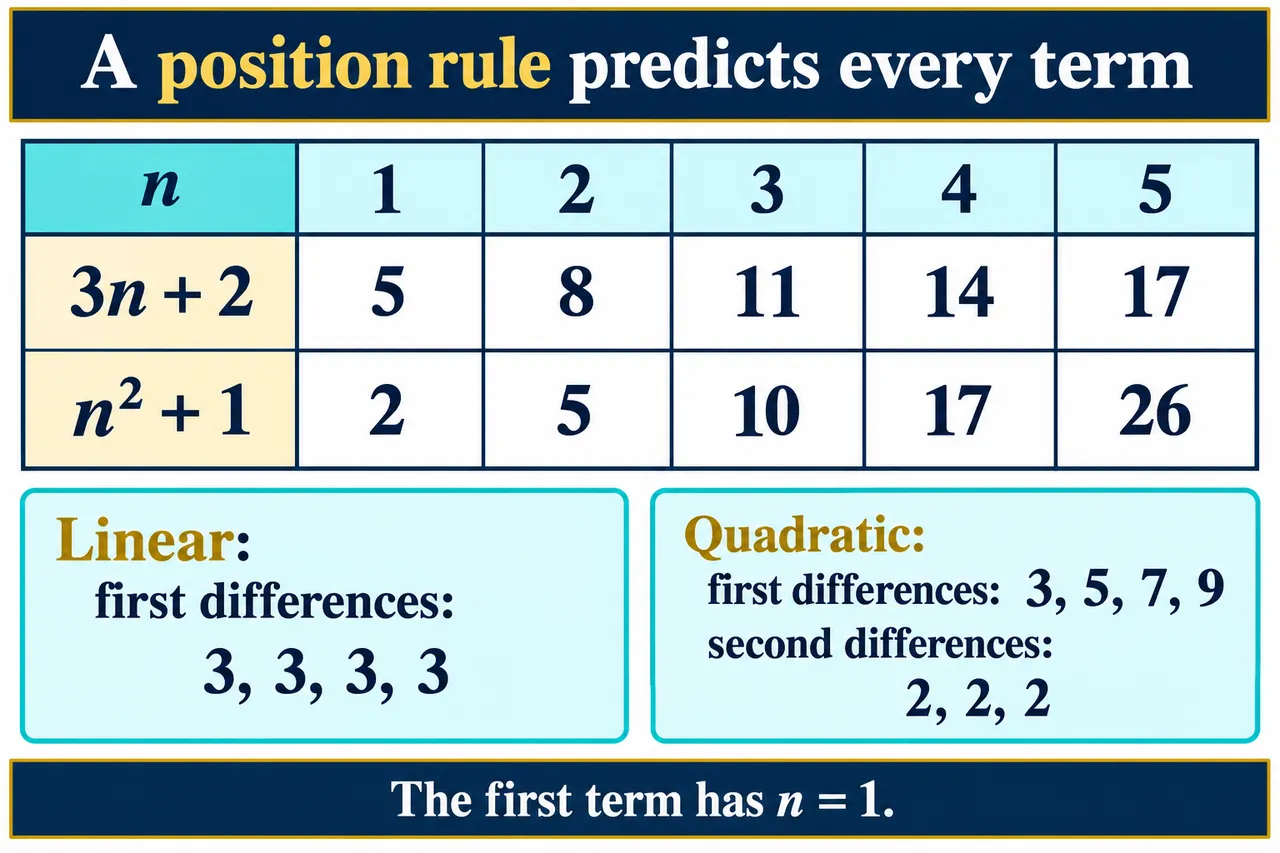
Generate terms from recurrence and position rules
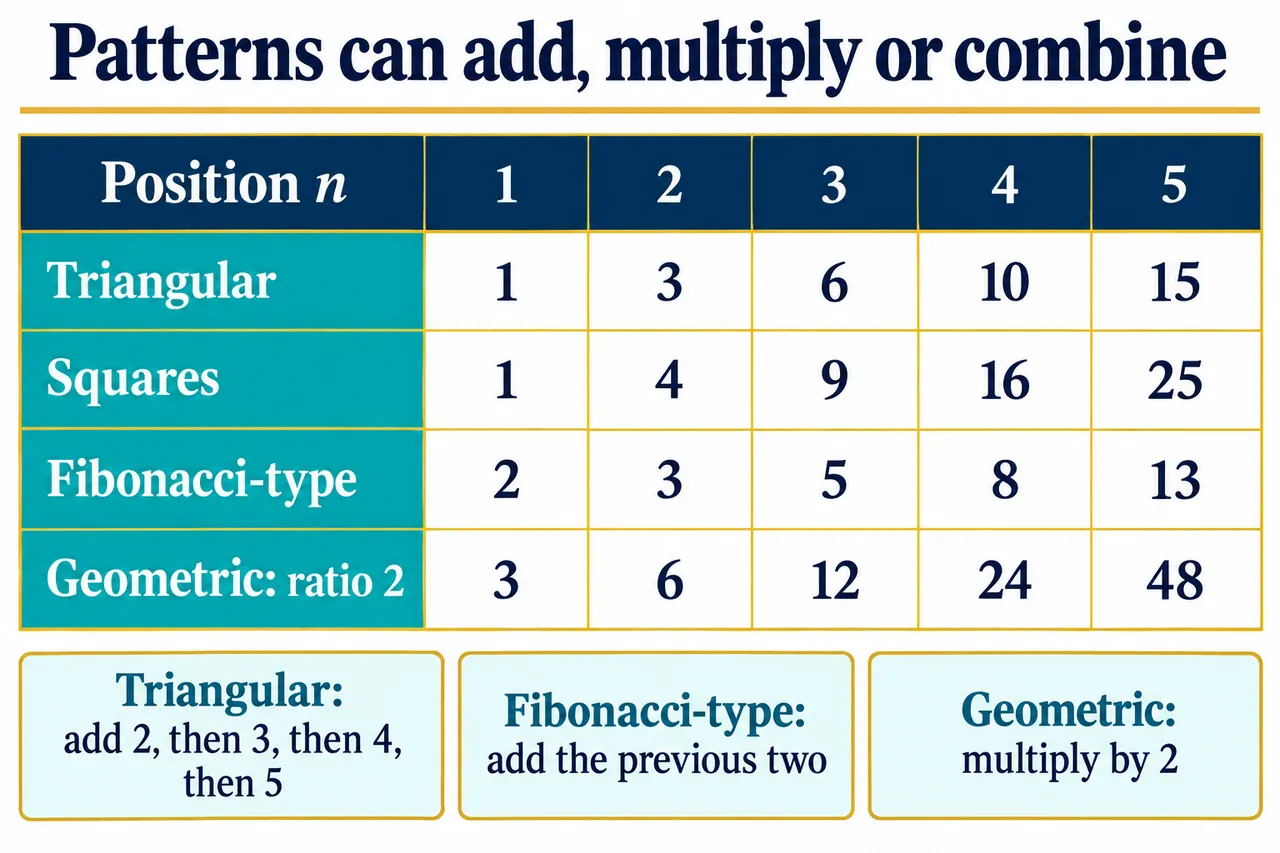
Recognise square, cube, triangular and Fibonacci-type patterns
Recognise a constant multiplicative step
Deduce the position rule of a linear sequence
Generate a geometric sequence with a surd ratio
Deduce a quadratic position rule from differences
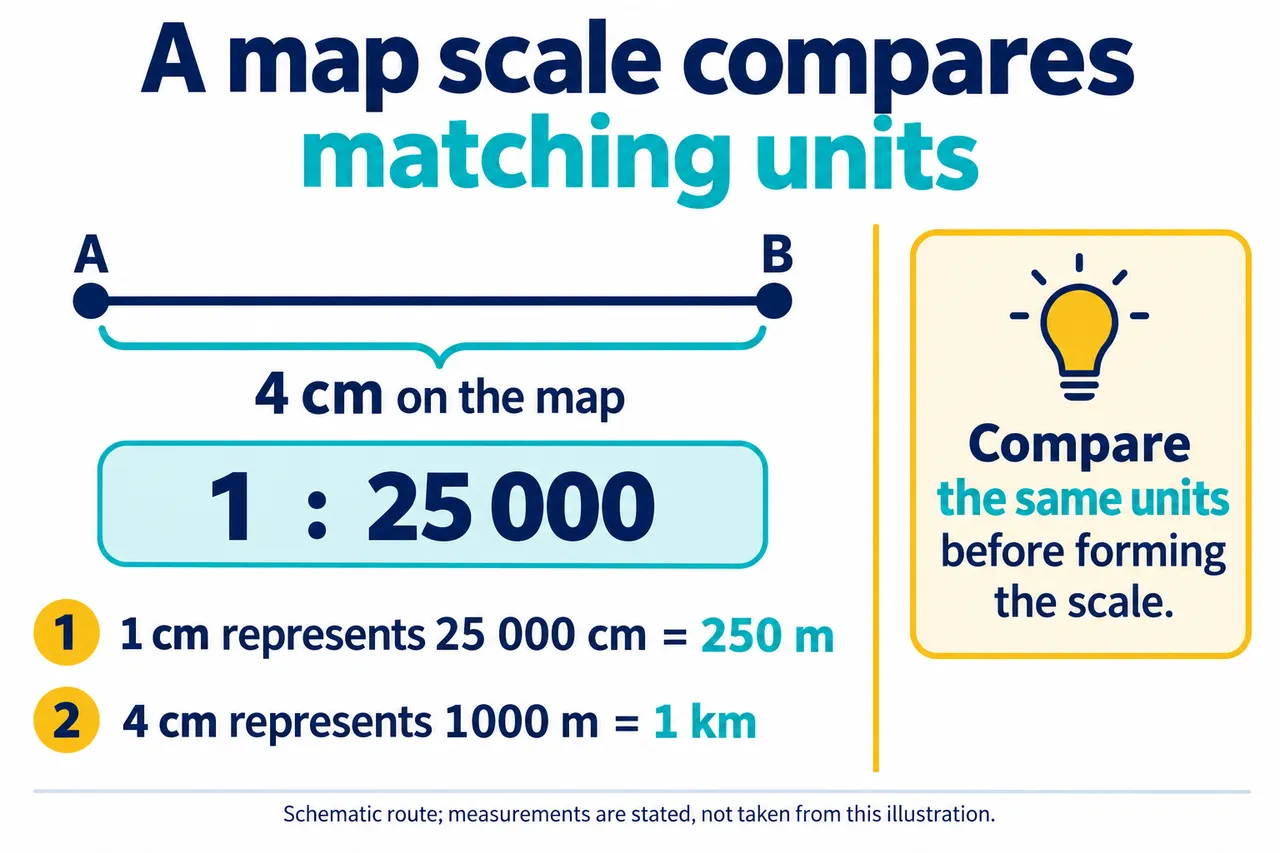
Convert quantities without changing what they measure
Use a scale only after matching the units
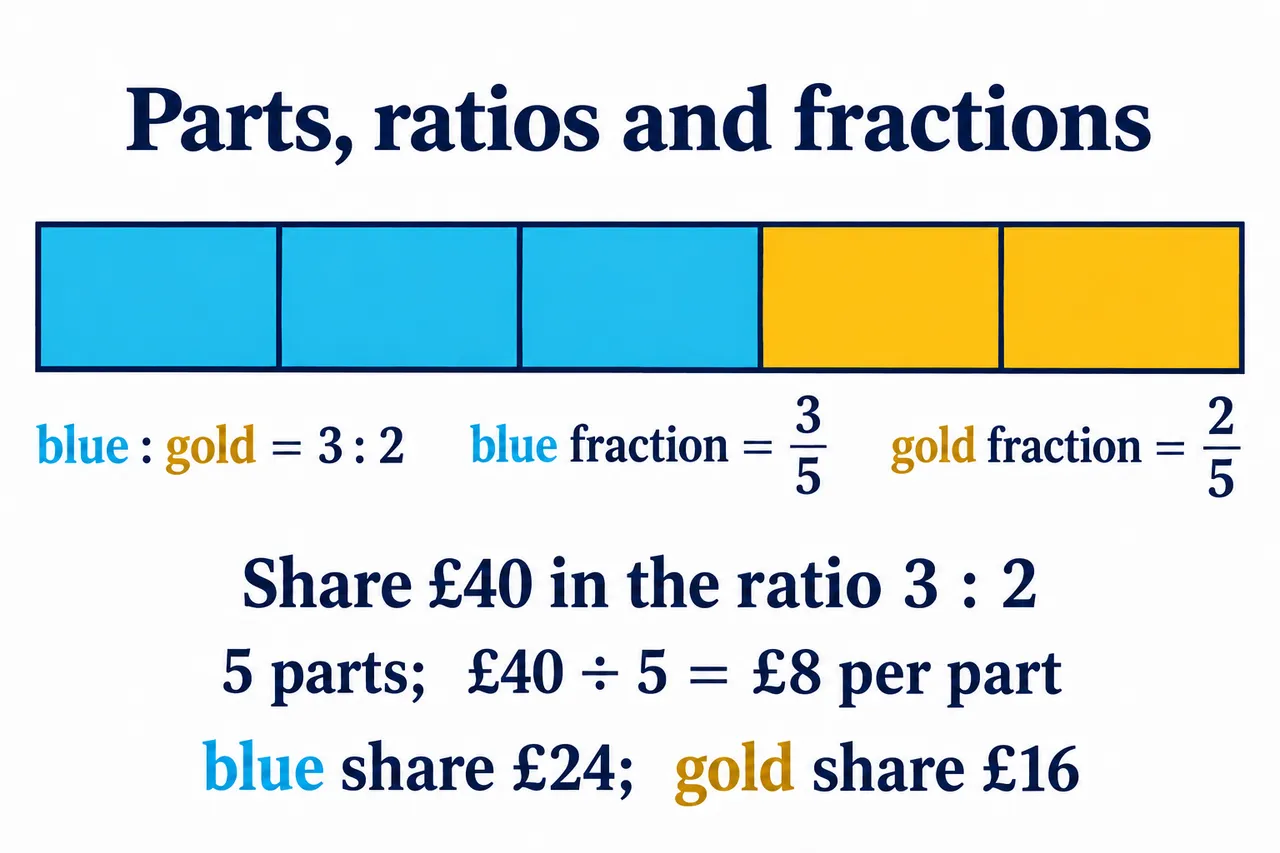
Express one quantity as a fraction of another
Reduce a ratio while preserving the comparison
Divide a total into part-to-part shares
Distinguish a part-to-whole ratio from a part-to-part ratio
Explain how many times one quantity is another
Recognise proportion as equality of ratios
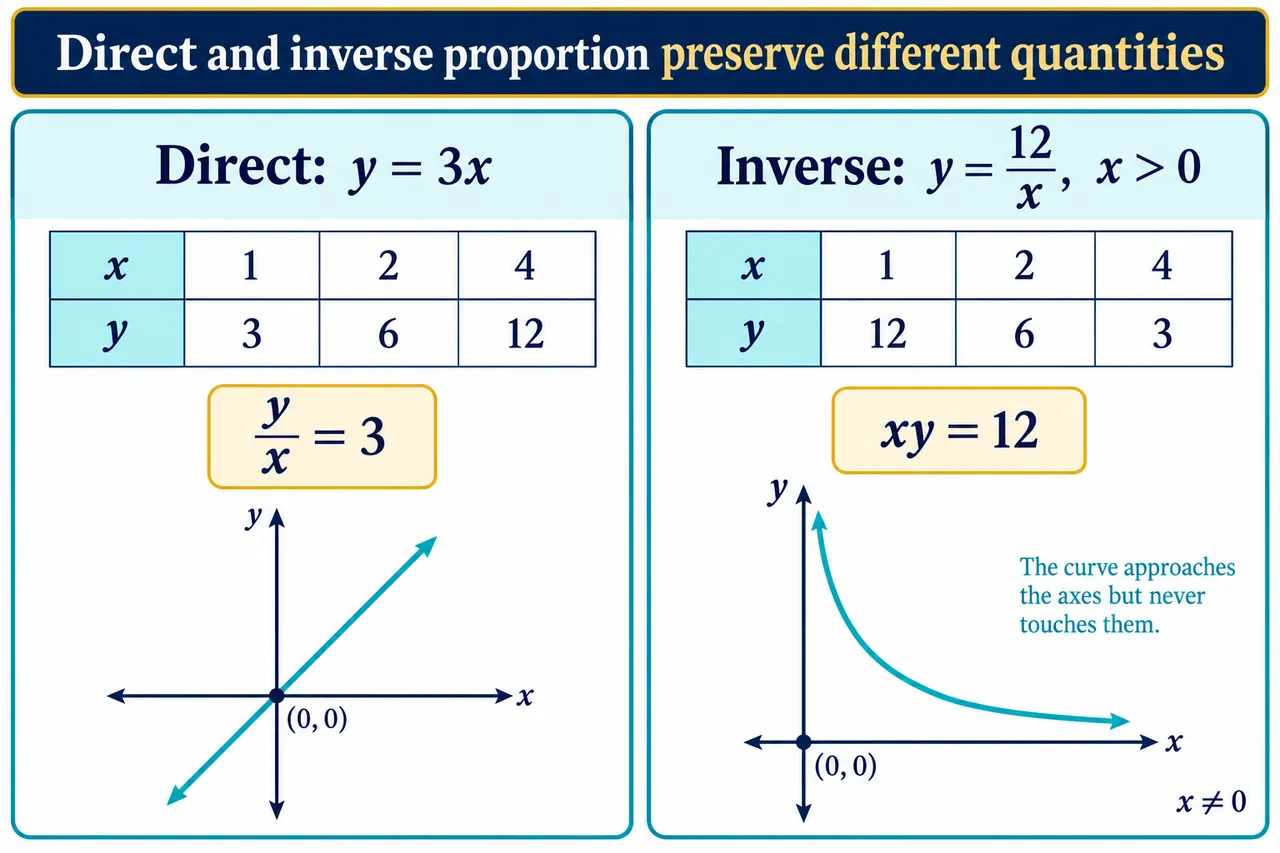
Connect a ratio, a fraction and a linear rule
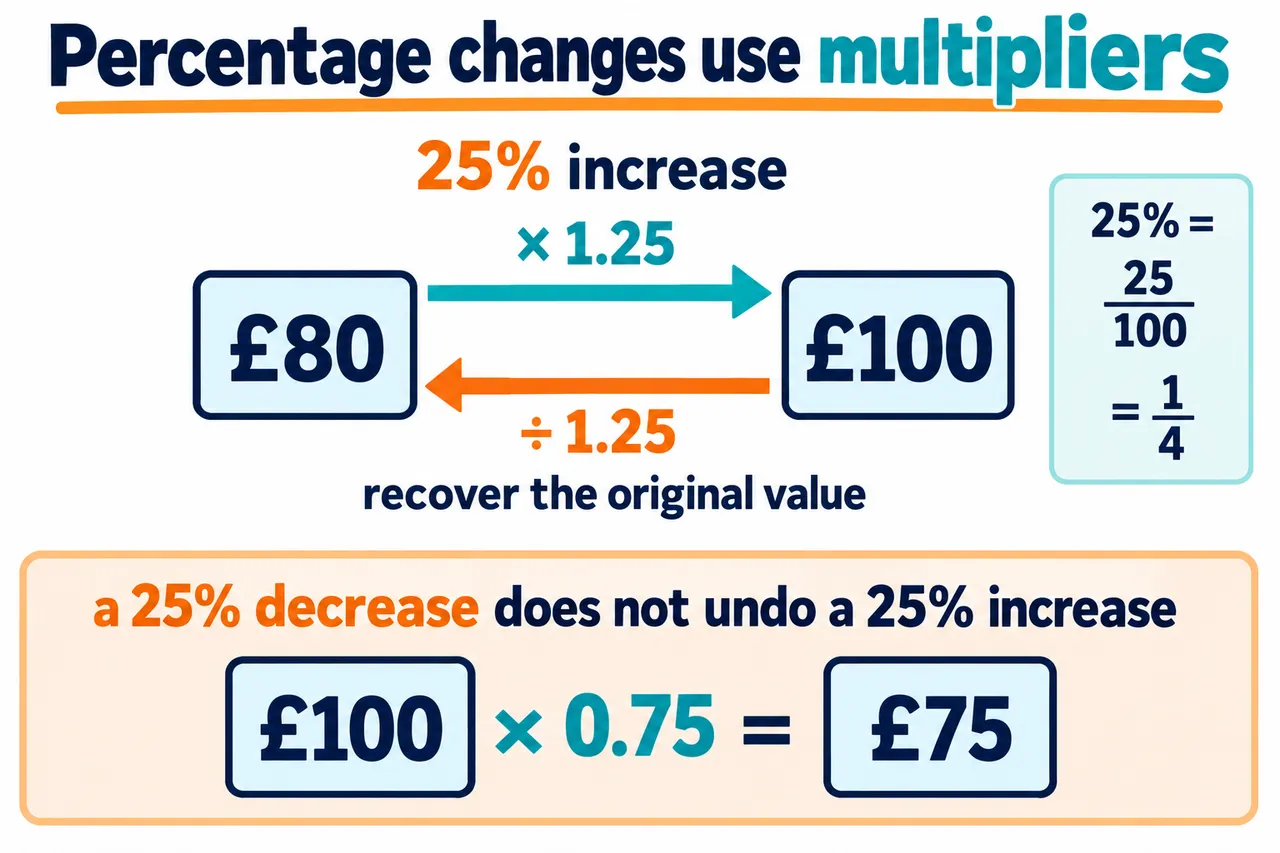
Choose the reference amount for a percentage
Apply a percentage change to the current amount
Recover an original value by undoing its multiplier
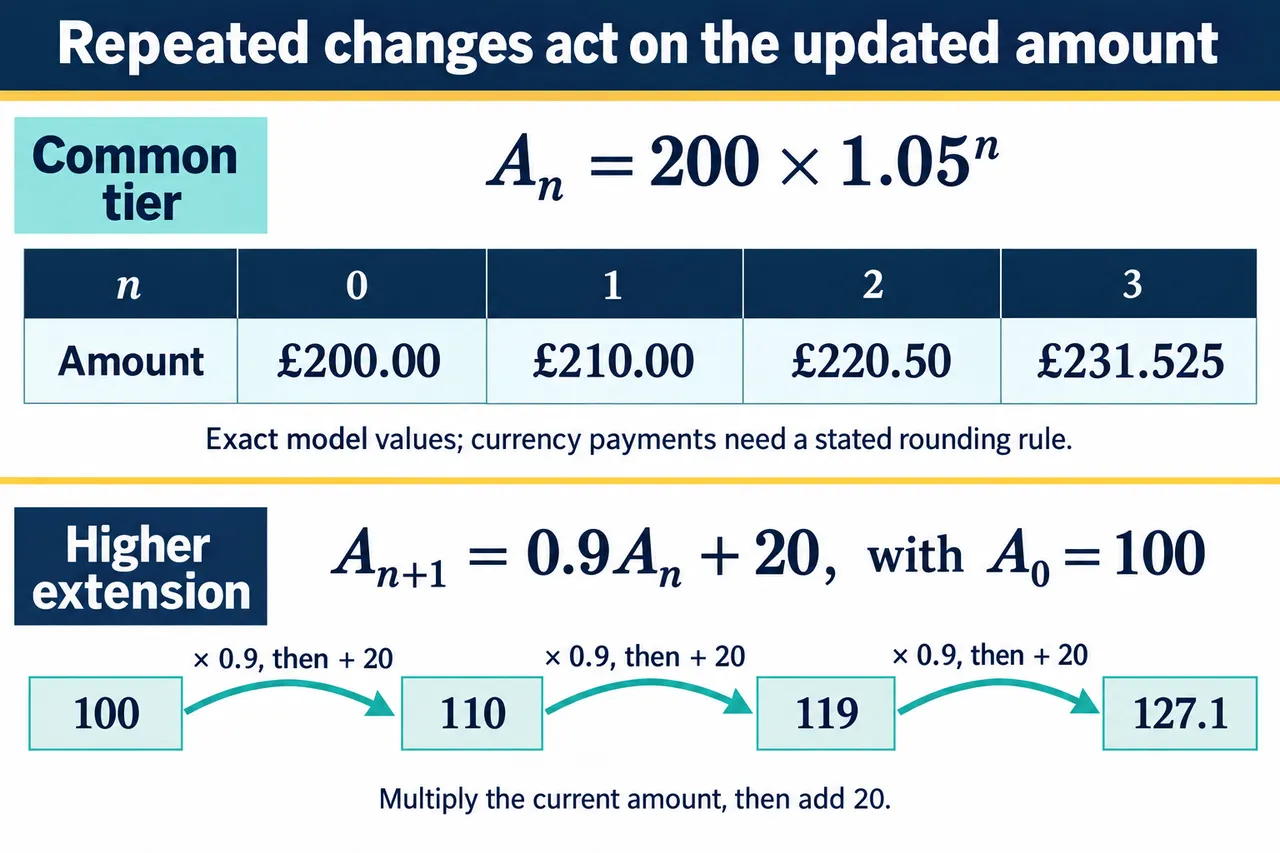
Calculate interest from the original principal
Identify a constant ratio and its proportionality coefficient
Identify a constant product in inverse proportion
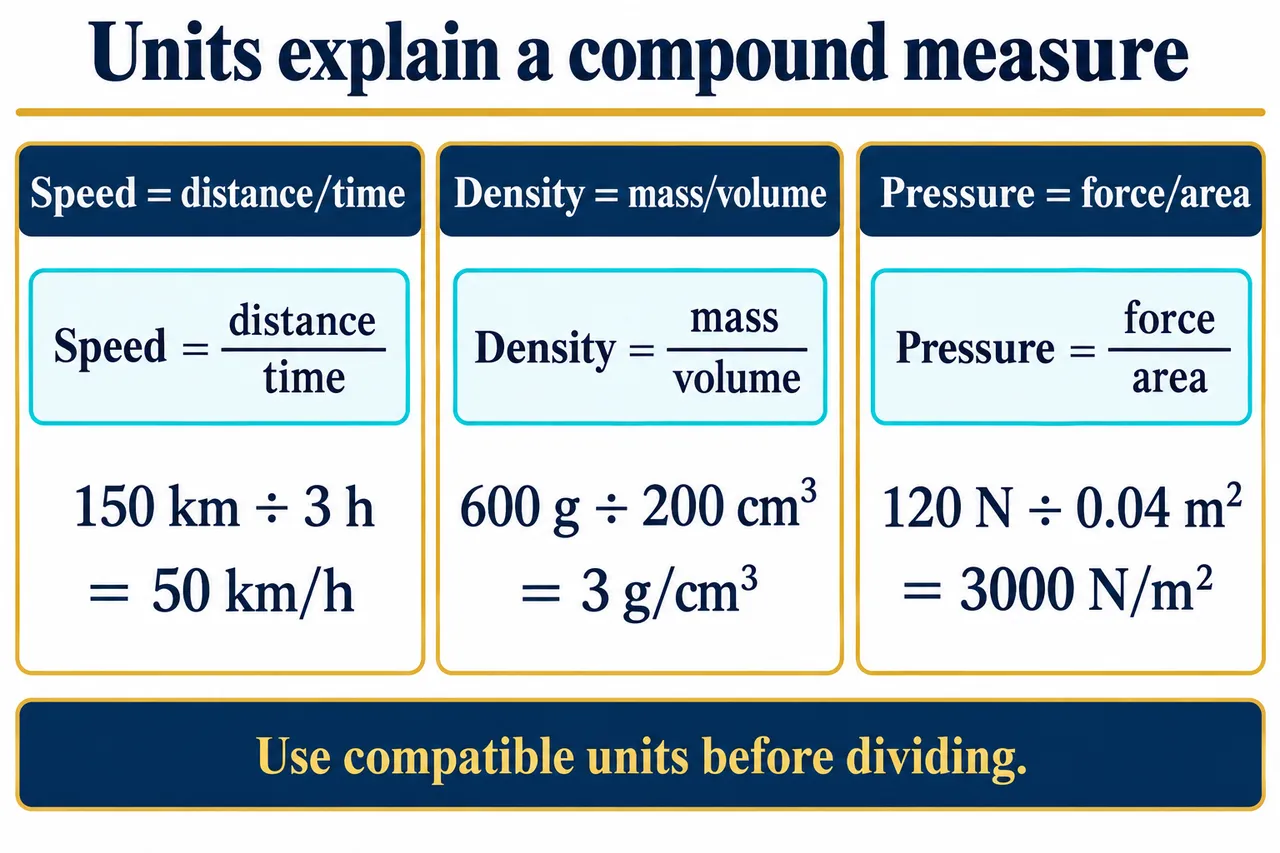
Use compound units to compare rates fairly
Connect mass, volume and density
Interpret force per unit area
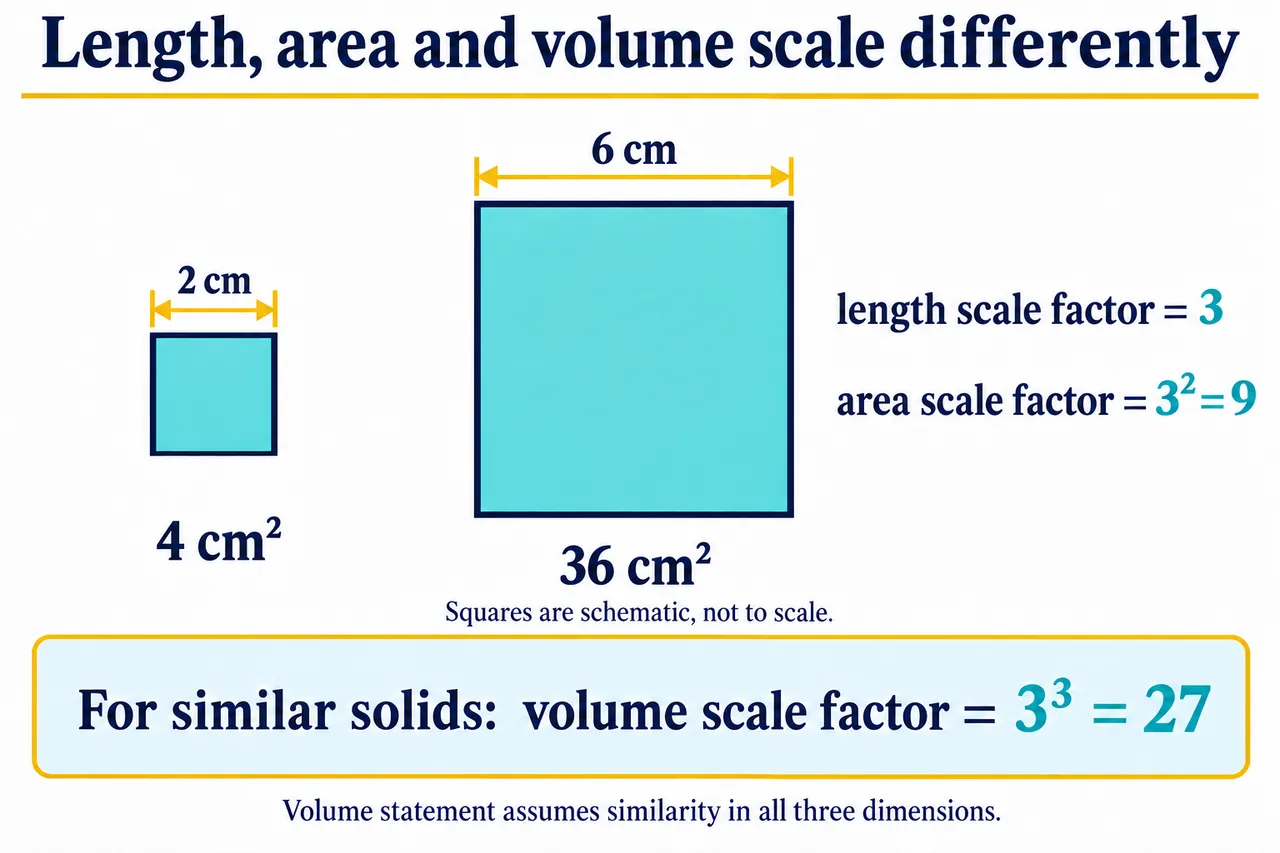
Apply the correct scale factor to length, area and volume
Interpret equations involving a reciprocal
Recognise proportional graphs and their rate meaning
Build a model for repeated percentage changes
Construct a direct or inverse proportional model
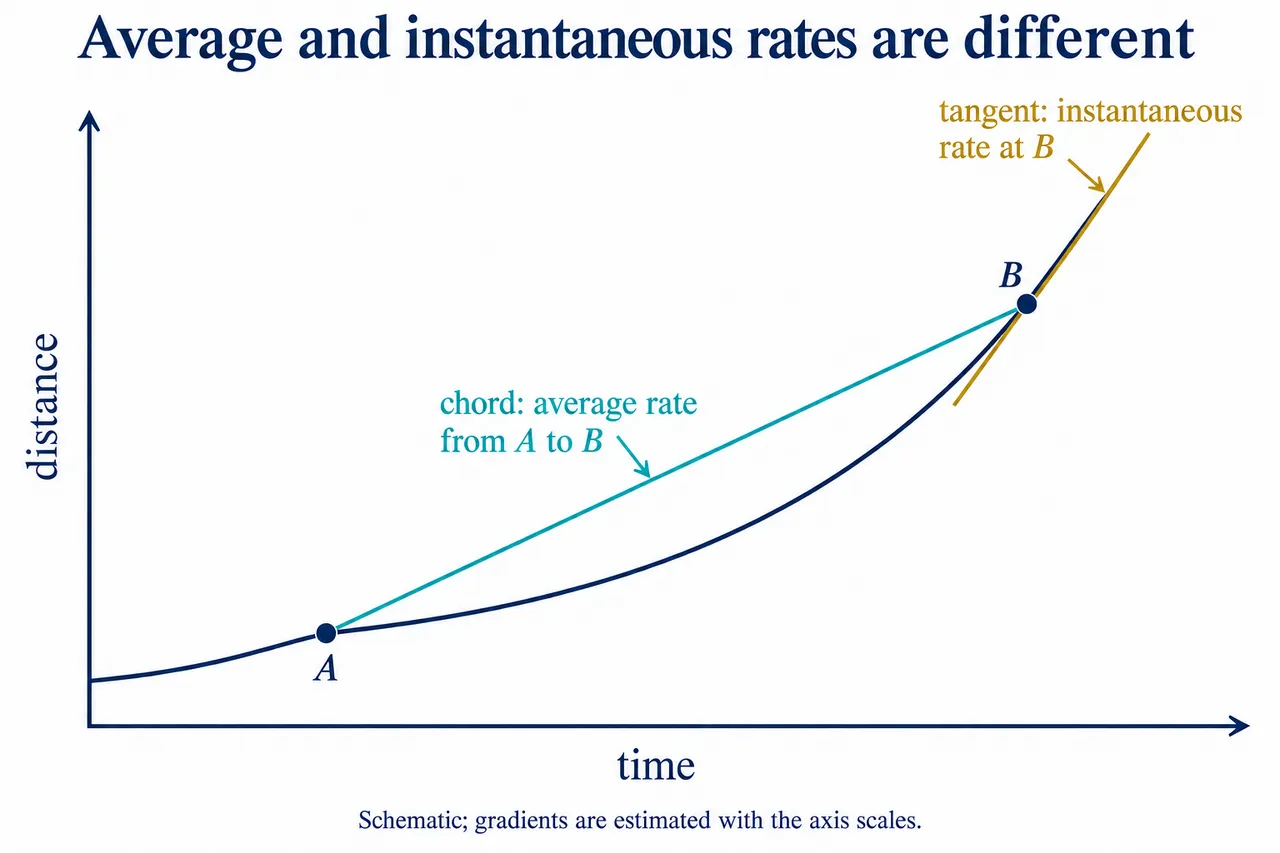
Separate interval averages from a rate at one point
Model a repeated multiplier and fixed addition
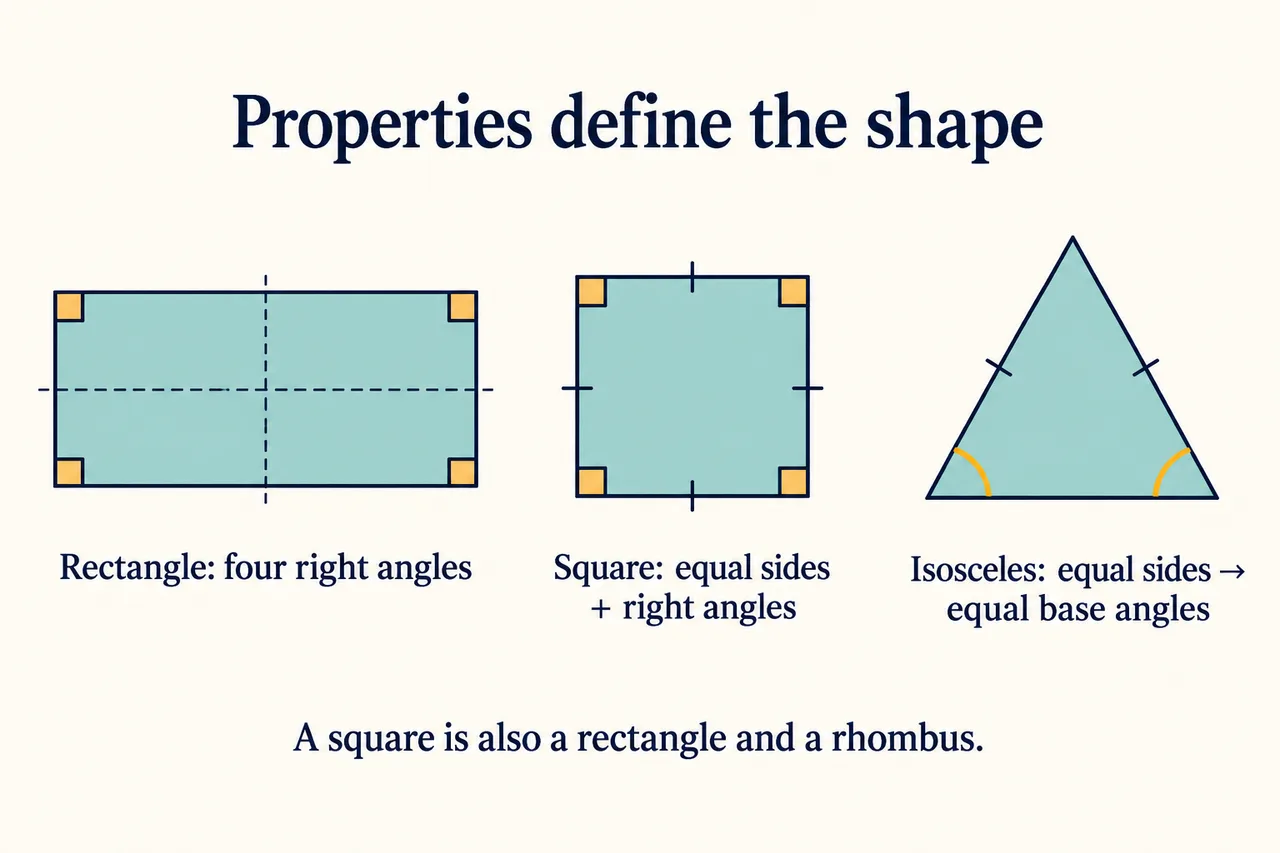
Read the language of a diagram
Separate reflection from rotation
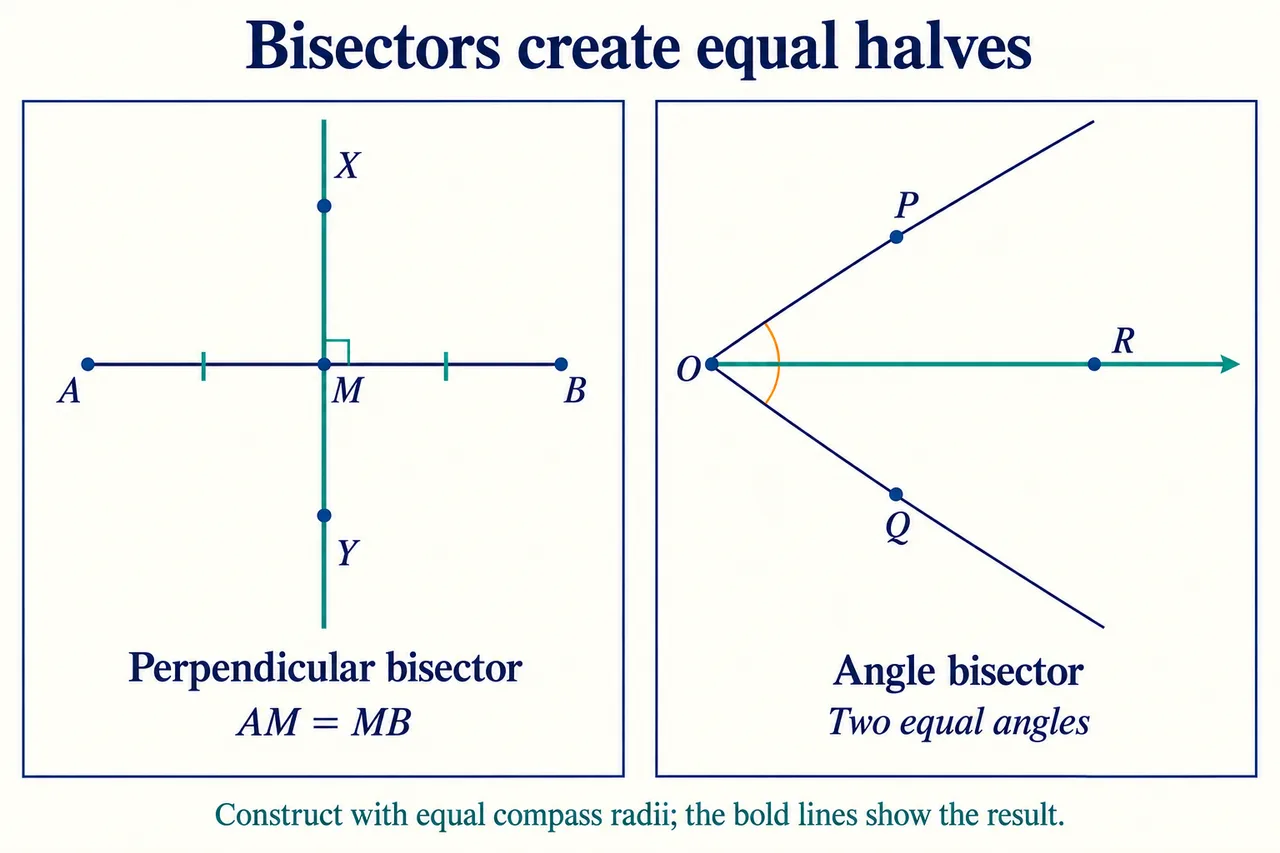
Construct an equal-distance boundary
Bisect an angle and interpret a locus
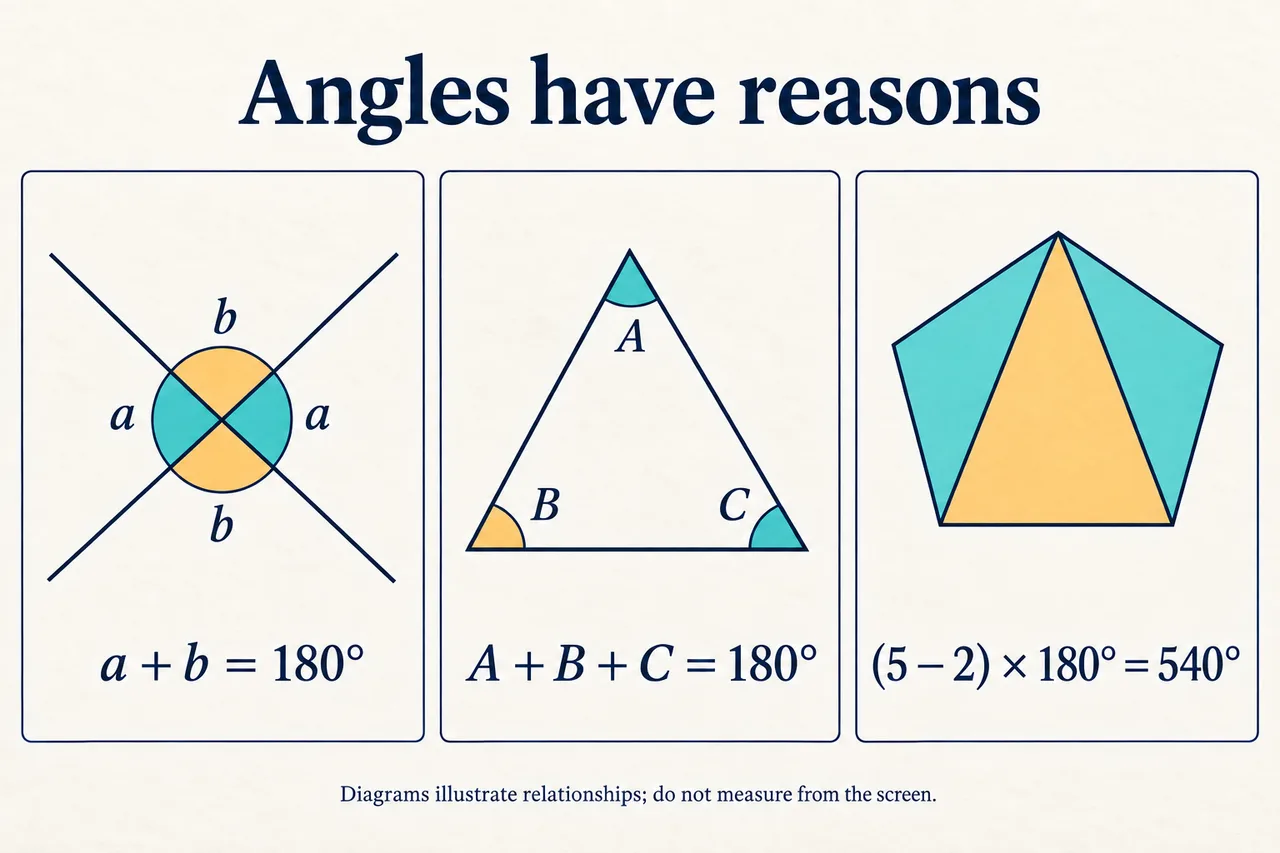
Use angle facts rather than appearances
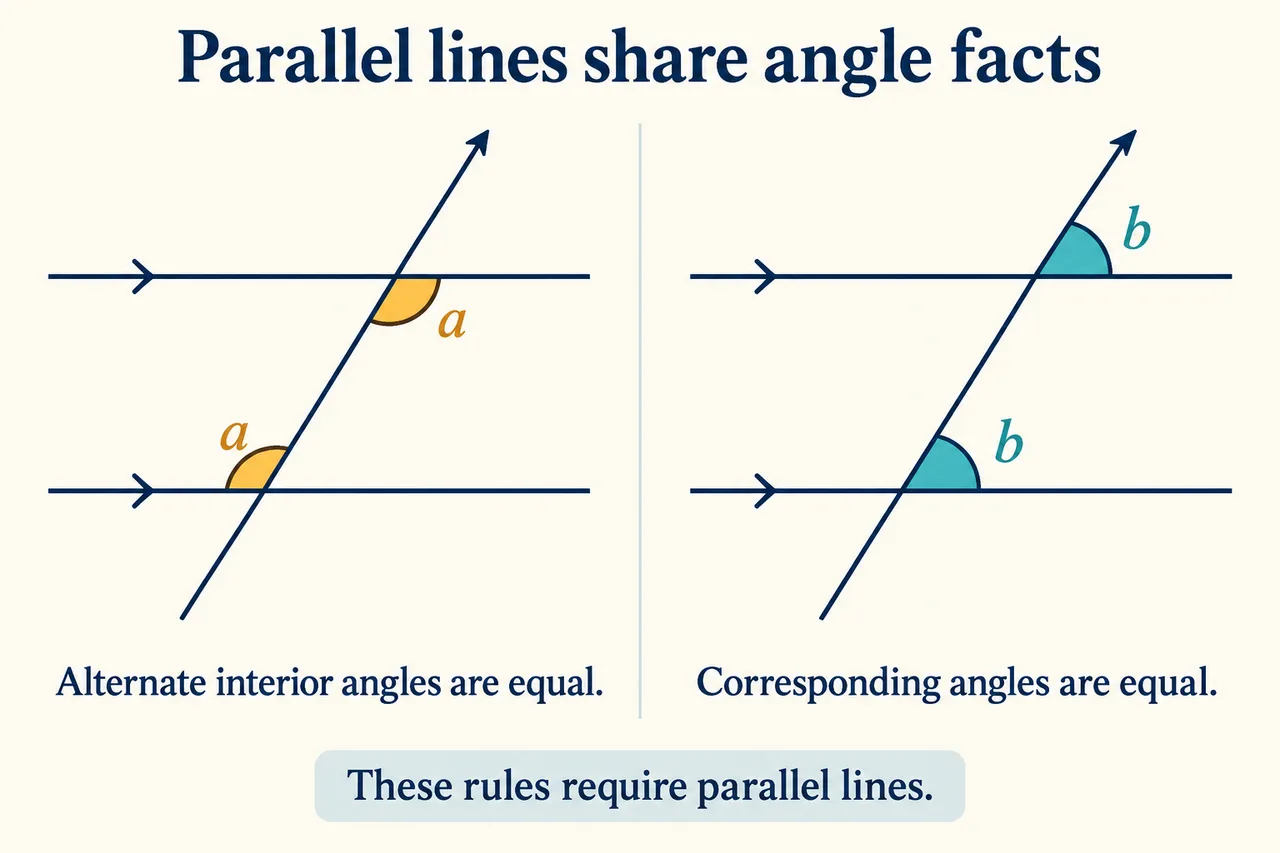
Recognise angles on parallel lines
Build polygon angle sums from triangles
Classify quadrilaterals by their properties
Use equal sides to deduce angles
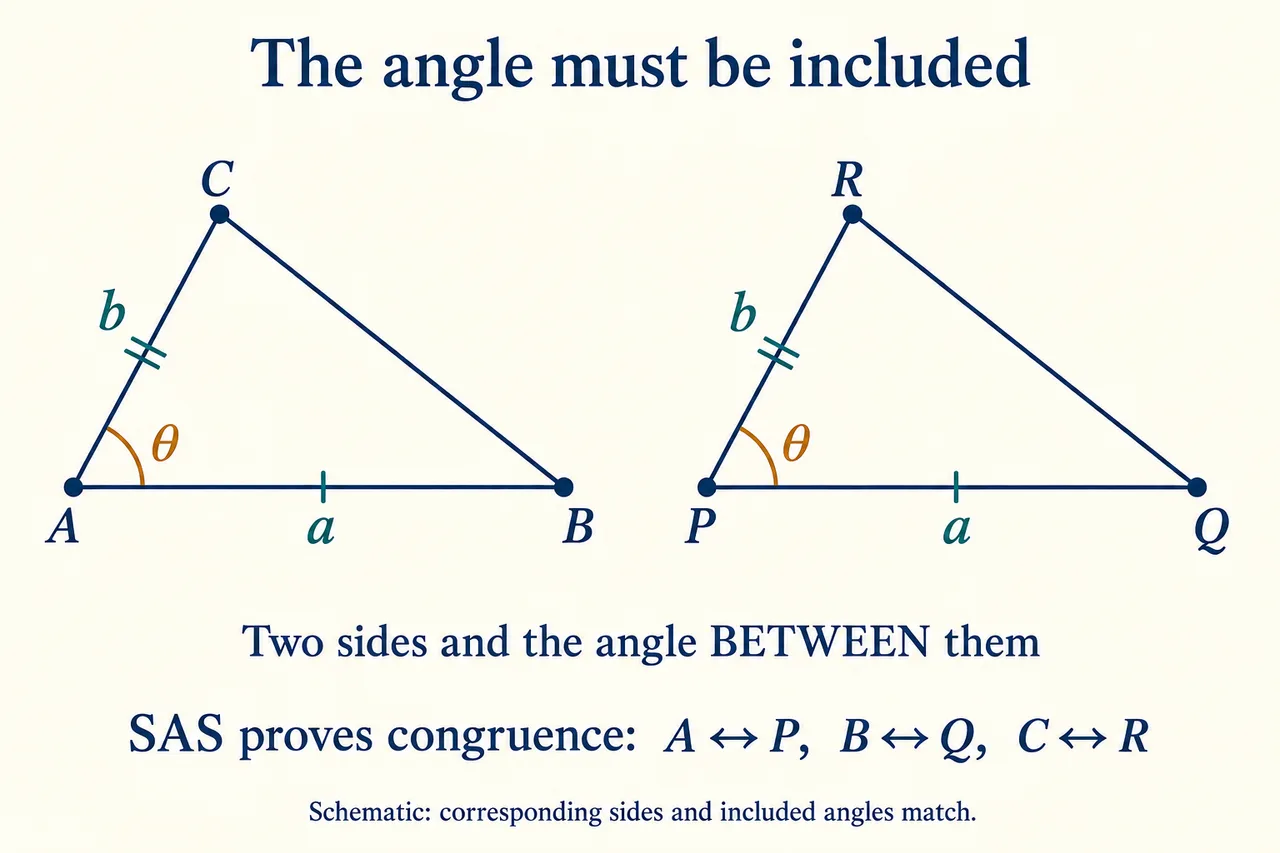
Prove triangles have the same size and shape
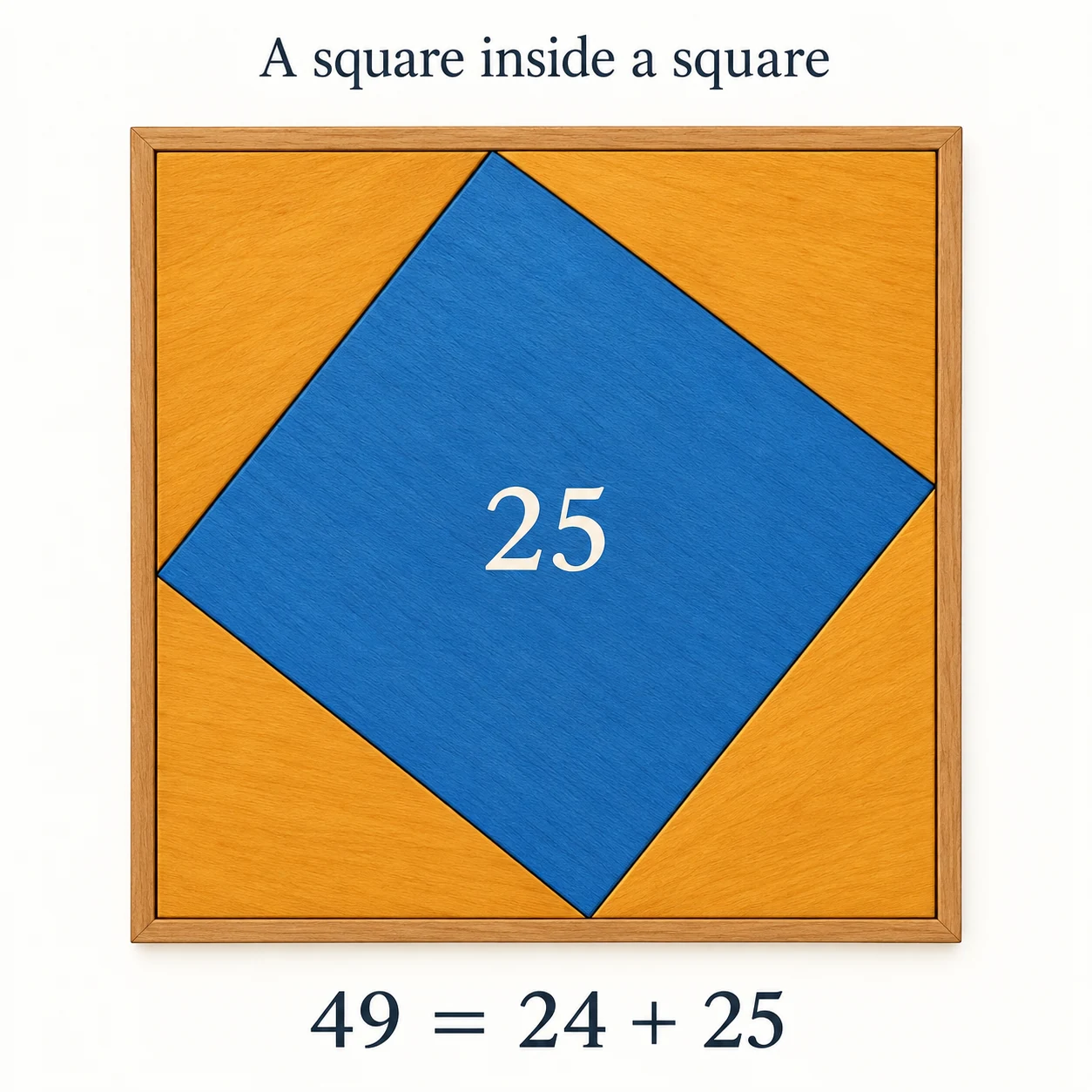
Why the squares on a right triangle balance
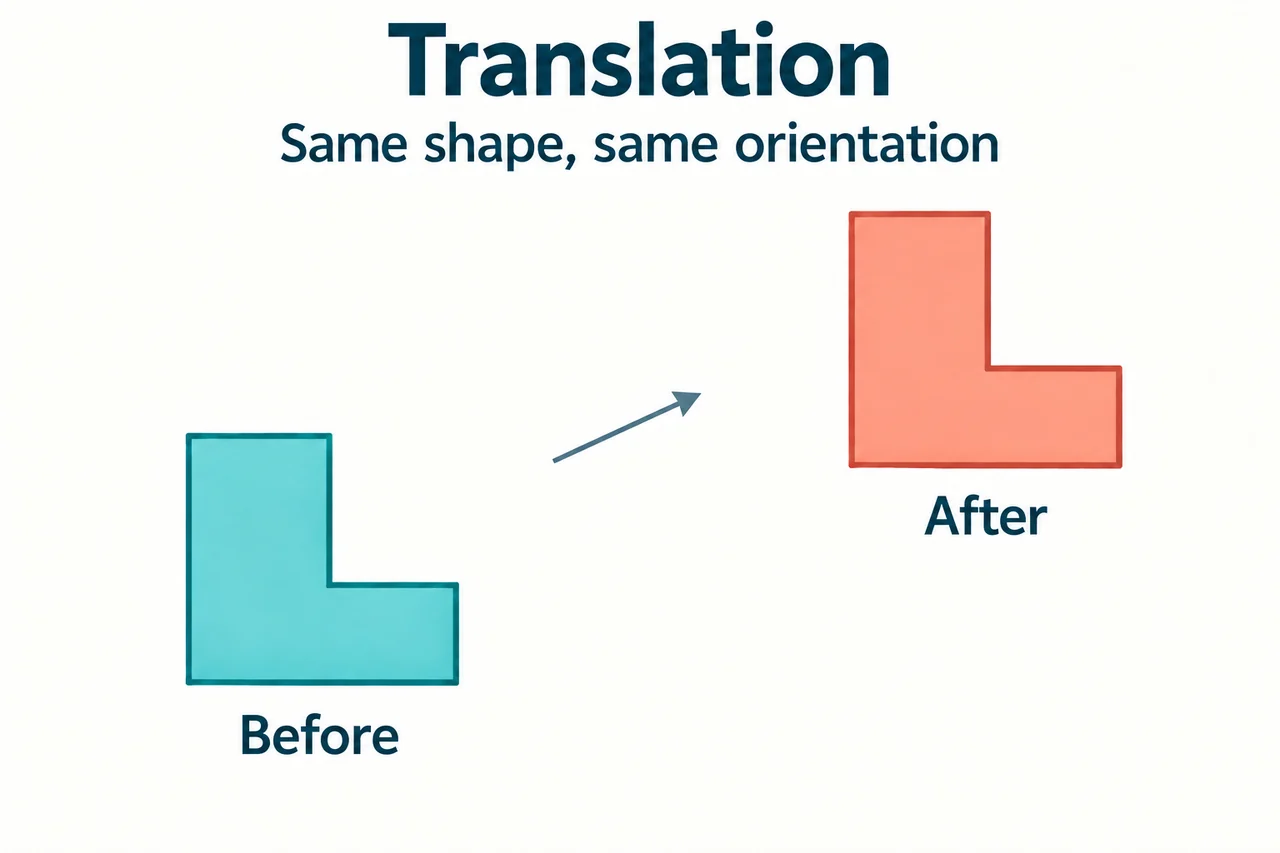
Translate every vertex by the same vector
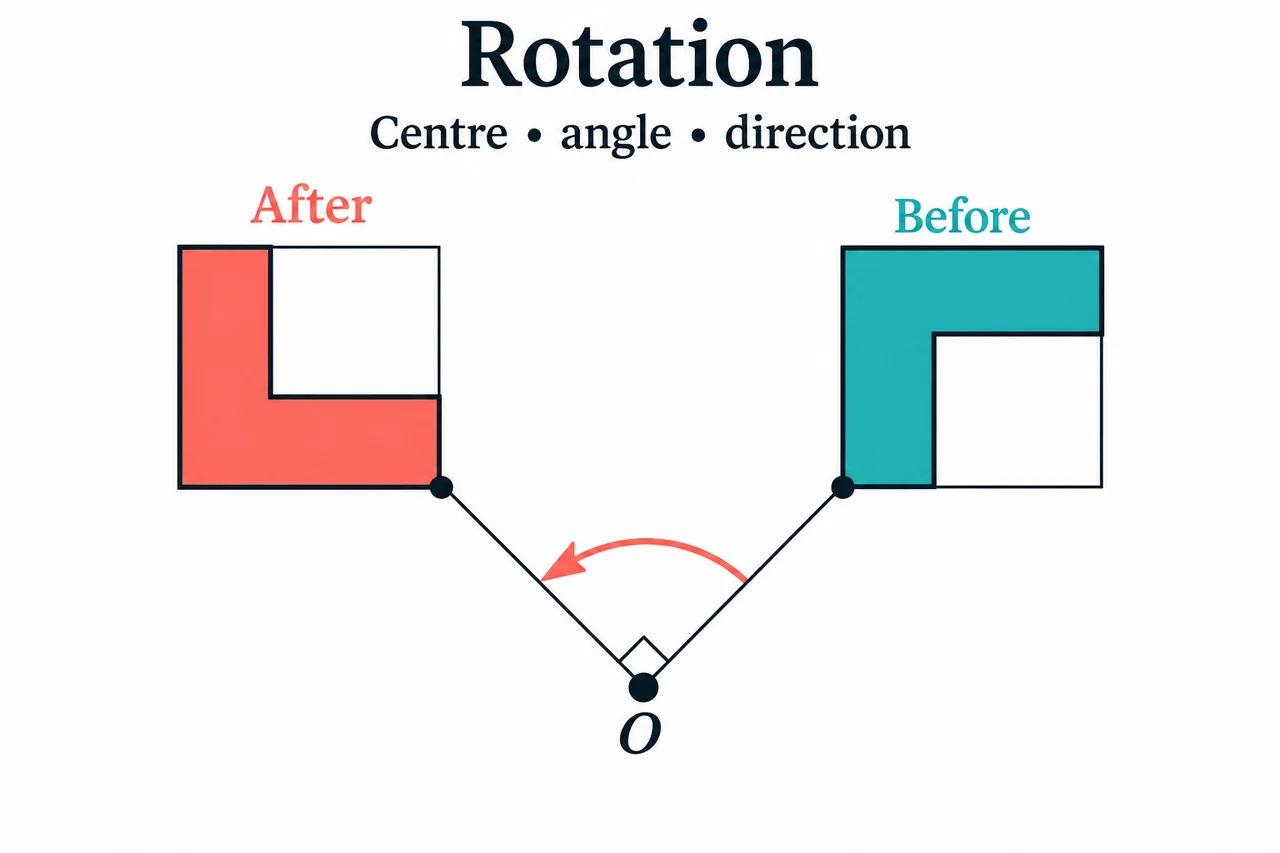
Rotate about a specified centre
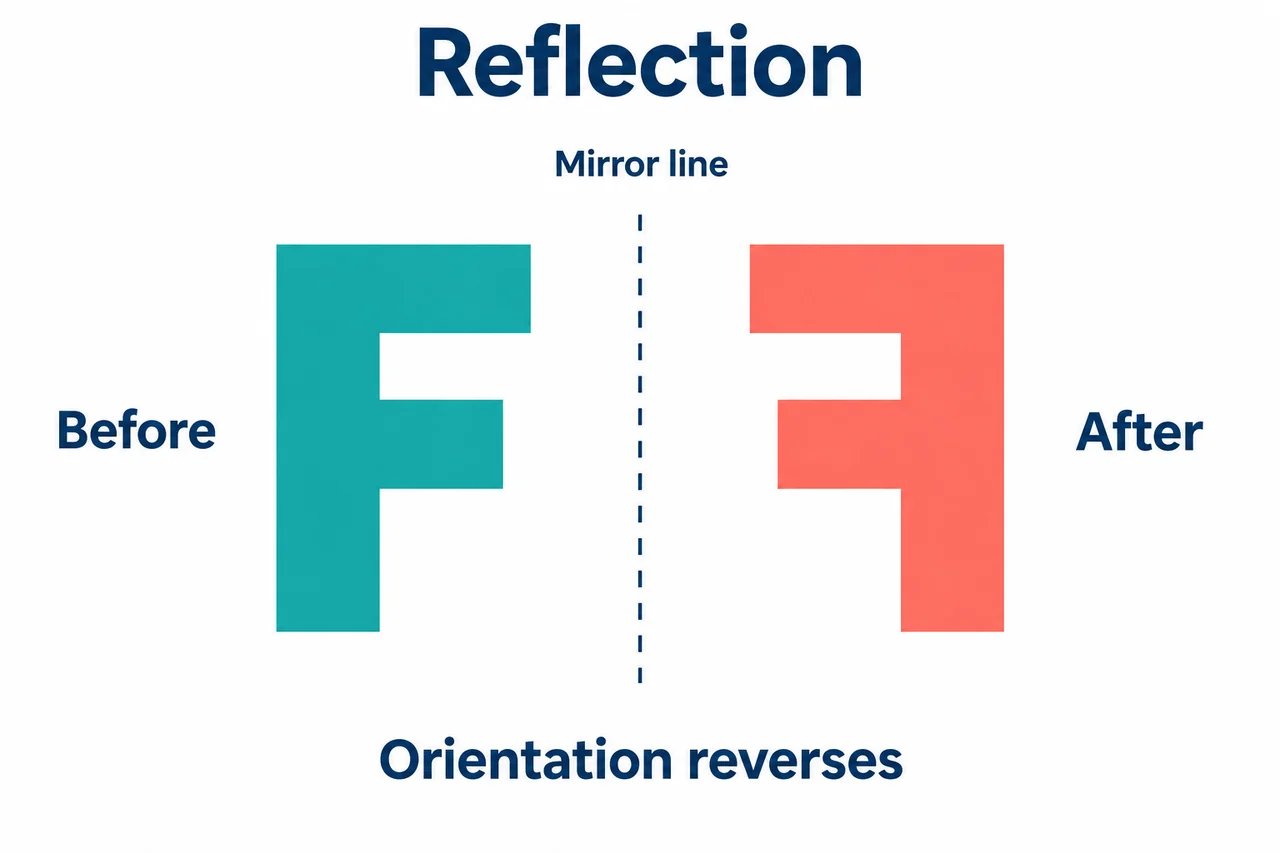
Reflect in a horizontal or vertical line
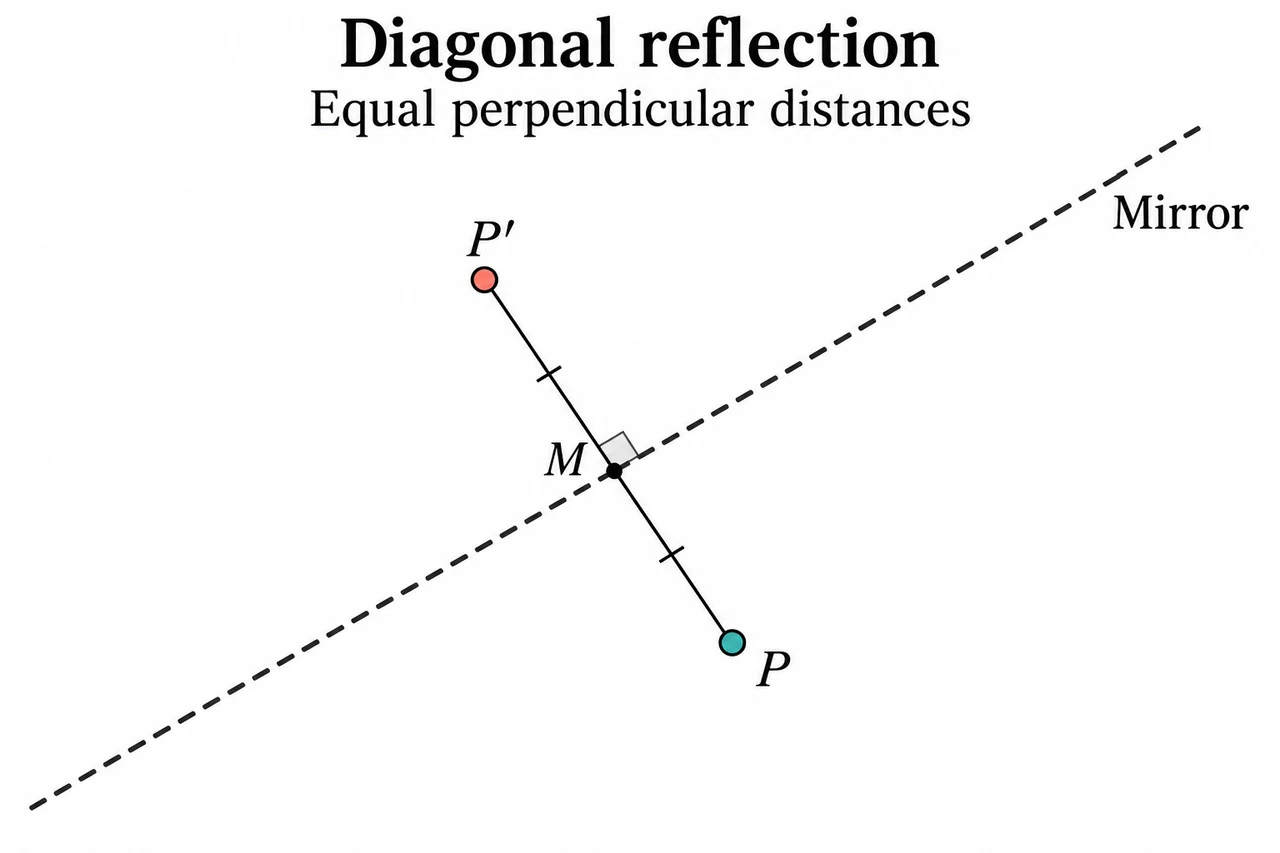
Reflect in a diagonal mirror
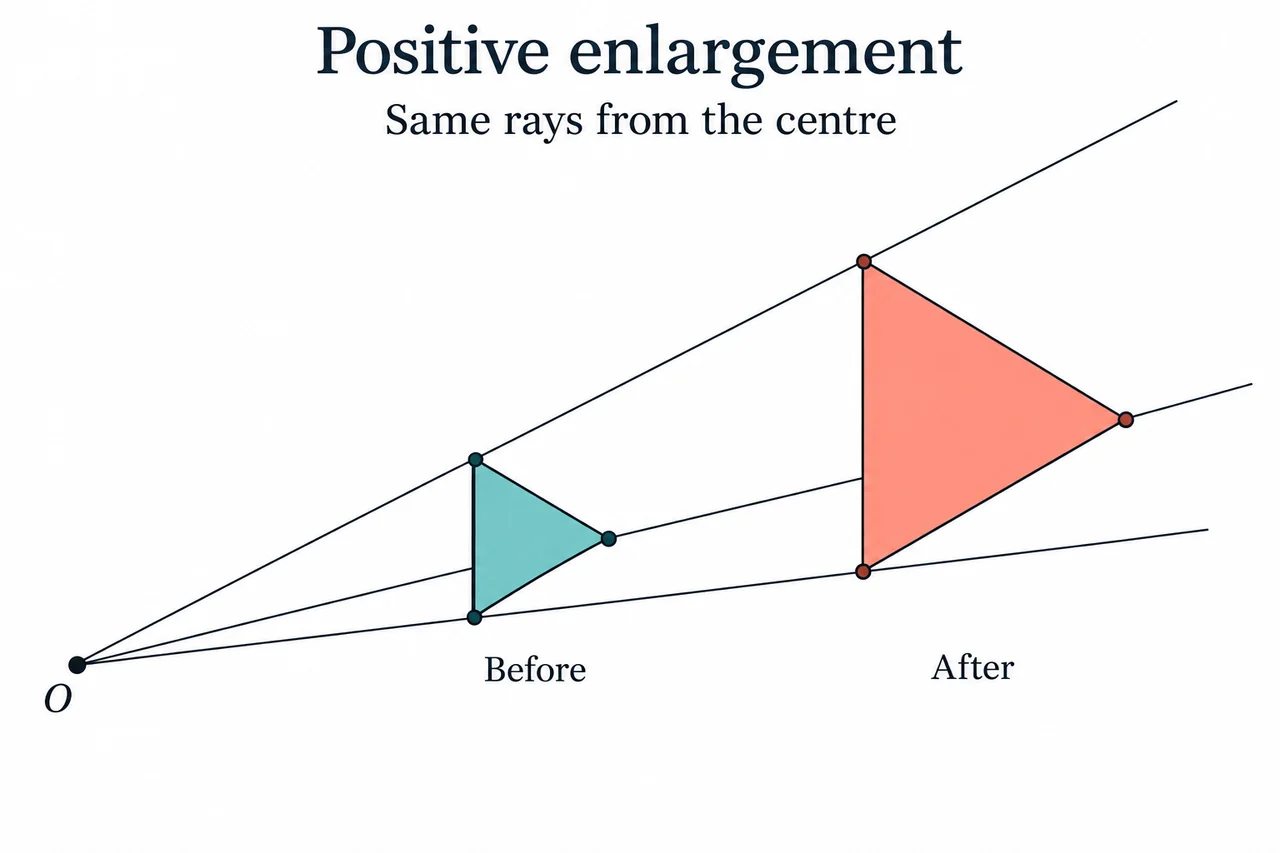
Enlarge from a centre, not from the origin by habit
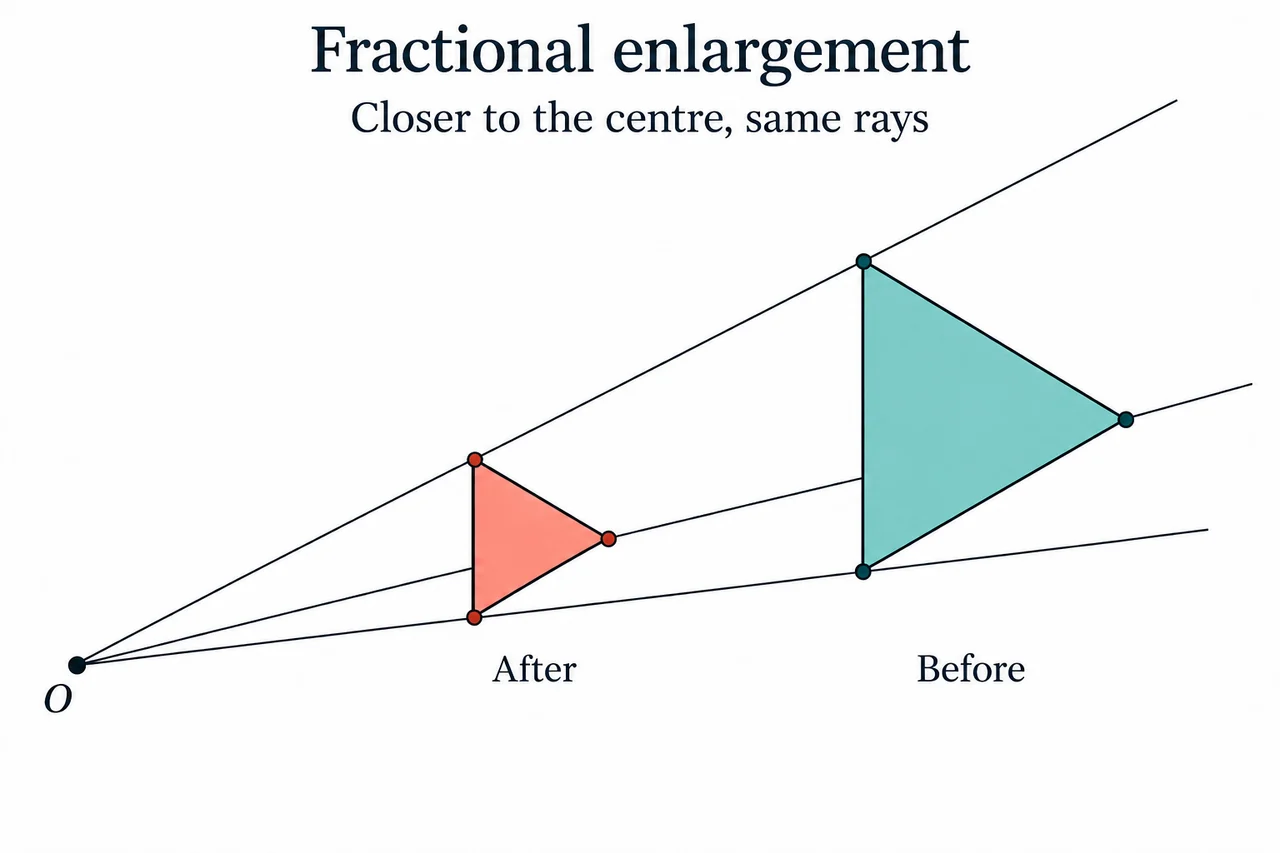
Use fractional scale factors without losing the centre
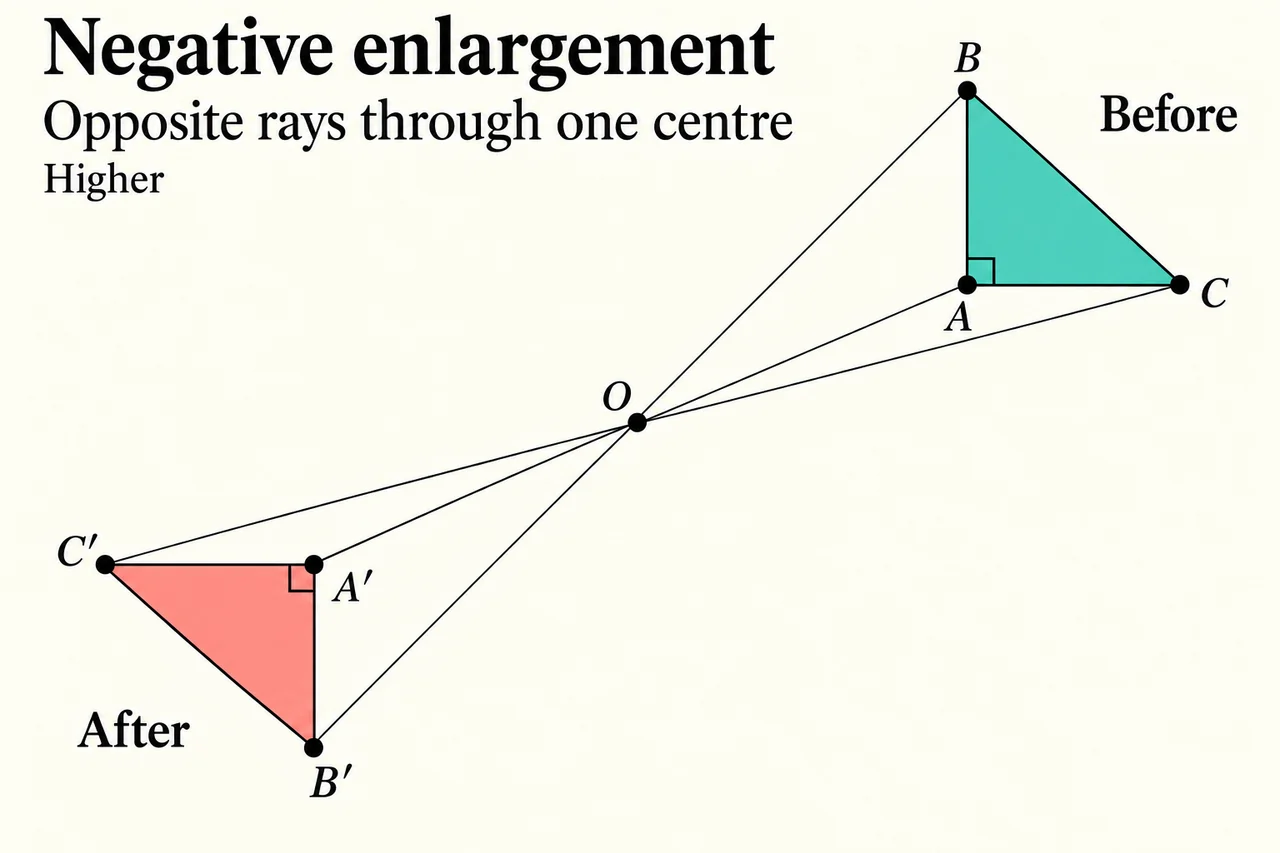
Negative scale sends vertices through the centre
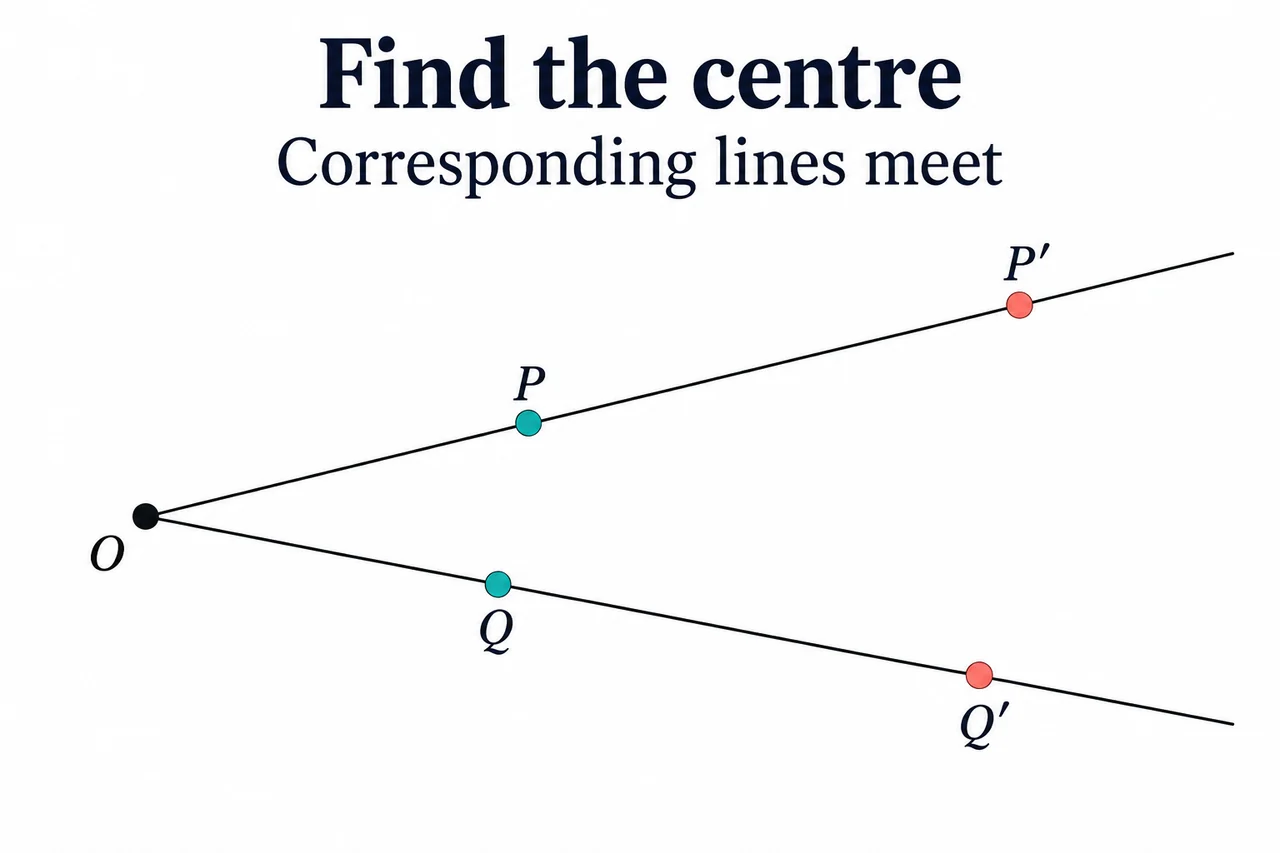
Recover a centre and verify the whole correspondence
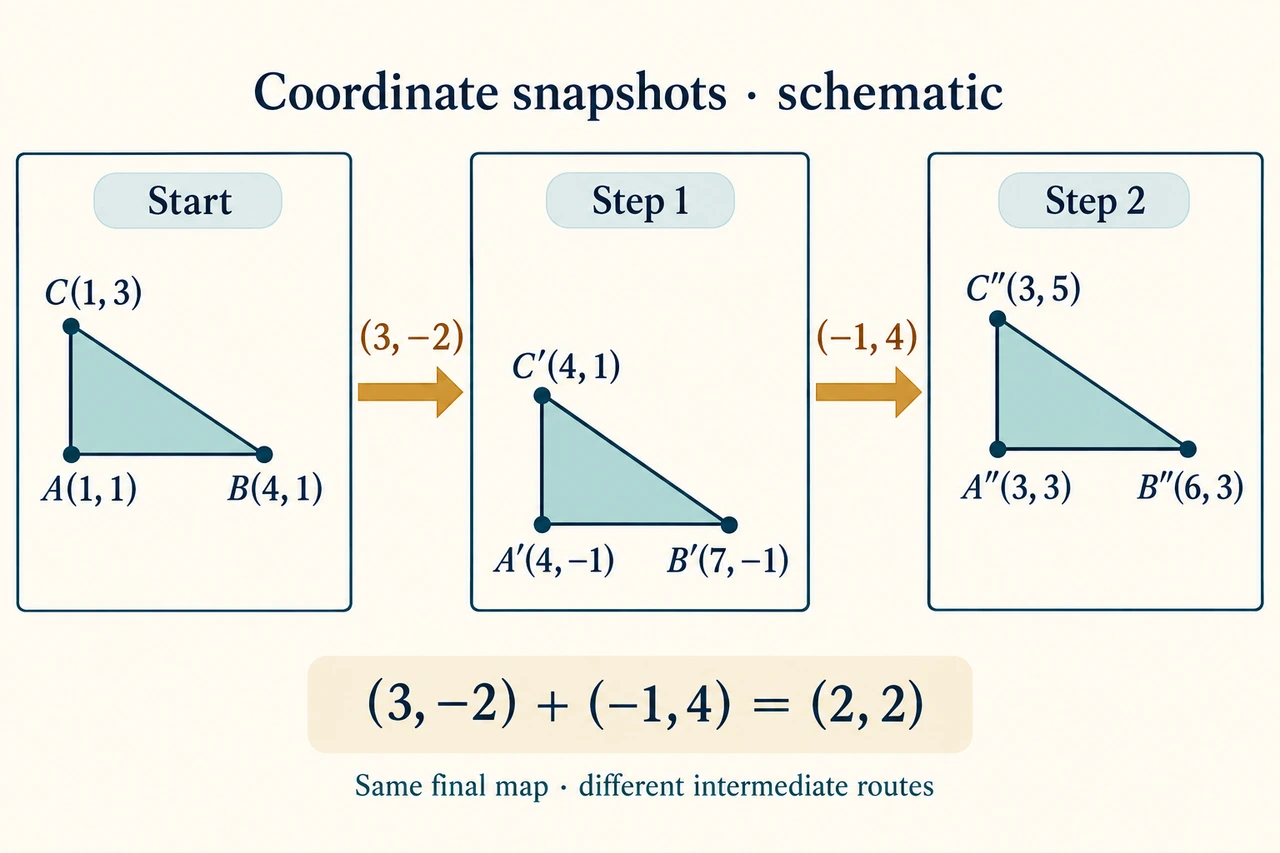
Translations: follow the journey, then combine the movement
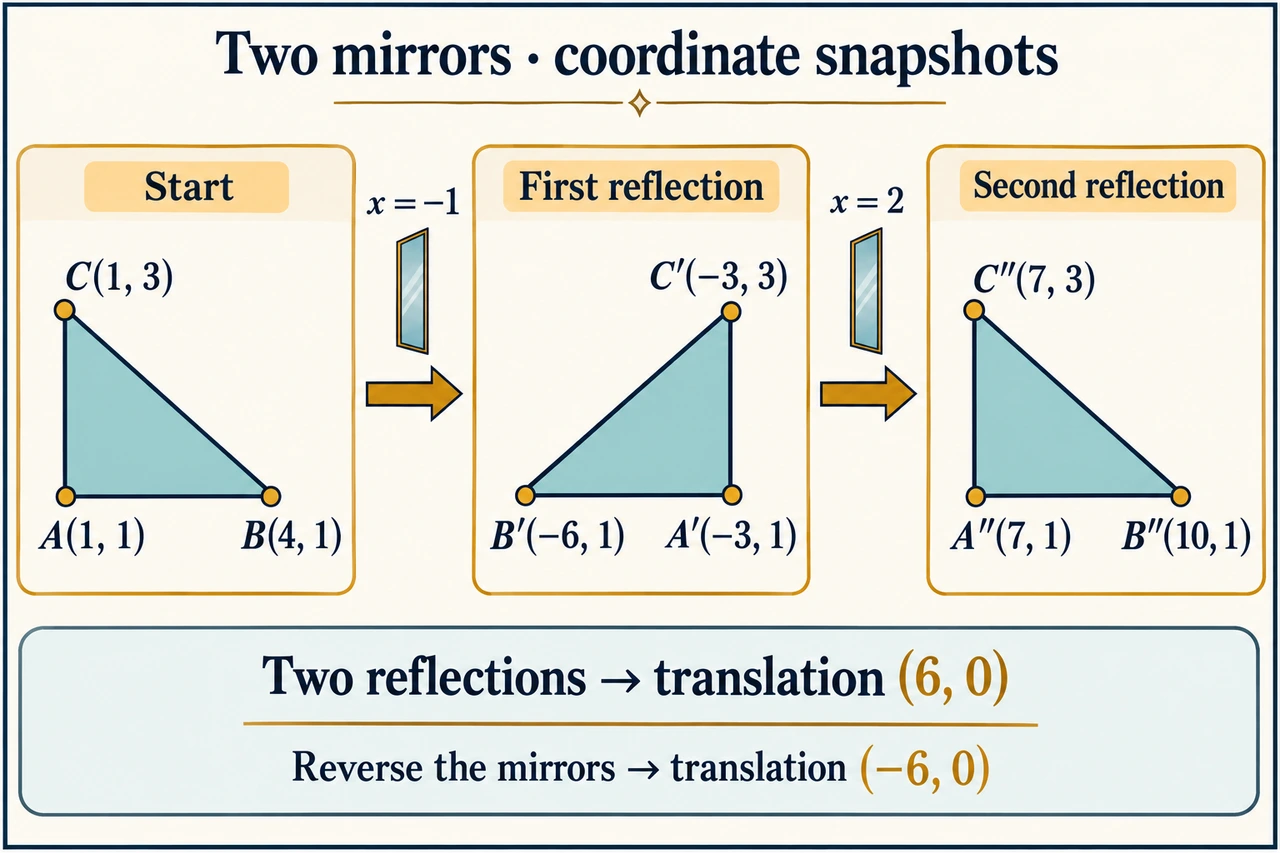
Two mirrors: why parallel reflections slide and crossing mirrors turn
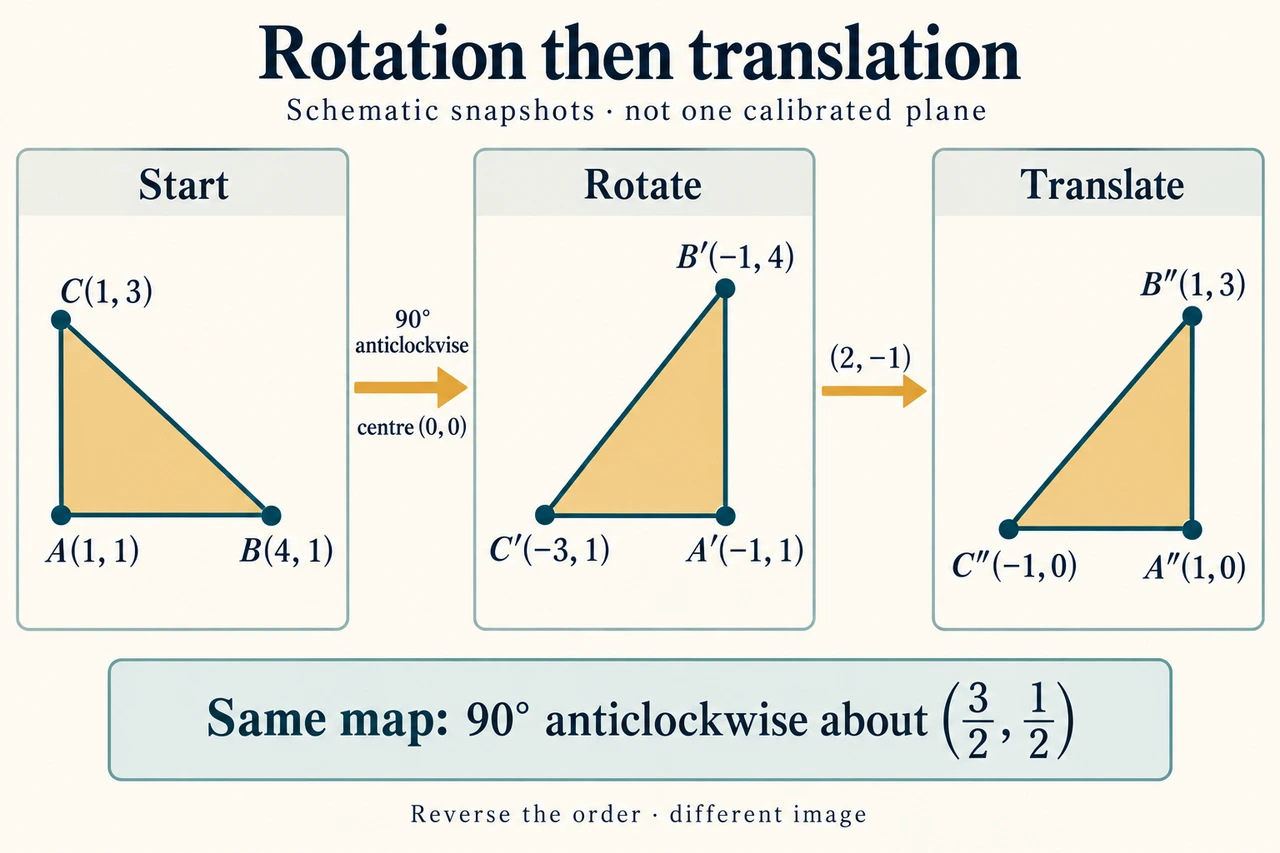
A turn followed by a translation: order changes the destination
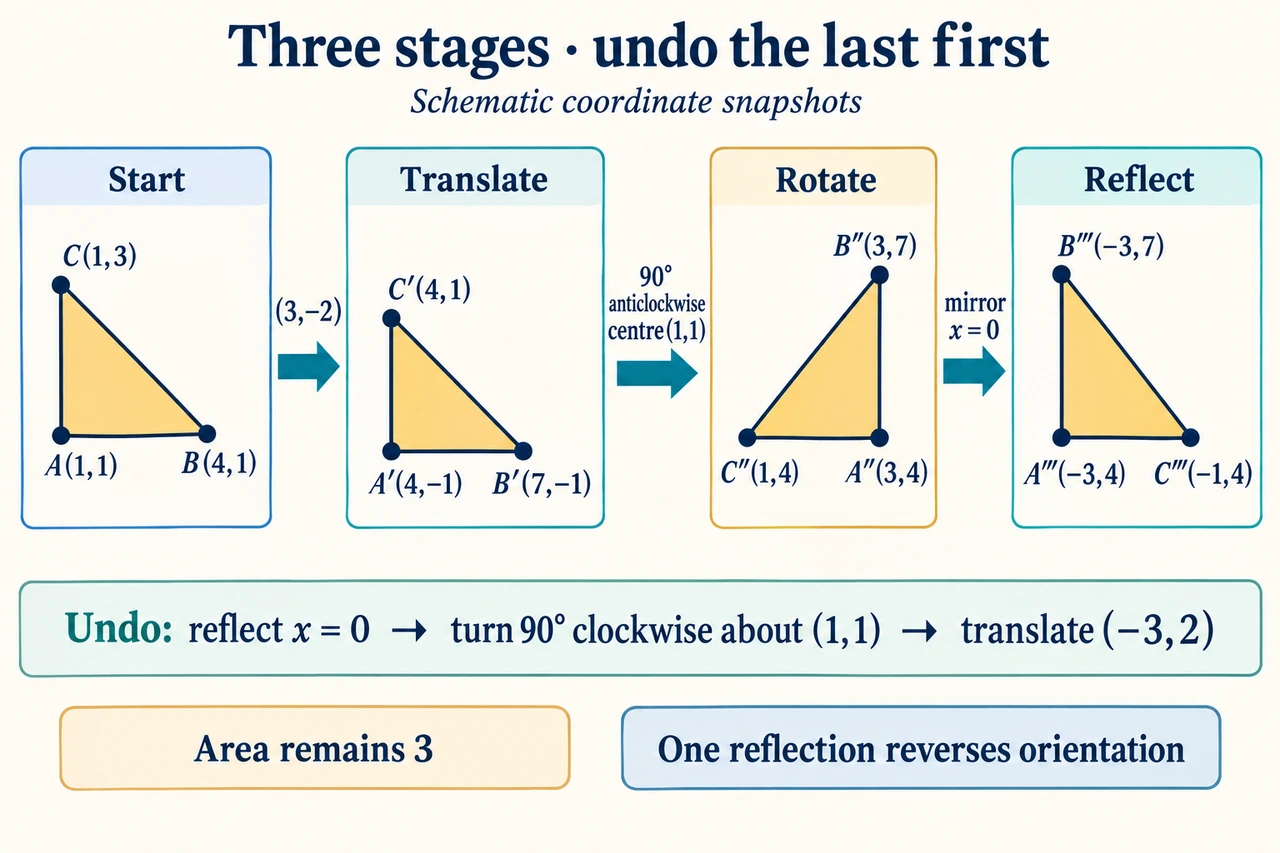
Three transformations: reverse the route and check what survives
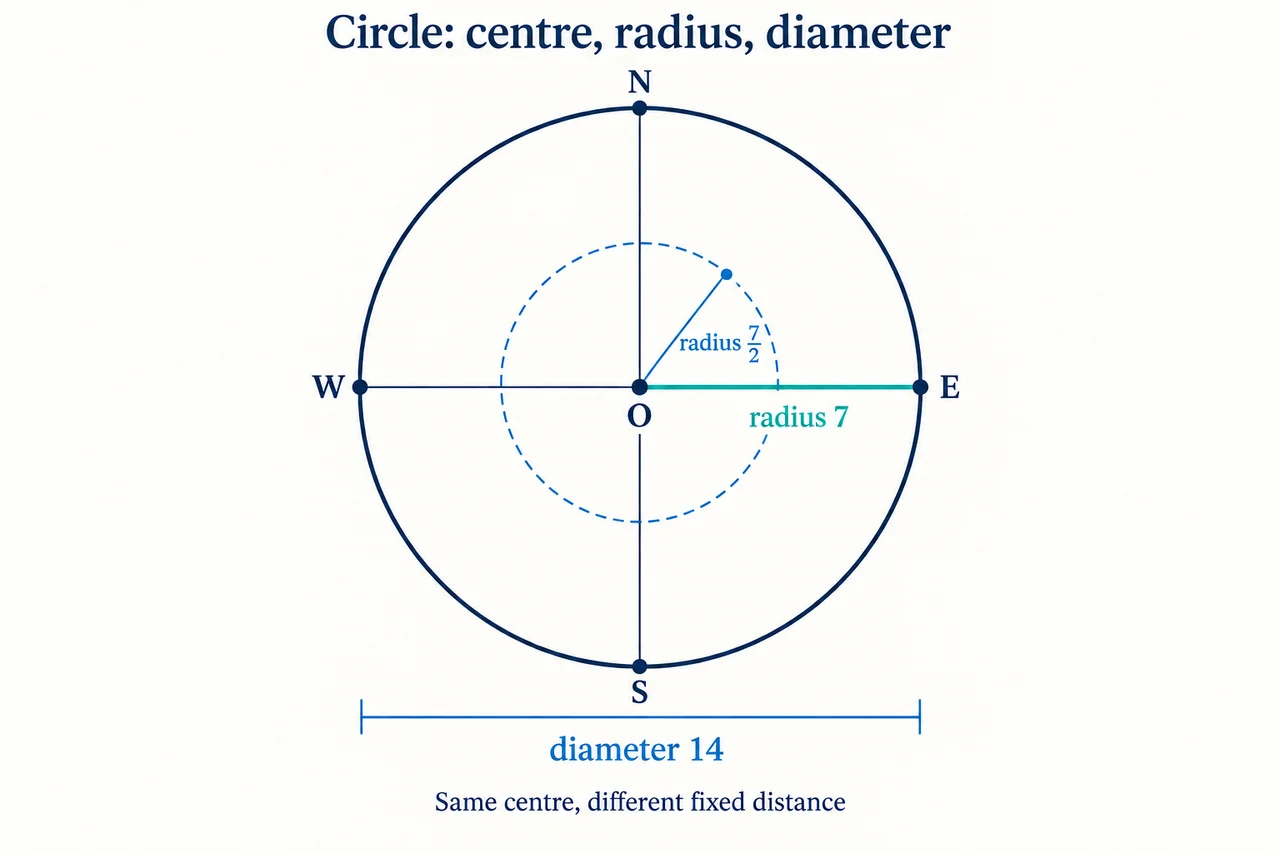
Define a circle by its fixed distance, not its appearance
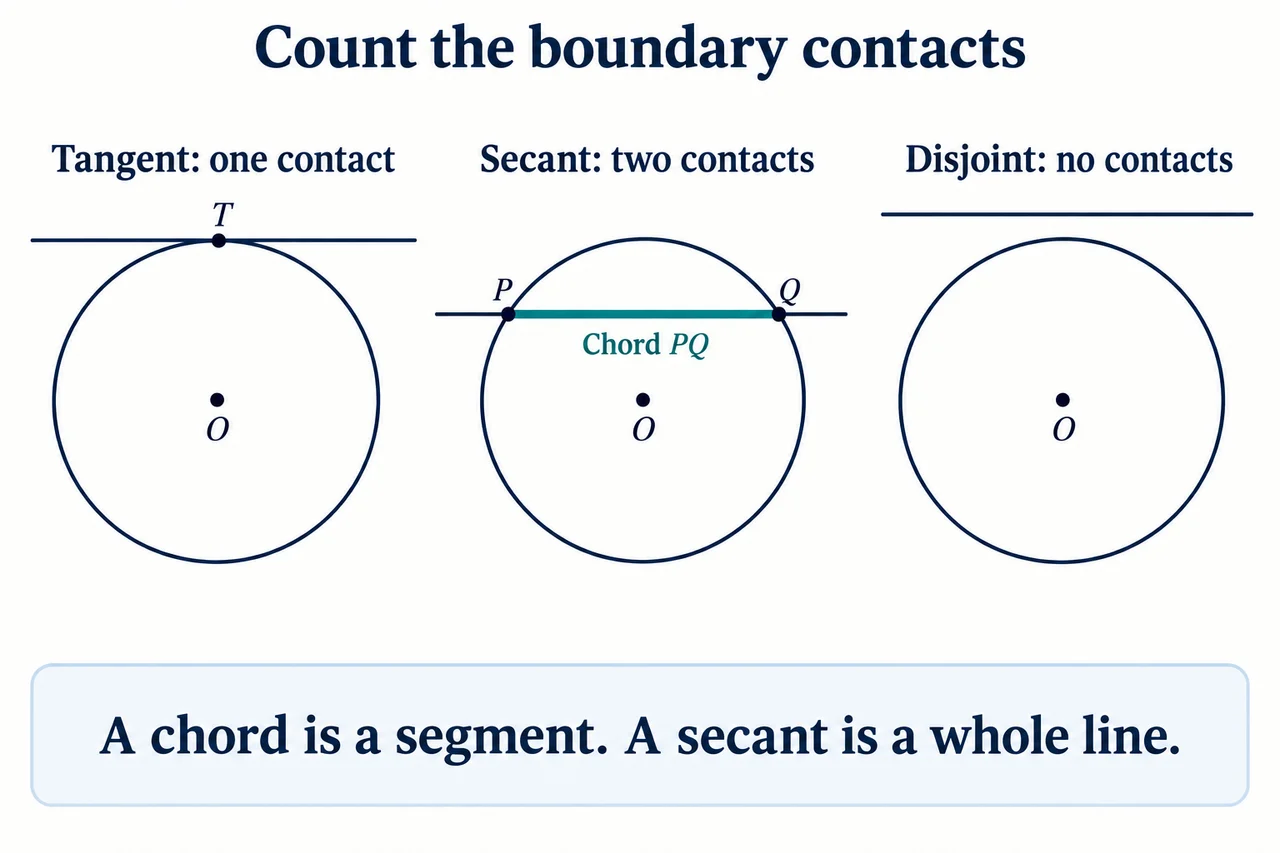
Chord, diameter and tangent: count the boundary contacts
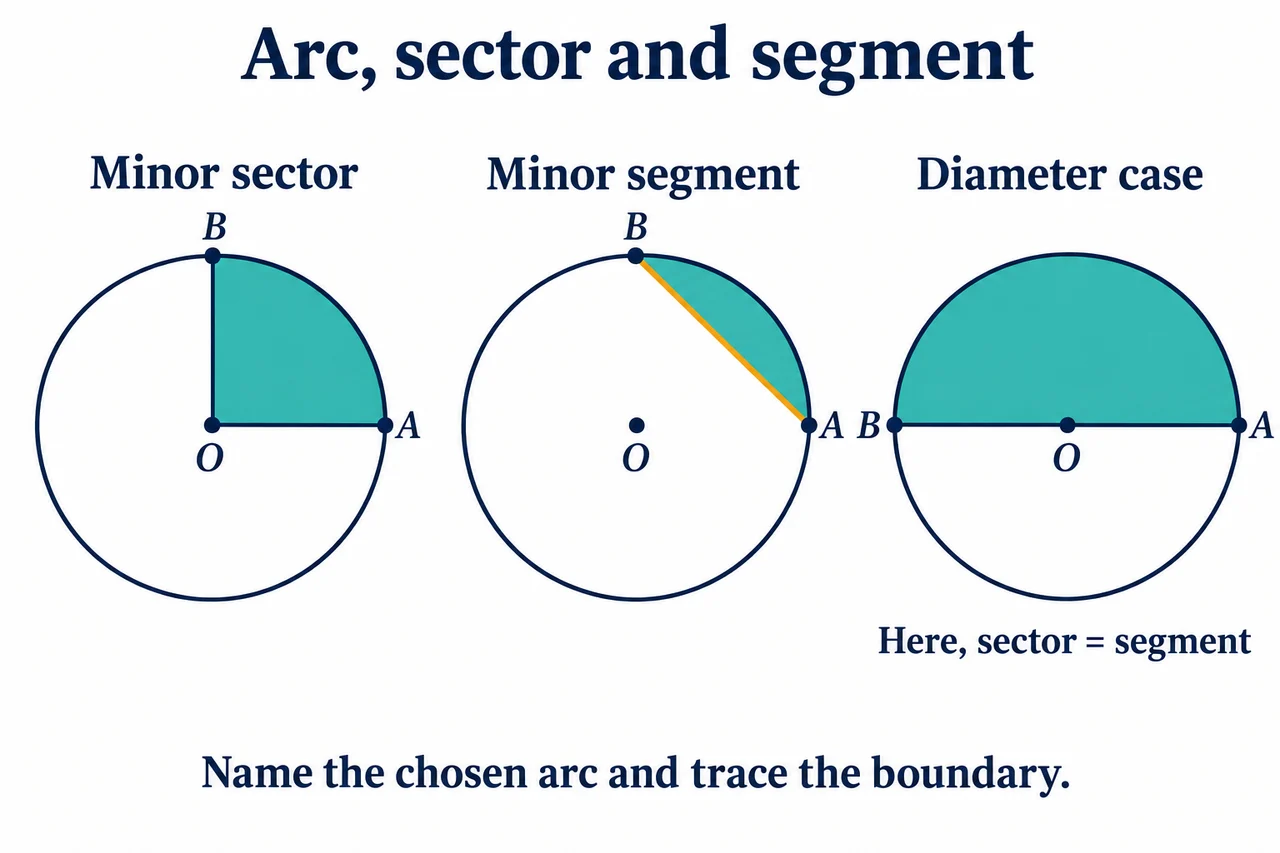
An arc is a boundary; a sector and segment are regions
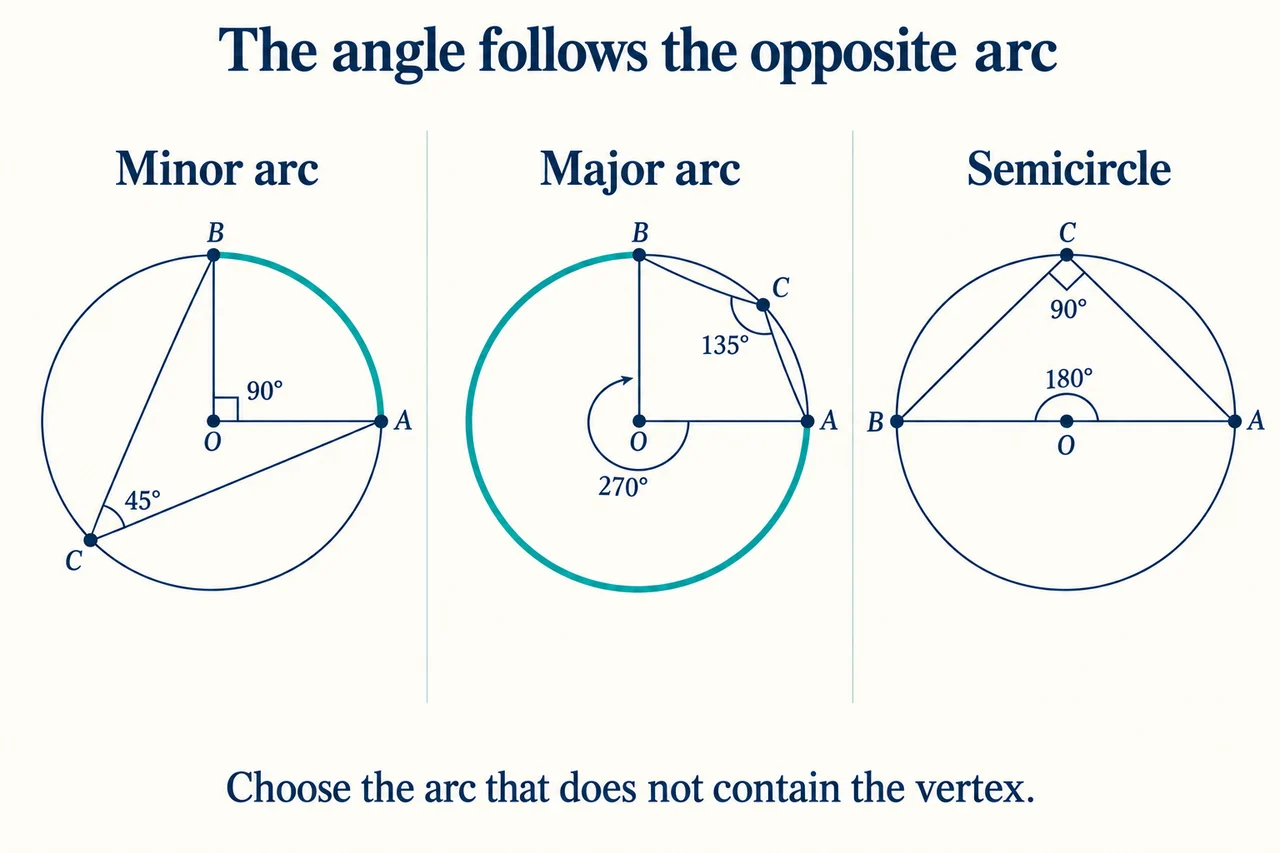
Central and circumference angles: prove the relationship with the right arc
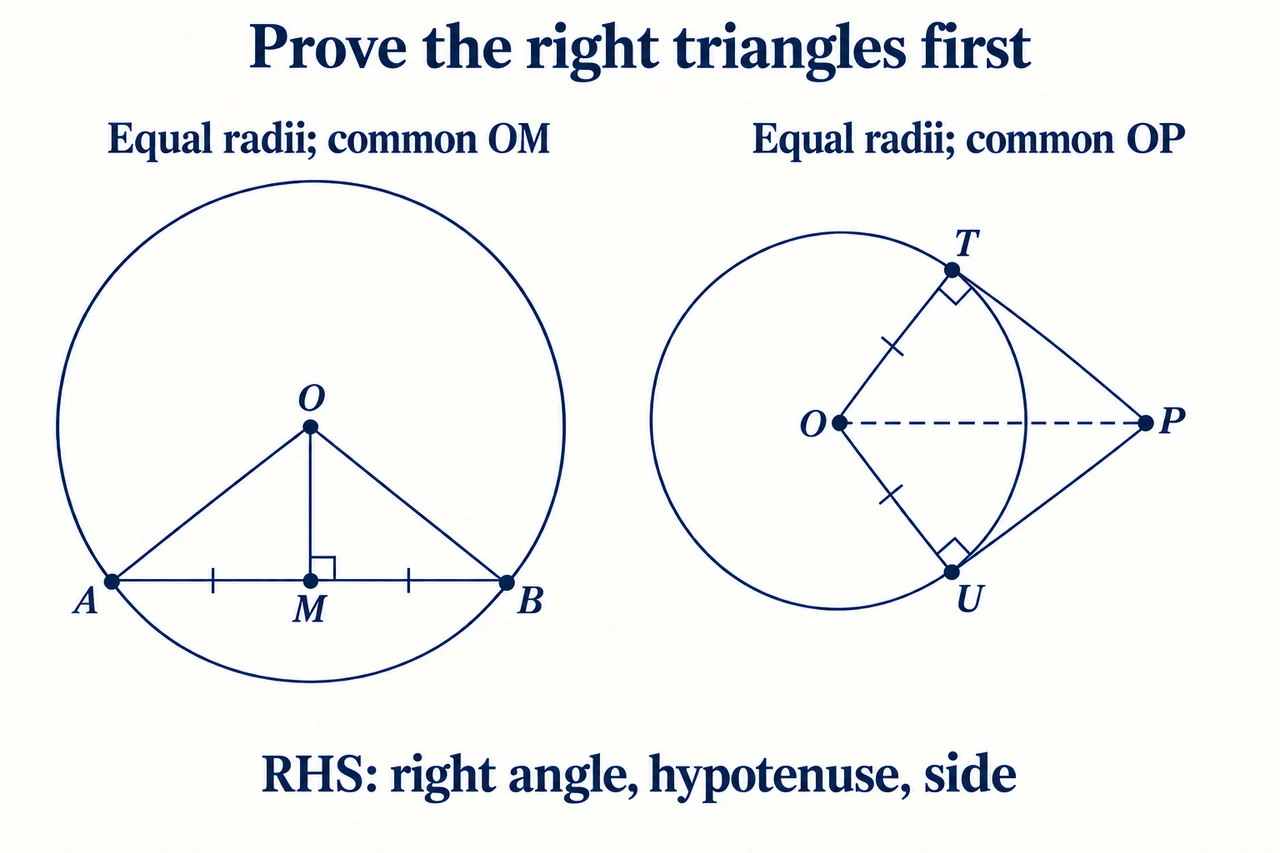
Chord bisection and tangent lengths: identify the congruent triangles
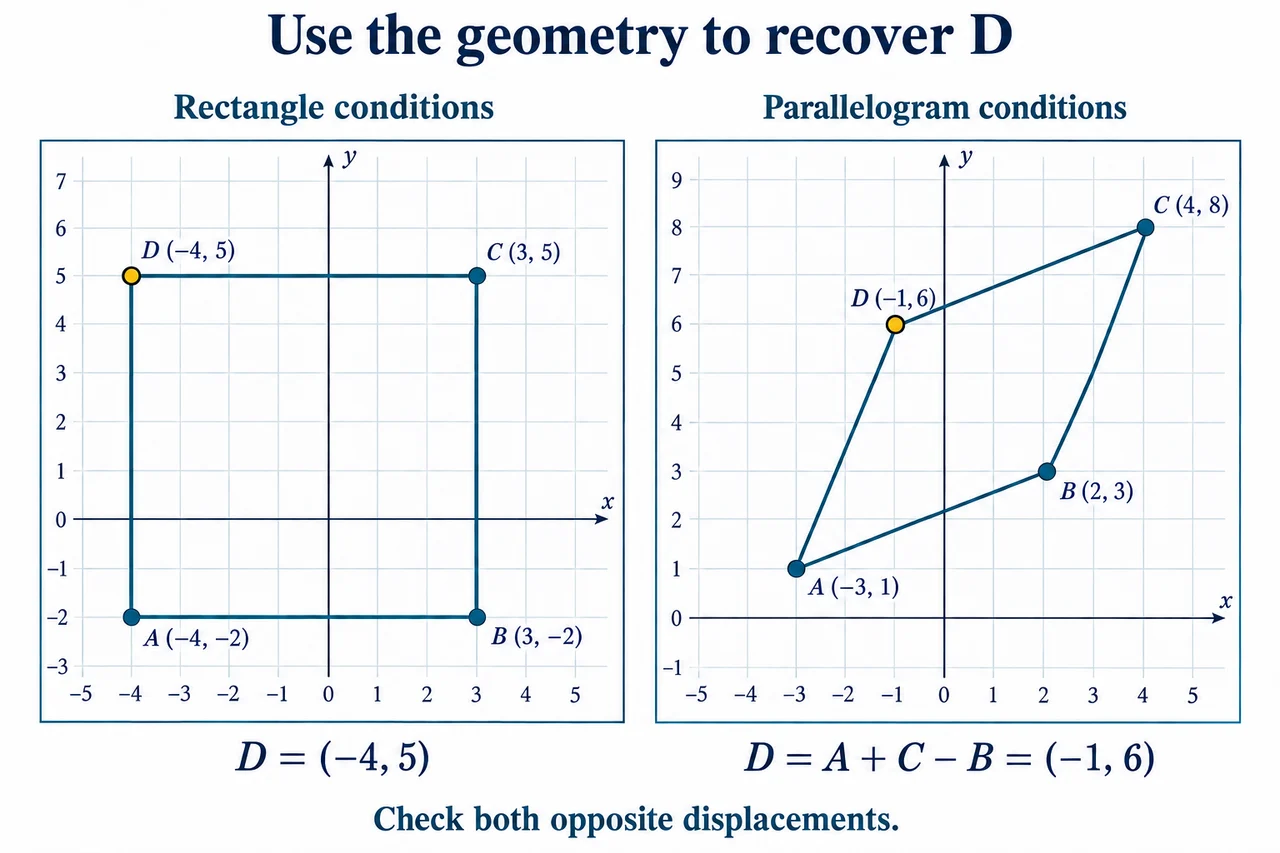
Recover a missing vertex from geometry, not the outline of the sketch